

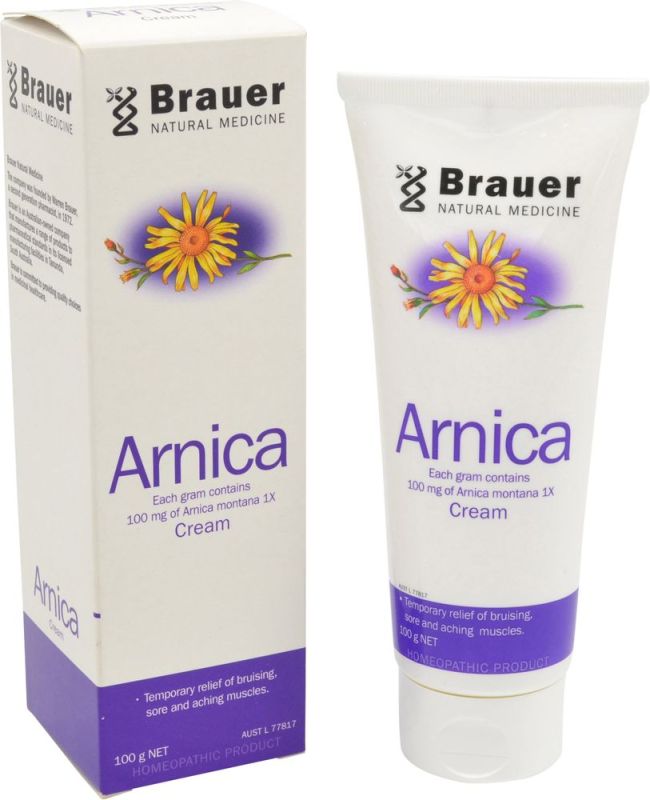
Arnica Cream 100g
Sports | Clubs | Trainers
$36.93
Secure checkout
VISA
Mastercard
Apple Pay
Google Pay
Also accepted
AMEX
Afterpay
Zip
Klarna
PayPal
In stock
Only 998 left
SKU
99506
Arnica cream is a topical preparation made from the flowering herb Arnica montana, also known as mountain daisy or leopard’s bane. This 100g tube is used for the temporary relief of bruising, swelling, and sore or aching muscles after minor knocks, sprains and everyday exertion. Each gram contains Arnica montana 1X 100mg. For external use on intact skin only.
What is arnica cream used for?
- Bruising and swelling from minor bumps and knocks
- Minor sprains, strains and stiffness
- Sore, aching muscles after exercise, heavy work or sport
- General muscular aches and soreness
Does arnica cream actually work?
Worth being straight about this, because it is the question most people are really asking. Arnica has a long history of traditional use for bruising and muscle soreness, and it remains one of the most widely bought topical remedies in Australian pharmacy. The clinical evidence, however, is limited and mixed: some trials on bruising and post-exercise soreness report modest benefit, others find no difference against placebo. It is sold here as a traditional preparation for temporary relief, not as a proven treatment, and we would rather say that plainly than overstate it. For anything beyond a minor knock, ice, rest and a medical opinion do more.
How to apply arnica cream
Apply a thin layer to the affected area and massage in gently, up to a few times a day, on clean and unbroken skin. Wash your hands afterwards. For a fresh knock, the first 24 to 48 hours are what matter most, and a cold pack applied early does more for swelling than any cream: pair arnica cream with a cold pack rather than instead of one. Active households and clubs tend to keep both in a sports first aid kit.
Specifications
| Type | Topical herbal preparation, for external use |
| Active ingredient | Arnica montana 1X, 100mg per gram |
| Size | 100g tube |
| Used for | Temporary relief of bruising, swelling, muscular aches |
| Apply to | Intact skin only, not wounds or broken skin |
| Prescription | Not required |
Safety: for external use only. Do not apply to broken skin, open wounds, or near the eyes or mouth, and do not swallow. Avoid if you are allergic to plants in the daisy (Asteraceae) family, such as chamomile, chrysanthemum, marigold or ragweed. Stop if irritation develops, and see a doctor if pain or swelling is severe, follows a significant injury, or is not settling.
Arnica Cream FAQs
Who should not use arnica cream?
Avoid it if you are allergic to the daisy family (Asteraceae), which includes chamomile, chrysanthemum, marigold and ragweed, since cross-reaction is common. Do not use it on broken skin or open wounds, or on children under two. If you take blood-thinning medication such as warfarin or apixaban, or you are pregnant or breastfeeding, ask your pharmacist or doctor before using it rather than assuming it is fine.
Can arnica cream be used on the face or under the eyes?
People do use it on facial bruising, but keep it well away from the eyes themselves and from the lips, and never apply it to broken skin. The skin around the eye is thin and more reactive, so patch-test elsewhere first. If bruising near the eye followed a blow to the head or face, or vision is affected at all, that needs medical assessment rather than a cream.
Can I use arnica after cosmetic injections such as fillers or anti-wrinkle treatment?
Some injectors suggest topical or oral arnica to help with bruising afterwards, and others do not; the evidence is thin either way. The important point is that this is your treating practitioner call, not ours. Follow the aftercare instructions they gave you, and in particular do not apply anything to injection sites in the first hours unless they have told you to. If you develop unusual swelling, pain, blanching or discolouration after an injectable, contact your injector promptly.
Can you put arnica cream on broken skin?
No. Arnica cream is for external use on intact skin only. Do not apply it to broken skin, cuts, grazes or open wounds, and do not swallow it. Arnica taken internally in anything other than a prepared homeopathic dilution is toxic, which is why the external-use-only instruction matters.
How often can you apply arnica cream?
Generally a thin layer massaged into the affected area up to a few times a day. Follow the directions on the pack, do not use it for longer than the label allows, and stop if any redness or irritation develops.
Arnica cream or a cold pack for a fresh bruise?
A cold pack, first. Cold applied within the first 24 to 48 hours reduces bleeding into the tissue, which is what makes a bruise large in the first place, and it also helps pain. Arnica cream is used afterwards for the ongoing soreness and discolouration. If a bruise is very large, extremely painful, or appeared without an obvious cause, see a doctor.
Always read the label and use only as directed. If symptoms persist, talk to your health professional. This information is a general guide and not medical advice. For accidental ingestion or poisoning advice in Australia, call the Poisons Information Centre on 13 11 26.
Frequently bought together