

A safe workplace is essential for employee productivity. When workers feel safe in their work environment, their morale and job satisfaction also get a boost.
Safe Work Australia (SWA) was established in 2008. It was created to ensure that companies act responsibly to protect the safety and welfare of their employees. The purpose of SWA is to create a national policy on Work Health and Safety (WHS) as well as workers’ compensation. However, SWA does not directly implement or regulate WHS laws. Instead, it is the Commonwealth, states and jurisdictions that regulate and implement WHS laws in their areas of coverage.
SWA is focused on policy-making and strategising on a national level. It also undertakes research, data collection, analysis and reporting. It is also responsible for developing and evaluating the WHS model legislative framework.
Legal responsibilities of business owners
To operate, business entities are legally mandated to implement health and safety measures. These are meant to protect the health and safety of employees. Moreover, the safety of customers, visitors, volunteers, contractors, or the public is also considered.
Businesses that do not implement the required health and safety measures can encounter a host of issues. These include unnecessary costs, penalties, and possible losses due to workplace-related injuries and problems. Therefore, as a business owner, you need to be familiar with WHS legislation. Be sure to adhere to the following in the conduct of your business:
- Employers must provide a safe work environment.
It is the employer’s responsibility to provide their employees with a safe workplace. This way, they can perform their roles efficiently without fear of any harm befalling them while at work.
- Employers should evaluate and identify possible risks in the workplace.
Business owners are responsible for conducting risk assessments in their establishment. In doing so, they can identify possible sources, factors or materials that can endanger the safety and or health of their employees.
- Employers must implement measures to mitigate risks found during the assessment.
If any faults or issues are found during the assessment, business owners must find ways to counter these.
- Employers must ensure the safe use and handling of materials, machinery, goods and substances.
Company owners must provide workers with the necessary training, safety equipment, and gear needed for safe operations. This is done to ensure that nothing goes amiss in the handling of certain materials or items. The type of training, equipment and gear required depends on the nature of the work or activities being done.
- Employers need to evaluate the layout of the workplace to ensure safe work systems are in place.
Employers are responsible for providing an optimally-designed workplace. This means giving employees easy access to safety elements (e.g. first aid kit, fire extinguishers). There must be clearly designated emergency exit points as well.
The importance of first aid
The significance of first aid cannot be overstated. It is a necessity, whether in the workplace or other settings. Workplace-related injury or sudden illness can be initially addressed through the administration of first aid. Sometimes, this can even spell the difference between life and death.
First aid requirements assessment
Workplace requirements in terms of first aid differ from one business to another. You need to consider certain factors in deciding on what first aid arrangement will work best for your company.
These factors include:
• The kind of work being performed
• The hazards posed at the workplace
• The location as well as the size of the workplace
• The number of people and the type of people who frequent the workplace (e.g., visitors, workers, contractors, etc.)
Assessments should be done periodically and with the participation of employees. Doing this ensures your first aid provisions remain adequate and effective.
First aid equipment placement and applications
For your first aid program to be meaningful and effective, all employees must have access to first aid equipment and facilities. You should also have qualified and trained first aiders.
First aid kits must be located near areas where there are higher risks of injury or illness. Examples of high-risk areas include work vehicles and production facilities.
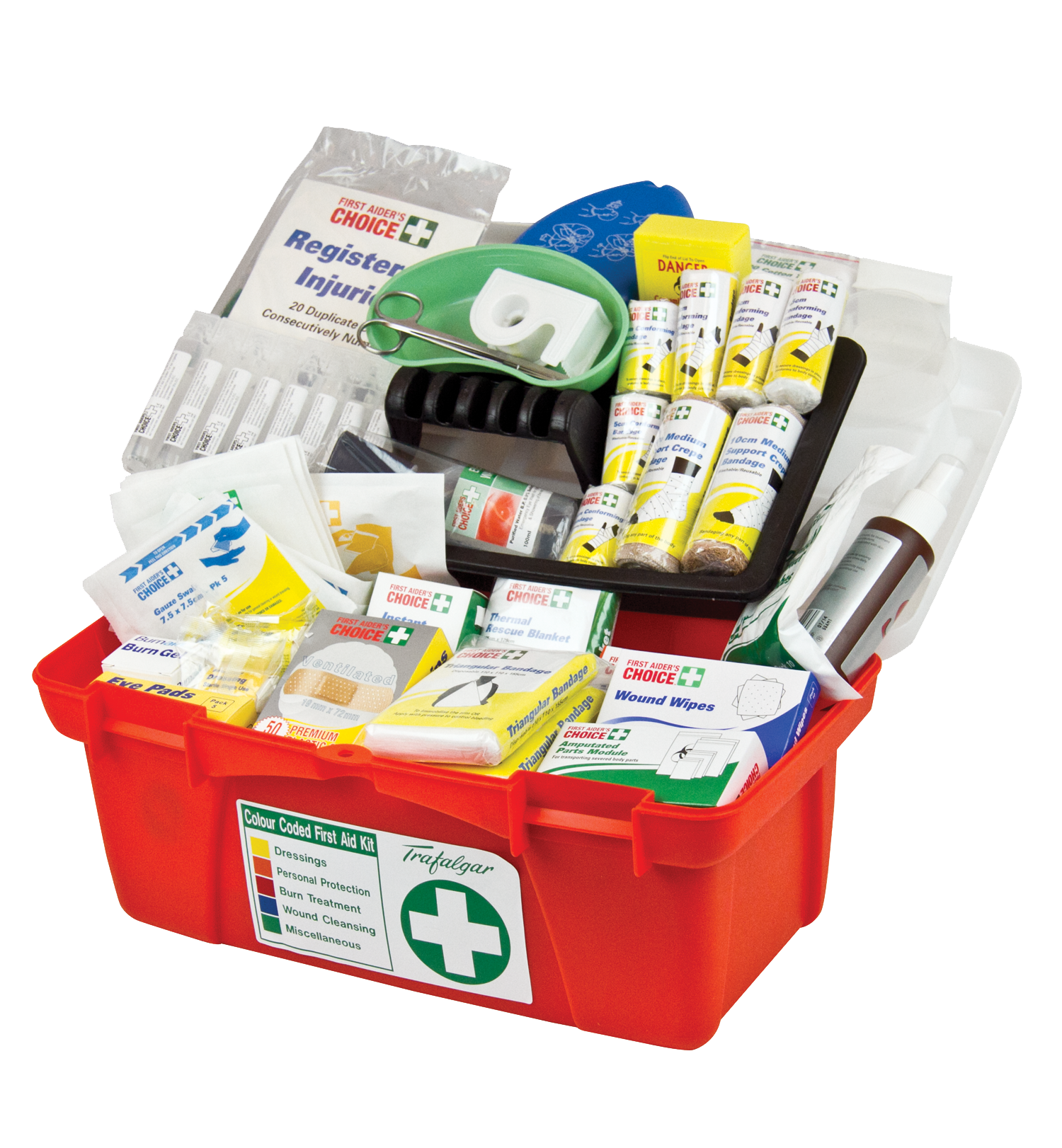
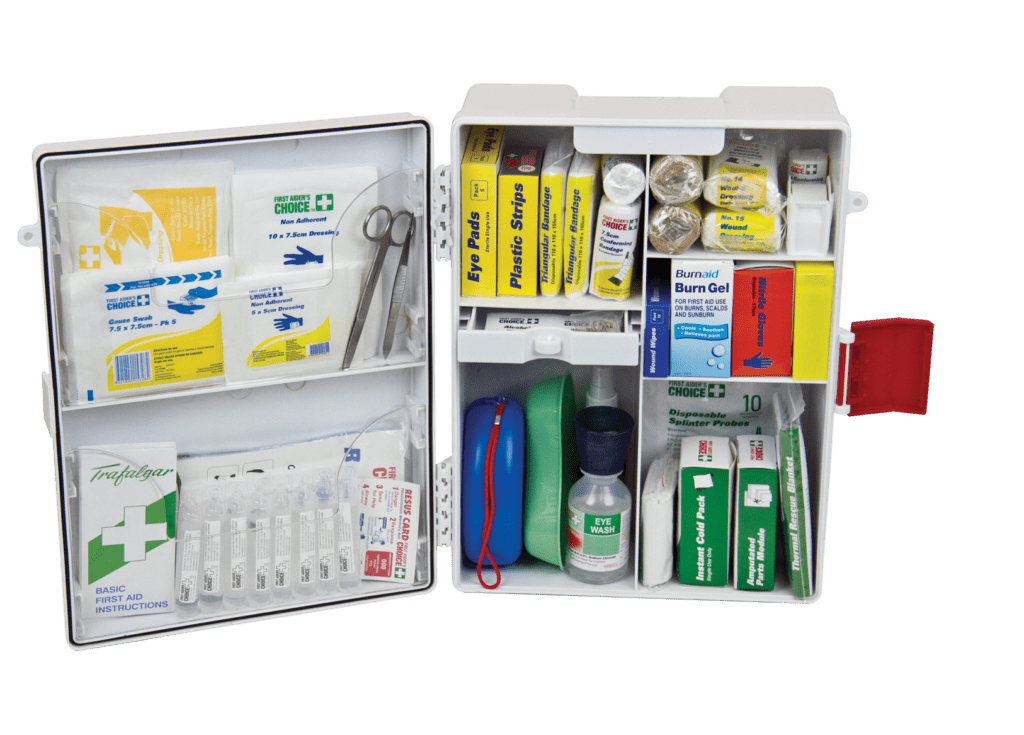
Ideally, each first aid kit should contain items that can be used for the following types of injuries:
• Scratches, cuts, punctures, grazes
• Muscular strain or sprain
• Burns
• Amputations or major wounds
• Broken bones
• Eye injuries
• Shock
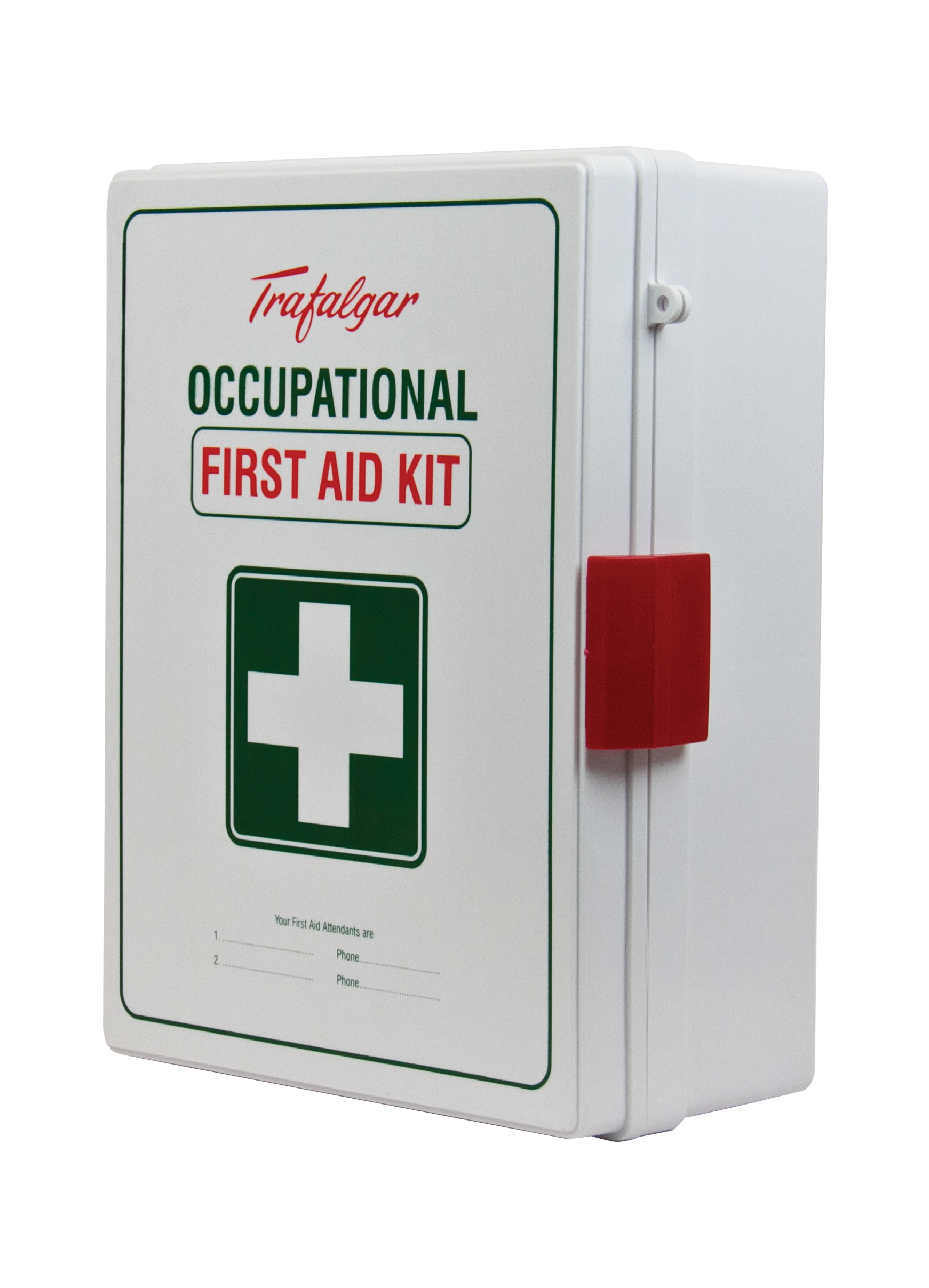
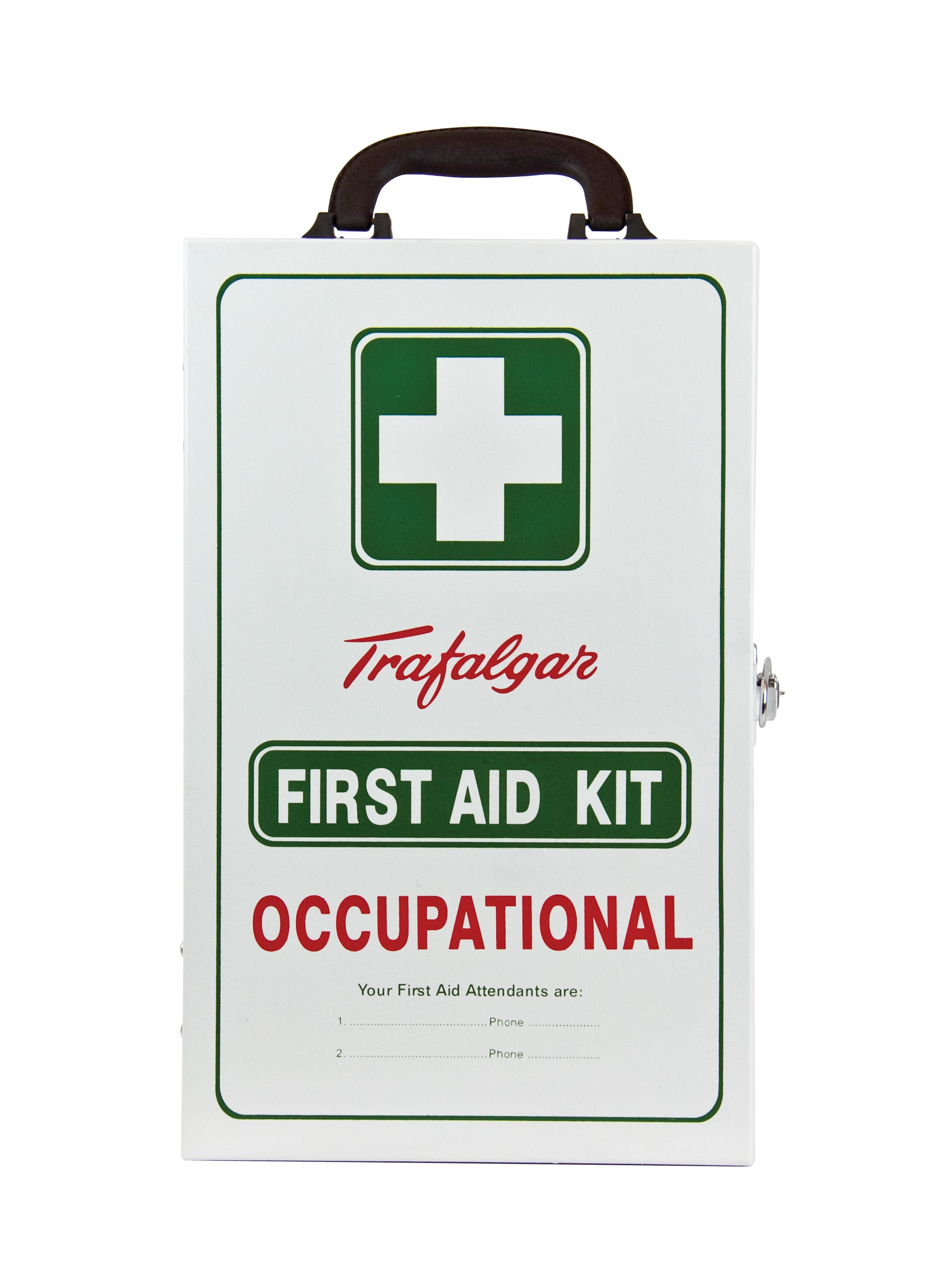
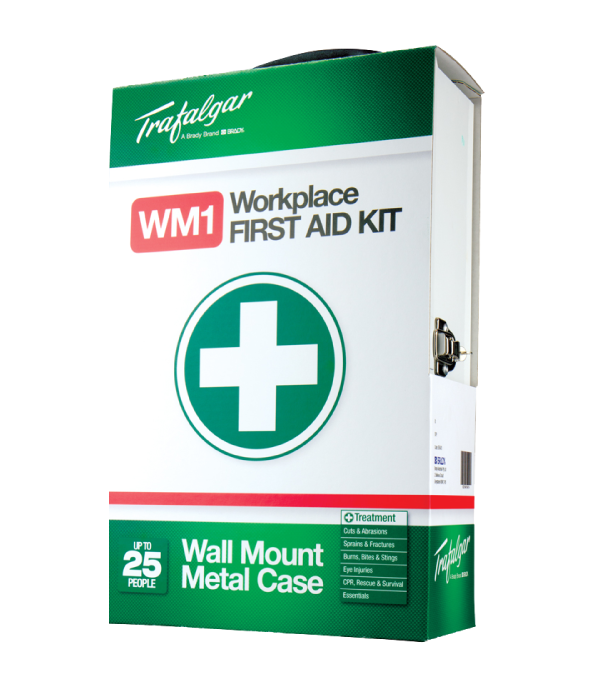
First aid kits need to be accessible. They must contain all the necessary first aid items identified during the assessment. They should be easily identifiable. Employees must know where they are located. This can be done with the placement of a white cross on a green background prominently displayed on the outside of the kit. There should be a list of the contents of the kit inside as well.
First aid workers
All personnel authorised to administer first aid need to be formally trained. Each one should be certified by a nationally recognised, registered training organisation.
However, some workplaces may need first aiders with advanced or more specific first aid training. This depends on the business activities and operations of an enterprise, of course. Moreover, first aiders must undergo periodic training and skills enhancement. Regular training ensures they remain updated with current standards and practices.
Generally speaking, there should be one first aider for:
* Every 50 workers in low-risk workplaces
* Every 25 workers in high-risk workplaces
* Every 10 workers in remote, high-risk workplaces
First aid kit location
As mentioned earlier, the location of each first aid kit must be strategic as accessibility is crucial. First aid kits must be placed near areas where there is a higher likelihood of injury or illness occurring. For example, businesses housed in multi-storey buildings must have at least one kit on every second floor. Moreover, first aid supplies need to be replenished once used. This ensures that each first aid kit remains complete.
Copies of emergency floor plans should be prominently displayed in the workplace. These must include information on the location of all first aid kits.
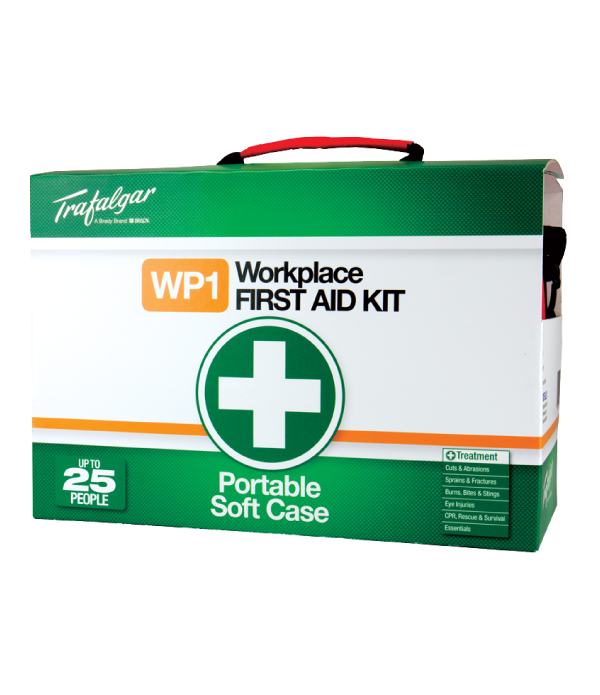
Mobile workers must have portable first aid kits in their vehicles as well. Each kit should be kept in a safe, secure compartment inside the vehicle. Doing so prevents the kit from posing a projectile risk in the case of an accident.
Worker safety remains a priority
All employees have the right to work in safe establishments. This is why there are set regulations imposed by WHS based on the SWA framework.
However, it's not just all about complying with WHS laws and rules. Employers must also realise the benefits of showing concern for their workers.
Moreover, employers who prioritise the safety of their workers are better able to keep their talent. They also cultivate loyalty among their employees. After all, what is a company without its people?
Employees who feel secure and safe are happy employees. This ultimately translates into efficiency and more productivity for the company.
Compliant Workplace First Aid Kits
Code-of-Practice-aligned workplace kits, wall-mount cabinets, and portable cases for every Australian work site.