

When you have kids, minor accidents are an unfortunate fact of life. So it’s totally natural for you as a parent to have some basic first aid knowledge.

But many of us don’t think what would happen if our child was the one who needed to give first aid or how they could help themselves in an emergency situation.
You may be wondering, how do you teach a child first aid? We’re here to answer that question and more in our tips to teach your child first aid. Once you’ve read them, you’ll be ready to pass them on to your child…and make them feel like a superhero in the making!
1. Teach them how to call for an ambulance
The first lesson when you teach a child first aid should be how to call for an ambulance.
As soon as they can recognise numbers, get them to memorise Australia’s main emergency number — triple zero (000) — and recognise the keys on your phone.
You can also practise the type of conversations they might need to have with the call operator. For this, they’ll need to be prepared with information such as:
- Your address, if the emergency happens at home, or current location
- Any existing medical conditions the injured person may have
- A simple description of the problem — for example, “Mummy has fallen down and hurt her head”
If you have a chronic condition or take medication on a regular basis, you could stick a list with the details somewhere obvious like the fridge door. That way your child can direct paramedics to vital information.
When teaching your child to call emergency services, you should also make sure they understand never to make prank calls.
2. What to do in the event of fire and burns
Firstly, teach your child what to do if their clothes catch fire.
Stop, drop and roll is an easy sequence that they can learn during role play. So if their clothes catch fire, they should immediately stop what they are doing, drop to the ground, put their hands over their face and roll around to extinguish the flames.
If they or another person is burned, tell them to move away from the source of the burn and cool the burn down with cool or tepid running water for 20 minutes.
3. How to treat bleeding
Teach your child what to do to treat bleeding. This is one of those first aid role play scenarios that they will love acting out.
Using a teddy or doll, show them how to apply pressure to the site of the wound with a dressing from your first aid kit. Tell them they should do this until the bleeding stops.
Then they can put a clean pad on the wound and use bandages to secure it in place. You can tell them that if the bleeding continues through the dressings, they should continue to apply pressure.
4. What to do if someone chokes
You can teach children of any age that if someone is choking but is able to speak, they can encourage them to cough to clear the blockage.
Older children can learn what to do in the event of severe choking. They will need to give back blows or abdominal thrusts in this case.
Note that abdominal thrusts should not be given to pregnant women or children under one year of age.
It’s best to do this on a first aid course. It’s something you can do with an older child so that you are both confident about what to do in an emergency. You can find out where to learn first aid on the healthdirect website here.
5. Getting to know your first aid kit
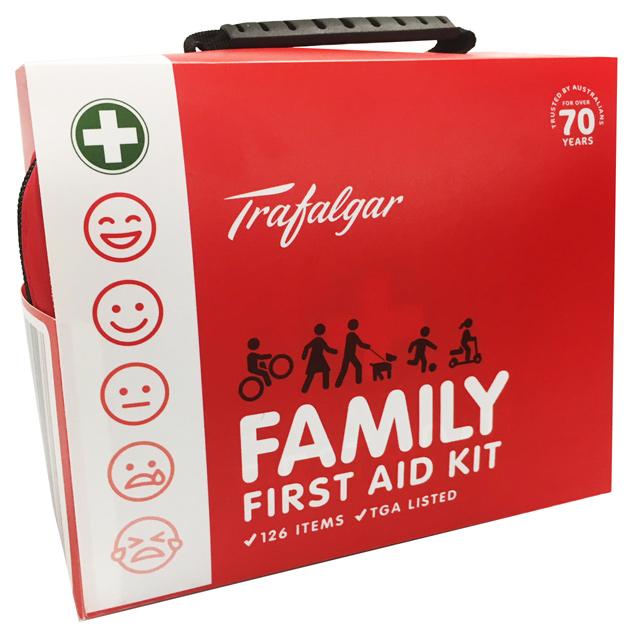
A first aid kit is an essential addition to your home.
Keep your family first aid kit somewhere accessible so that your child can reach it easily in an emergency.
Talk them through the contents and help them to practise using each item. Get them interested by doing first aid kit role play — they’ll love bandaging their toys and helping to make them well again!
Finally, make sure that your first aid kit is fully stocked with supplies. You can give your child the task of checking your kit once a month and helping you order anything you need.
It’s a question of confidence
Whatever the first aid emergency, your child should know how to call for help. That’s why the first step — knowing how to call triple zero and what to say — is so important.
And you can build on their confidence by using role play to practise first aid scenarios using items from your first aid kit.
Take a look at the MediBC range to find the perfect first aid kit for your family’s needs. You’ll also find first aid supplies to keep your kit fully stocked with everything you need.
We offer an ever-growing range of health and safety products, which are delivered quickly to your door, and we offer great customer service too! Trust us for all your first aid and safety supplies to give peace of mind to you and your child.
Teaching Kids First Aid: The Right Tools
Pocket CPR shields, easy guides, family kits, and kid-sized waterproof kits for teaching first aid at home.