


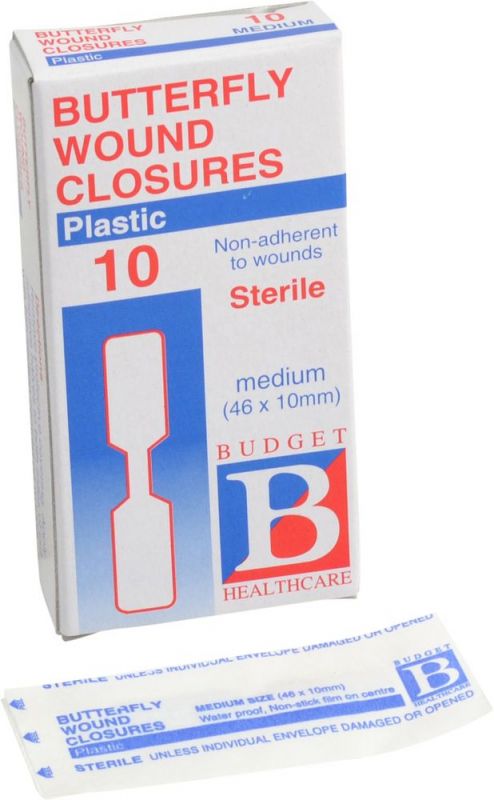
Butterfly Wound Closures (10) 10 x 46mm
Fabric Dressings | Plastic Plasters
$9.97
Secure checkout
VISA
Mastercard
Apple Pay
Google Pay
Also accepted
AMEX
Afterpay
Zip
Klarna
PayPal
In stock
Only 998 left
SKU
20100
Butterfly wound closures, 10 x 46mm, pack of 10. Adhesive skin closures that pull the edges of a small cut together without stitches, anaesthetic or needle marks.
How butterfly closures work
Each strip has a narrow bridge between two adhesive ends. You anchor one side clear of the wound, draw the edges together, then anchor the other. The bridge holds the tension across the gap while the skin heals, and the rounded ends resist lifting and curling so they stay put longer than a plain strip.
For a clean, shallow, straight cut with edges that meet easily, that is often all that is needed, and it avoids the anaesthetic and the puncture marks that come with suturing.
When a cut needs stitches instead of closures
This is the important part. Get medical assessment rather than closing it yourself if the wound:
- gapes open, or the edges will not meet with gentle pressure
- is deep enough to show fat, muscle or bone
- is bleeding heavily or spurting
- is on the face, a joint, the hand or over a crease that moves
- was caused by a bite, a dirty or rusty object, or has anything embedded in it
- is in someone with diabetes, poor circulation or a weakened immune system
Closing a contaminated wound traps the contamination inside it. Never apply closures over a wound containing dirt, grit or glass, or one from an animal or human bite. Those need cleaning and assessment. Check tetanus status for any dirty or puncture wound.
Applying butterfly closures
Clean and dry the skin thoroughly, because adhesive will not hold on damp or greasy skin. Start in the middle of the cut, anchor one side, draw the edges together without overlapping them, and press the other side down. Space the remaining strips along the wound with small gaps between, which lets any fluid escape rather than building up underneath.
Keep them dry, leave them in place as directed, and let them lift on their own rather than pulling them off. Browse first aid supplies, or keep them with your first aid kit.
Specifications
| Type | Adhesive butterfly wound closures |
| Size | 10 x 46mm |
| Pack | 10 closures |
| Design | Rounded ends resist lifting and curling |
| Suits | Minor incisions and shallow skin lacerations with edges that meet |
| Anaesthetic | Not required |
Butterfly wound closure FAQs
What are butterfly closures used for?
Holding the edges of small, shallow, clean cuts together while they heal, as an alternative to stitches. They need no anaesthetic and leave no needle puncture marks.
When does a cut need stitches instead?
If it gapes, is deep enough to show fat or muscle, bleeds heavily, sits on the face, a hand or a moving joint, or came from a bite or a dirty object. Also if the person has diabetes or poor circulation. Get it assessed rather than closing it.
How do I apply them?
Clean and fully dry the skin, start at the middle of the cut, anchor one side, draw the edges together without overlapping, then press the other side down. Space further strips with small gaps so fluid can escape.
How long do they stay on?
Leave them as directed and let them lift naturally rather than pulling them off early, which can reopen the wound. Keep them dry; wet adhesive lets go.
Can I use them on a dirty wound?
No. Closing a wound over dirt, grit or glass seals the contamination inside and invites infection. Clean it properly first, and get assessment if anything is embedded or the wound came from a bite.
Will they leave a scar?
Any wound through the skin can scar. Closures avoid the puncture marks stitches leave, and keeping the edges neatly aligned and not picking at the healing wound gives the best result available.
Seek medical attention for deep, gaping, heavily bleeding, dirty or bite wounds, for wounds on the face or joints, and for any sign of infection. Check tetanus status after a dirty or puncture wound. This information is a general guide and is not medical advice.
Frequently bought together
You may also need