


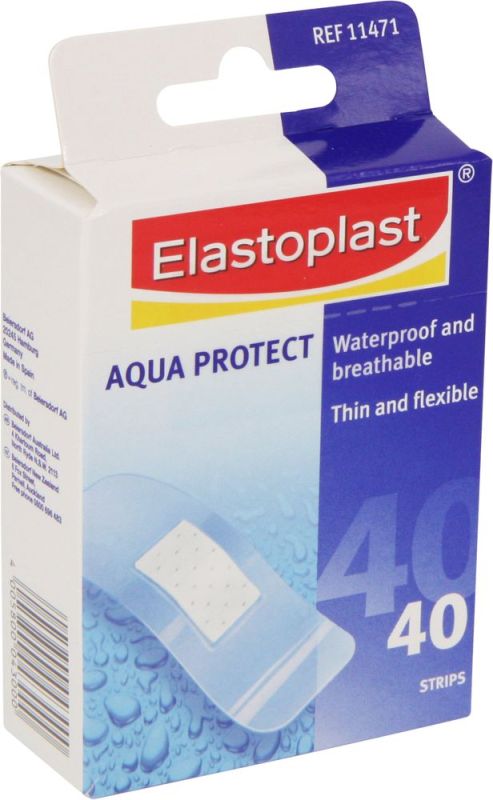
Elastoplast Waterproof Strips (40) Aqua Protect
Miscellaneous
$9.30
Secure checkout
VISA
Mastercard
Apple Pay
Google Pay
Also accepted
AMEX
Afterpay
Zip
Klarna
PayPal
In stock
Only 1000 left
SKU
99813
Elastoplast waterproof strips from the Aqua Protect range are thin, flexible plasters that keep water, dirt and germs out while still letting the skin breathe. The secret is a microporous film: it contains tiny channels that let air through but not liquid, so the strip stays waterproof without needing holes in the film. Each strip has an "island" pad - a non-adherent, absorbent pad surrounded by a wide band of adhesive that seals the wound edges. The pack holds 40 individually wrapped, sterile strips (Beiersdorf reference 11471).
Key features
- Waterproof and breathable microporous film
- Thin and flexible, so it moves with the skin
- Non-adherent island pad that will not stick to the wound
- Wide adhesive border seals out dirt and water
- Individually wrapped and sterile
- Pack of 40 strips
Specifications
| Brand | Elastoplast (Beiersdorf) |
| Range | Aqua Protect |
| Reference | REF 11471 |
| Film | Microporous - waterproof, breathable |
| Pad | Absorbent, non-adherent island pad |
| Pack | 40 strips, individually wrapped and sterile |
Why choose Elastoplast waterproof strips?
A fabric plaster soaks up water the moment you wash your hands, and a wet plaster lets dirt in and peels away. Elastoplast waterproof strips solve that for the cuts that happen in kitchens, workshops, pools and showers - the strip stays sealed through hand washing and swimming, so the wound underneath stays clean. Because the film breathes, the skin under it does not turn soggy and white the way it can under a fully sealed plastic dressing.
Getting a waterproof seal
A waterproof plaster only seals if it goes onto clean, dry skin. Clean the wound, pat the surrounding skin completely dry, then peel the backing and place the pad over the wound without touching it. Press the adhesive border down all the way around, smoothing from the centre outwards so no channels are left for water to creep in. Change the strip if it lifts at the edges, becomes dirty, or the pad is saturated. For a cut that keeps bleeding, is deep or gaping, or shows signs of infection, seek medical advice rather than relying on a plaster.
Choosing the right plaster
Not every wound suits a waterproof strip. Fabric strips flex well on knuckles and joints but soak up water; waterproof strips like these are the better choice wherever hands get wet or a wound needs protecting while you swim or shower. For a graze or cut too large for a strip's pad, use a sterile dressing pad and tape or a bandage instead. Whatever you choose, the wound underneath must be clean before it is covered - a waterproof seal over a dirty wound keeps the dirt in as well as the water out. Keeping a box of 40 means there is always a spare strip for the change the next day.
Common uses
Everyday cuts and grazes on hands and fingers, food handling and kitchen work, swimming and water sports, and workplace first aid kits. Clean the wound first with chlorhexidine irrigation solution or saline, keep sterile gauze squares for larger wounds, and browse all first aid supplies.
Elastoplast Waterproof Strips FAQs
Are these strips really waterproof?
Yes. The microporous film keeps liquid out while allowing air through, so the strip stays sealed through hand washing and swimming when applied to clean, dry skin.
Will the pad stick to my wound?
No - the island pad is non-adherent, so it lifts away from the wound when you change the strip.
How many strips are in the pack?
40 strips, each individually wrapped and sterile.
Why does my waterproof plaster lift in water?
Usually because it was applied to damp or oily skin. Dry the skin thoroughly and press the border down all the way around.
Can the skin breathe under the strip?
Yes. The film is breathable, which helps stop the skin under it becoming soggy.
| Brand | Elastoplast |
|---|