

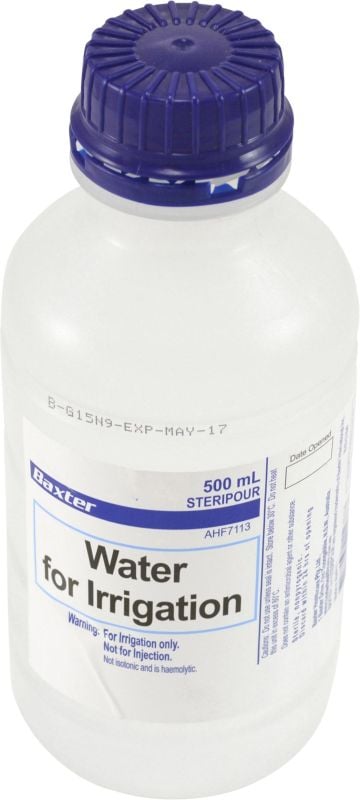
Water for Irrigation 500ml
Miscellaneous
$9.97
Secure checkout
VISA
Mastercard
Apple Pay
Google Pay
Also accepted
AMEX
Afterpay
Zip
Klarna
PayPal
In stock
Only 1000 left
SKU
99529
Water for irrigation, 500ml. Sterile water for flushing wounds and eyes, in a bottle big enough to do the job properly rather than a token rinse.
Why 500ml is the size that matters
Irrigation works by volume and by flow. A 30ml squeeze bottle is right for a speck of grit; it is nowhere near enough for a contaminated wound or a chemical splash, where the answer is sustained flushing for many minutes. A 500ml bottle is one you can keep running.
Keep the small ones for convenience and at least one large bottle for the case that actually needs it. Browse first aid supplies to stock both, or see the 30ml sterile saline for the compact size.
Irrigation water or saline?
| Sterile water | Sterile saline | |
|---|---|---|
| Wound irrigation | Suitable, widely used | Suitable |
| Eye irrigation | Usable, may sting slightly more | Better tolerated, matched to the body |
| Why | No dissolved salts | Isotonic, matches the body’s own concentration |
In practice, for a serious splash the fluid you have to hand beats the ideal fluid you have to go and find.
A chemical splash to the eye needs continuous irrigation, commonly 15 to 20 minutes, and urgent medical attention. Start flushing immediately with whatever clean fluid is available, keep going, and get help on the way. Tilt the head so the affected eye is lower than the other and flush from the inner corner outward, so contaminated fluid does not cross the good eye. Never try to remove anything embedded in the eye.
Using irrigation water on a wound
Irrigate to lift loose dirt and debris away from the surface, then dry the surrounding skin and dress the wound. Irrigation does not remove embedded material, and a wound containing grit, glass or anything you cannot see the bottom of needs assessment rather than more flushing.
Specifications
| Contents | Sterile water for irrigation |
| Volume | 500ml |
| Use | Wound and eye irrigation |
| Sterility | Sterile until opened, single use |
| Suits | First aid rooms, workshops, laboratories, site kits |
Water for irrigation FAQs
What is water for irrigation used for?
Flushing wounds and eyes to remove loose dirt, dust, grit and chemical contamination. The 500ml size suits sustained flushing rather than a quick rinse.
Is it the same as saline?
No. Saline contains dissolved salts at roughly the body’s own concentration and is generally better tolerated in the eye. Sterile water has no salts and is widely used for wound irrigation. For an urgent splash, use whichever you can reach first.
How long should I flush a chemical splash?
Commonly 15 to 20 minutes of continuous irrigation, and get urgent medical help. One bottle will not cover that, so start with what you have and keep more fluid or a running supply going.
Can I keep a bottle after opening it?
No. It is sterile until opened and intended for single use. Discard the remainder and replace it in the kit so the next person opens something sterile.
Which way do I tilt the head for an eye flush?
So the affected eye sits lower than the other, and flush from the inner corner outward. That keeps contaminated fluid from running across the unaffected eye.
Will irrigation remove grit stuck in a wound?
It lifts loose material only. Anything embedded, including glass you cannot see the end of, needs medical assessment. Repeated flushing or picking at it pushes debris deeper.
Seek urgent medical attention for chemical splashes to the eye, penetrating injuries and embedded foreign bodies. This information is a general guide and is not medical advice.
Frequently bought together