

Reviewed by the Medibc First Aid Team — last updated May 2026.
Out-of-hospital cardiac arrest survival drops 10% for every minute without CPR. The Australian Resuscitation Council (ARC) reports that fewer than 1 in 10 Australians survive a cardiac arrest outside hospital - but the survival rate doubles or triples when bystanders start CPR within the first 2 minutes. Australian workplaces and homes need not just trained first aiders, but the right resuscitation EQUIPMENT to convert CPR theory into practice during real emergencies.
Why resuscitation equipment matters
The 10% rule
Out-of-hospital cardiac arrest survival drops approximately 10% for every minute of delay in starting CPR. With Australian ambulance response times averaging 6-9 minutes in metropolitan areas (longer in regional), the first 5 minutes of bystander CPR are the single biggest factor in survival.
Bystander CPR doubles survival
ARC data shows survival from witnessed cardiac arrest rises from ~8% (no bystander CPR) to ~17% (bystander CPR started) and ~30% when an AED is used within 5 minutes. Equipment that supports bystander CPR - pocket masks, instruction cards, posters - directly saves lives.
Workplace WHS context
Under the Safe Work Australia first aid code of practice, workplaces with 100+ workers in high-risk industries OR 200+ in low-risk industries must provide resuscitation equipment beyond a basic first aid kit - typically a BVM and AED.
The DRSABCD action plan
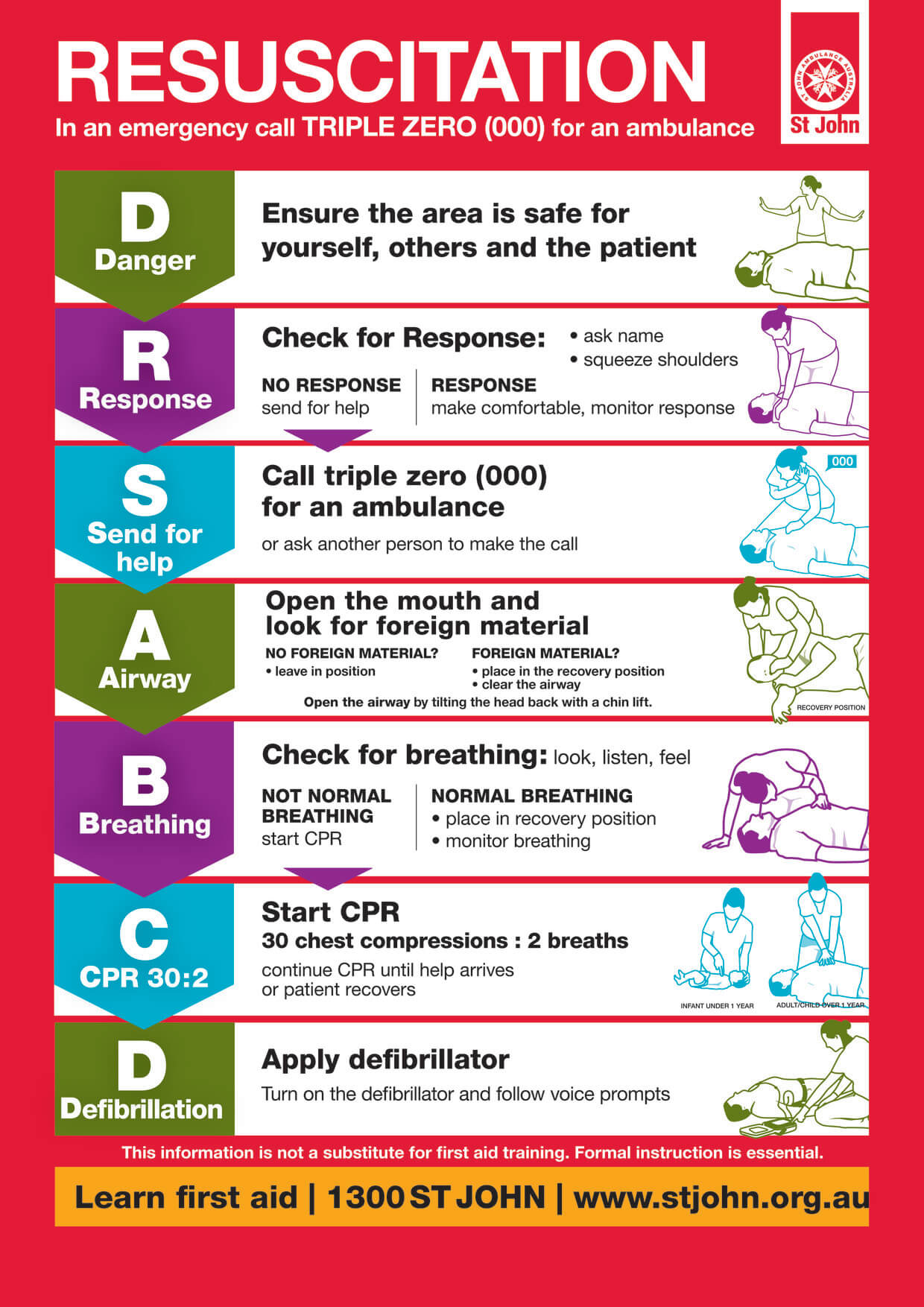
Every Australian first aid responder should know the DRSABCD sequence from the DRSABCD action plan:
- D - Danger: Make the scene safe.
- R - Response: Check responsiveness.
- S - Send for help: Call 000.
- A - Airway: Clear and open the airway.
- B - Breathing: Look, listen and feel.
- C - CPR: 30 compressions, 2 breaths.
- D - Defibrillation: Apply AED as soon as available.
Pocket masks for single-rescuer CPR
What a pocket mask does
A pocket mask is a small soft silicone or PVC mask with a one-way valve that lets a rescuer give mouth-to-mask rescue breaths without direct contact. The one-way valve prevents the rescuer breathing in the casualty’s exhaled air or potentially infectious body fluids. A flatter, single-use alternative is a disposable CPR face shield.
When to use
- Single-rescuer scenarios.
- Bystander CPR with strangers (infection control).
- Workplace first aid stations without trained BVM operators.
- Travel first aid kits.
- Lifeguard equipment.
How to use a pocket mask
- Position the casualty supine with head tilted back, chin lifted.
- Apply the mask over the casualty’s nose and mouth, narrow end at the bridge of the nose.
- Seal the mask with both hands - thumbs over the mask, fingers under the jaw lifting upward.
- Give 2 slow rescue breaths (1 second each) watching for chest rise.
- Return to chest compressions: 30 compressions to 2 breaths ratio.
Bag valve mask (BVM) for trained operators
What a BVM does
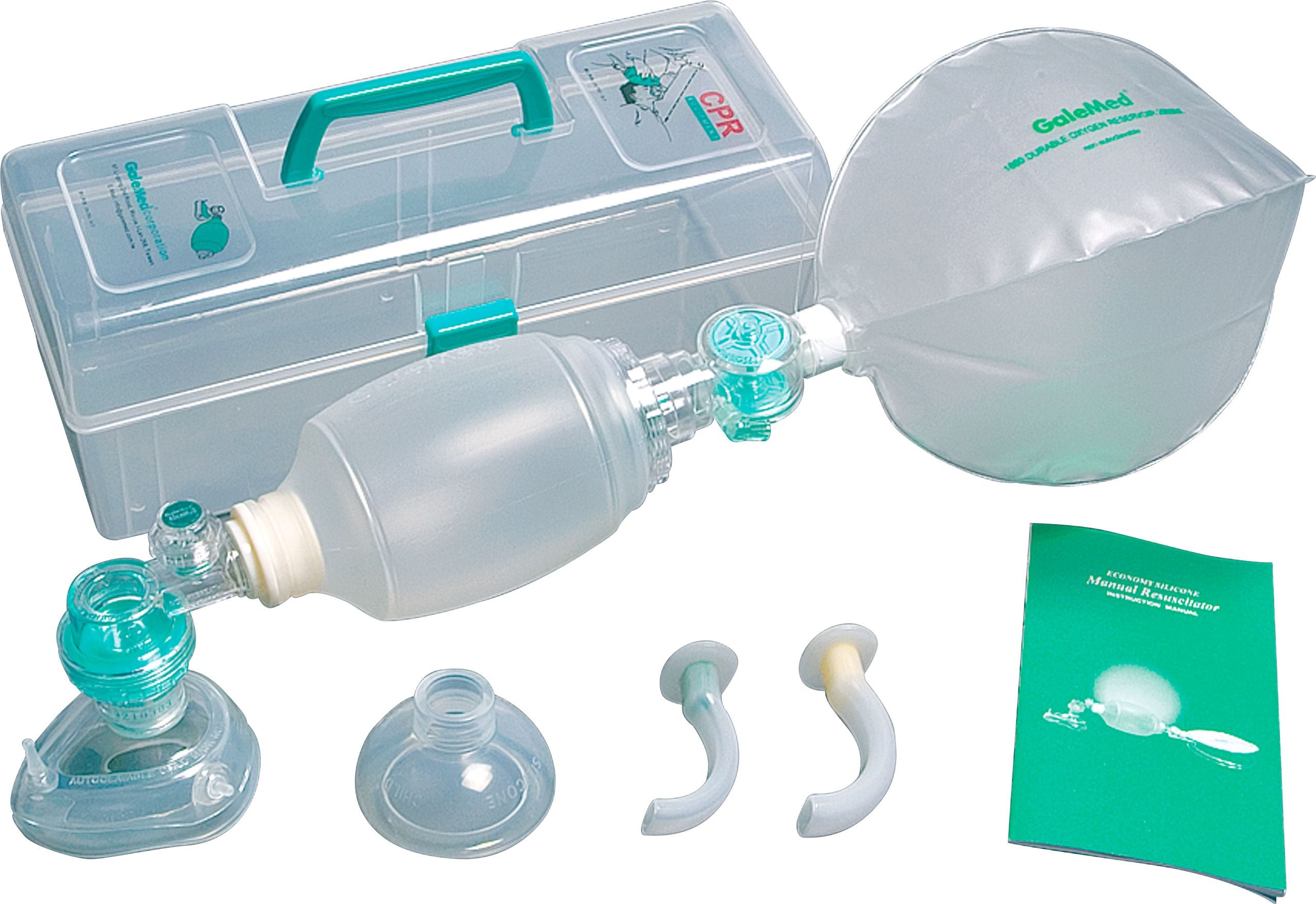
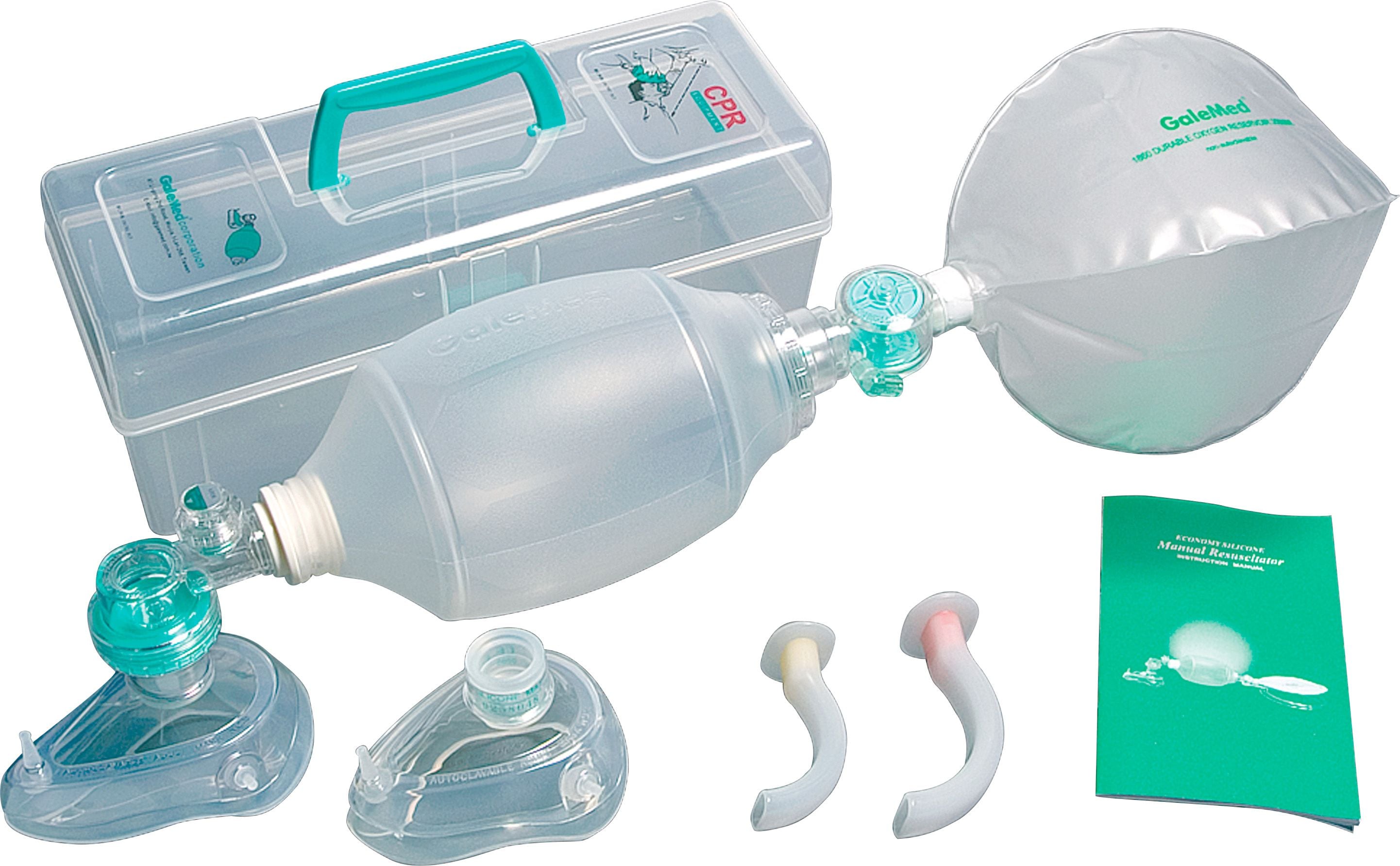
A bag valve mask is a self-inflating bag attached to a mask, allowing controlled ventilation. Squeezing the bag forces air (or supplemental oxygen if connected) into the casualty’s lungs. BVMs are clinical and ambulance standard equipment requiring training in correct technique.
Adult vs paediatric BVMs
Bag volume and mask size differ:
- Adult BVM - 1.5-2 litre self-inflating bag, adult mask. Stock at least 2 spare masks and 2 airways. Browse adult BVM set.
- Paediatric/child BVM - 500-700ml bag, child mask. Essential for workplaces, schools and clinical settings with paediatric exposure. Browse child BVM set.
BVM common errors
- Squeezing too hard or too fast - causes gastric inflation and reduces lung delivery.
- Incorrect mask seal - air leaks around the mask reduce effective tidal volume.
- Wrong-size mask - too small leaks at the cheeks, too large overlaps the eyes.
- Forgetting to attach oxygen line in resuscitation when available.
BVM use requires hands-on training - typically a half-day workshop covering technique, two-person operation and troubleshooting.
CPR reference materials
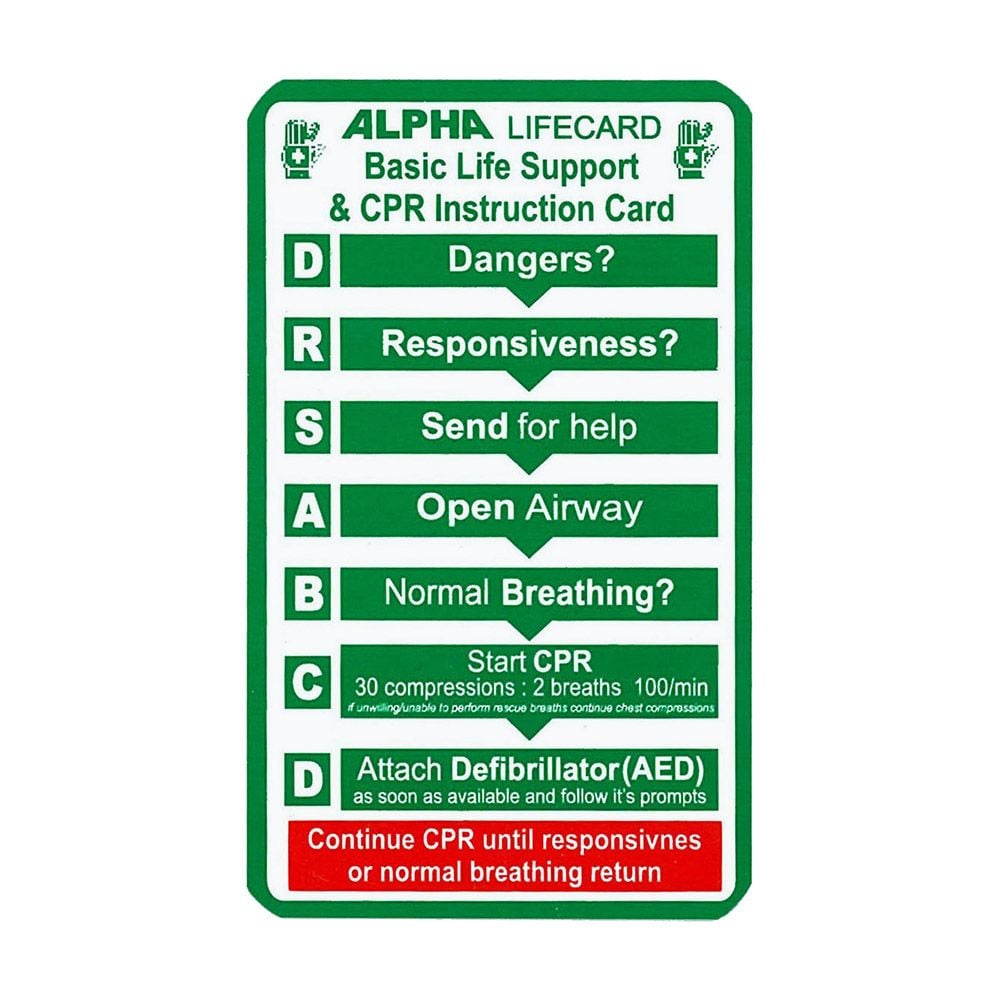
Instruction cards for first aiders
A pocket-sized Basic Life Support CPR instruction card in every first aider’s wallet or workplace ID lanyard provides step-by-step prompts during a real emergency. Under stress, even trained first aiders sometimes blank on the sequence - the card gives immediate visual reference. ARC-compliant cards include the current 100-120/min compression rate, 5-6cm depth, and AED prompts.
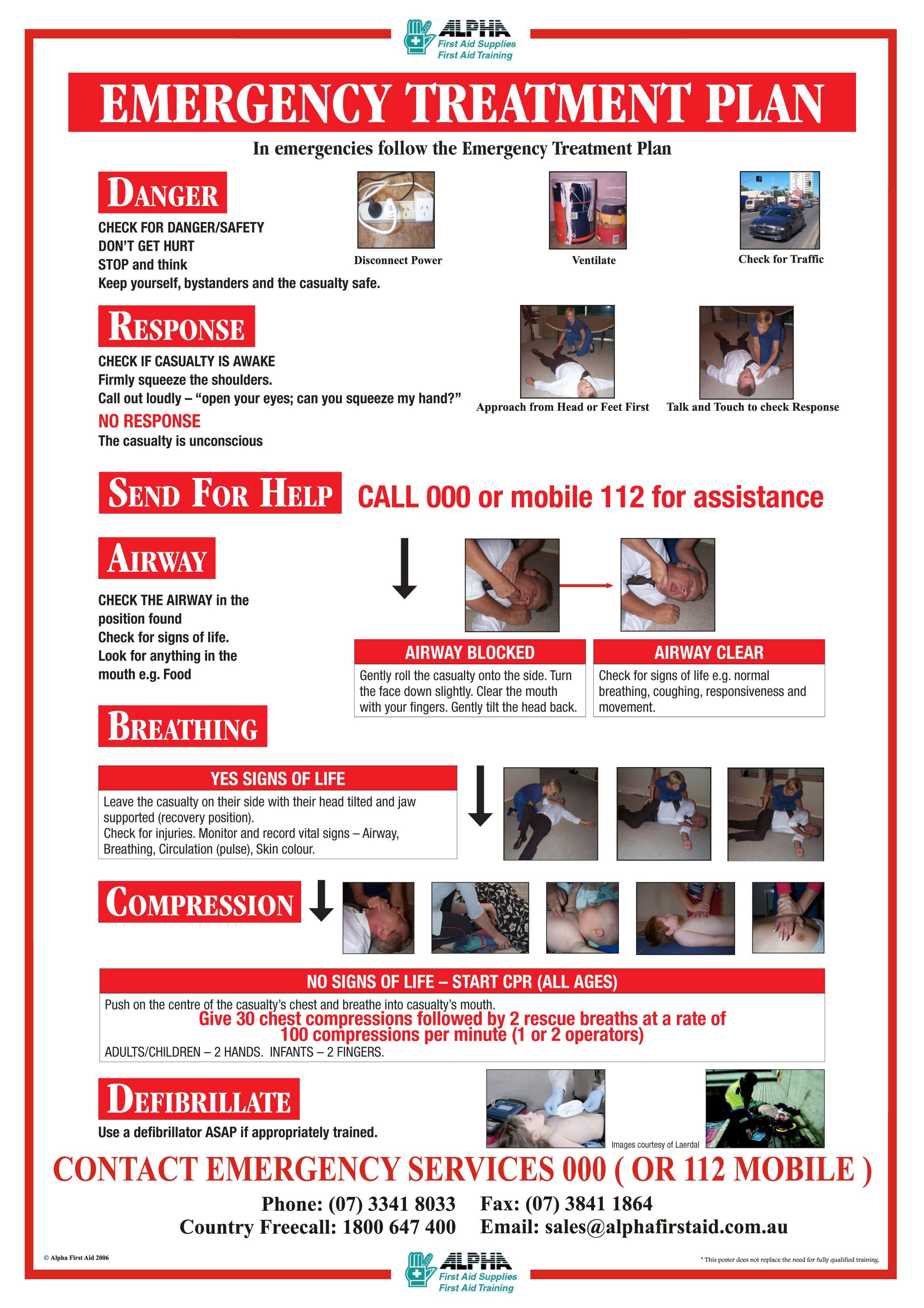
Workplace emergency posters
Laminated A3 emergency response posters at every workplace first aid station show the full DRSABCD algorithm at-a-glance. Place at:
- First aid room entry.
- Kitchen and break-room.
- Reception.
- Vehicle bays.
- Production floor near AED.
Browse our CPR guide poster for the standard Australian workplace format.
Reference books for training rooms
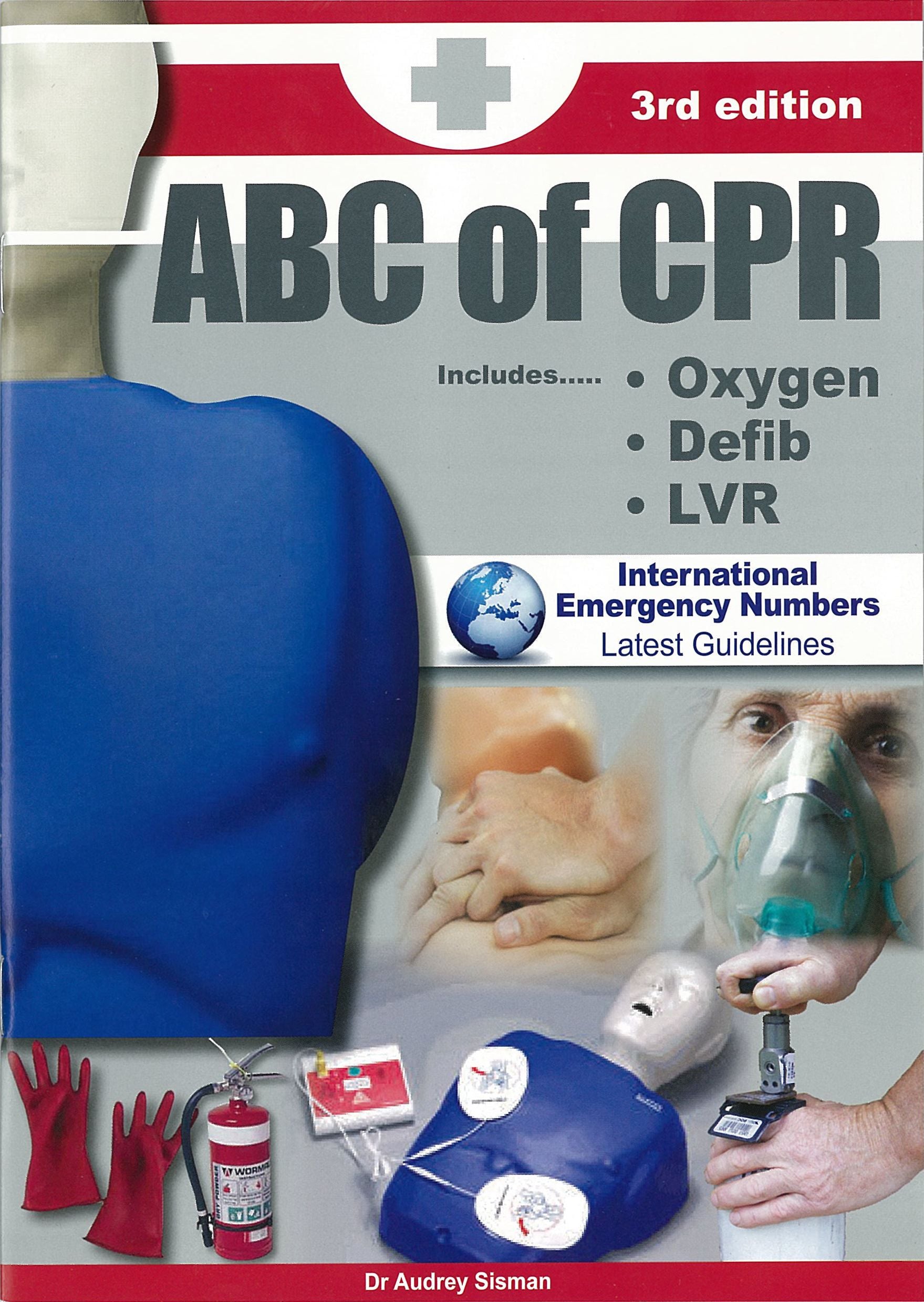
The ABC of CPR book is the comprehensive Australian reference covering CPR technique, AED use, AART (Australian Apparent Recovery Technique), low-voltage electrical rescue, and resuscitation for special populations. Suitable for workplace training rooms and clinical settings.
Wall-mount CPR signage
Why visible CPR signage matters
Polypropylene wall signs at every first aid station give bystanders the visual cue: ‘CPR equipment available here’. Combined with AED location signage, this prompts faster response in real emergencies. Australian workplace signage standards (AS 1319) cover sign size, colour and pictogram requirements.
Pairing with AEDs (defibrillators)
CPR alone keeps oxygenated blood circulating - it’s the AED that restarts the heart. ARC recommends every workplace with first aid responsibility have AED access within 3-5 minutes. The combination of bystander CPR + early defibrillation gives the best chance of survival.
AED placement
- Visible, signposted location.
- Within 3 minutes of any workplace area.
- At entrances to gymnasiums, recreation centres, schools.
- In aged care facilities, dialysis units, cardiac rehabilitation centres.
- Wall-mounted cabinet or display case with tamper alarm.
Building your CPR equipment kit
Small workplace (less than 50 staff, low risk)
- 1 pocket mask with one-way valve.
- 2 CPR instruction cards.
- 1 laminated DRSABCD poster.
- Basic first aid kit.
- AED if not within 3 minutes of nearest external AED.
Medium workplace (50-200 staff, low/medium risk)
- 2-3 pocket masks distributed at first aid stations.
- 1 BVM (if trained personnel available).
- 5 CPR instruction cards (1 per first aider).
- 2-3 emergency response posters.
- AED with monthly maintenance check.
- Workplace-grade first aid kit.
Large workplace (200+ staff, high-risk industry)
- Adult BVM (2 sets - one for first aid room, one mobile).
- Child BVM if work includes minors or has childcare.
- Multiple pocket masks at every workstation cluster.
- 10+ CPR instruction cards.
- 5+ wall-mount posters and signs.
- 2+ AEDs.
- Dedicated first aid room with full resuscitation kit.
Browse the complete oxygen and resuscitation equipment range for workplace kits.
Training requirements
HLTAID009 - Provide CPR
Half-day course covering basic CPR including chest compressions, rescue breathing, AED operation. Valid 12 months. Required for most first aid responder roles.
HLTAID011 - Provide First Aid
Full first aid course (1 day). Includes CPR plus comprehensive first aid management. Valid 3 years. Required for designated workplace first aiders.
HLTAID015 - Provide advanced resuscitation
Includes BVM technique, oxygen administration, advanced airway management. Valid 12 months. Required for industrial settings, mining, remote workplaces.
When to call 000
Call 000 immediately for:
- Unconscious adult or child.
- Sudden collapse with chest pain.
- Drowning casualty.
- Electric shock causing collapse.
- Severe allergic reaction (anaphylaxis).
- Suspected stroke (FAST positive).
- Any suspected cardiac arrest.
Then start CPR if the casualty is unresponsive and not breathing normally. Triple-zero call-takers will coach you through.
Frequently asked questions
What is the difference between a CPR pocket mask and a bag valve mask (BVM)?
A pocket mask is a small soft mask with a one-way valve that lets a single rescuer give rescue breaths mouth-to-mask without direct contact - portable, fits in a belt pouch, suits workplace first aid kits. A bag valve mask (BVM) is a larger self-inflating bag attached to a mask that allows controlled ventilation and oxygen delivery - clinical/ambulance grade, needs training. BVMs are required equipment in workplaces with full first aid rooms; pocket masks suit smaller workplaces.
How often should CPR-trained first aiders refresh?
The Australian Resuscitation Council (ARC) and HLTAID requirements specify that CPR certification (HLTAID009) is valid for 12 months and must be refreshed annually. Full Provide First Aid (HLTAID011) certification is valid for 3 years. Annual CPR refresher courses take half a day and cover the latest ARC guideline updates - including changes to compression depth, rate, and AED operation.
Is a BVM required in Australian workplaces?
BVMs are required for workplaces with dedicated first aid rooms or where staff are trained to use them - typically larger workplaces (200+ staff in low-risk, 100+ in high-risk industries) under the Safe Work Australia first aid code. Smaller workplaces use a pocket mask with one-way valve. The Australian Resuscitation Council recommends BVM use only by trained personnel - improper technique causes gastric inflation and reduces ventilation effectiveness.
Do I need a CPR poster in my workplace?
Australian workplace first aid stations should display the current ARC CPR algorithm poster (DRSABCD sequence) at every emergency response point - first aid room, kitchen, reception, vehicle bays. Laminated A3 posters are the standard - they survive workplace conditions and act as immediate reference during a real emergency. Update posters when ARC publishes new guidelines (typically every 5 years).
What should a first aid responder do if not trained in CPR?
Even untrained bystanders should call 000, start hands-only chest compressions (push hard and fast in the centre of the chest at 100-120 per minute), and get an AED if available. Triple-zero call-takers will coach you through the technique. Hands-only CPR DOUBLES survival from out-of-hospital cardiac arrest compared to doing nothing. ARC actively encourages bystander CPR even without formal training - any CPR is better than none.
Sources: Australian Resuscitation Council Guidelines, Safe Work Australia — First aid in the workplace, National Heart Foundation — CPR, St John Ambulance — CPR.