

Reviewed by the Medibc First Aid Team — last updated May 2026.
Wound care is the most-frequently-used skill from any first aid kit. The Australian Institute of Health and Welfare records that cuts, lacerations and abrasions account for over 100,000 emergency department presentations every year in Australia — with many more managed at home or in workplaces with a well-stocked first aid kit. Knowing which bandage, dressing or gauze swab to reach for makes the difference between a wound that heals cleanly and one that gets infected or scars.
Why wound care matters in first aid
Three jobs every wound dressing must do
According to healthdirect.gov.au, every well-applied wound dressing should: (1) stop bleeding by applying pressure, (2) protect the wound from contamination and trauma, and (3) create a moist healing environment that supports new tissue growth. Different bandages and dressings prioritise these jobs differently, which is why your first aid kit needs a mix. If a wound is bleeding heavily, start with our guide on how to stop bleeding quickly.
Workplace WHS context
Under the Safe Work Australia first aid code of practice, every Australian workplace must provide wound dressings appropriate to the workplace’s risks. Higher-risk industries (construction, manufacturing, hospitality) need larger and more varied dressings than low-risk offices.
Home + travel first aid
Family and travel first aid kits need a smaller but similar mix — cuts and abrasions are common with kids, cooking, gardening and active sport.
Bandages: which type for which job?
Triangular bandages
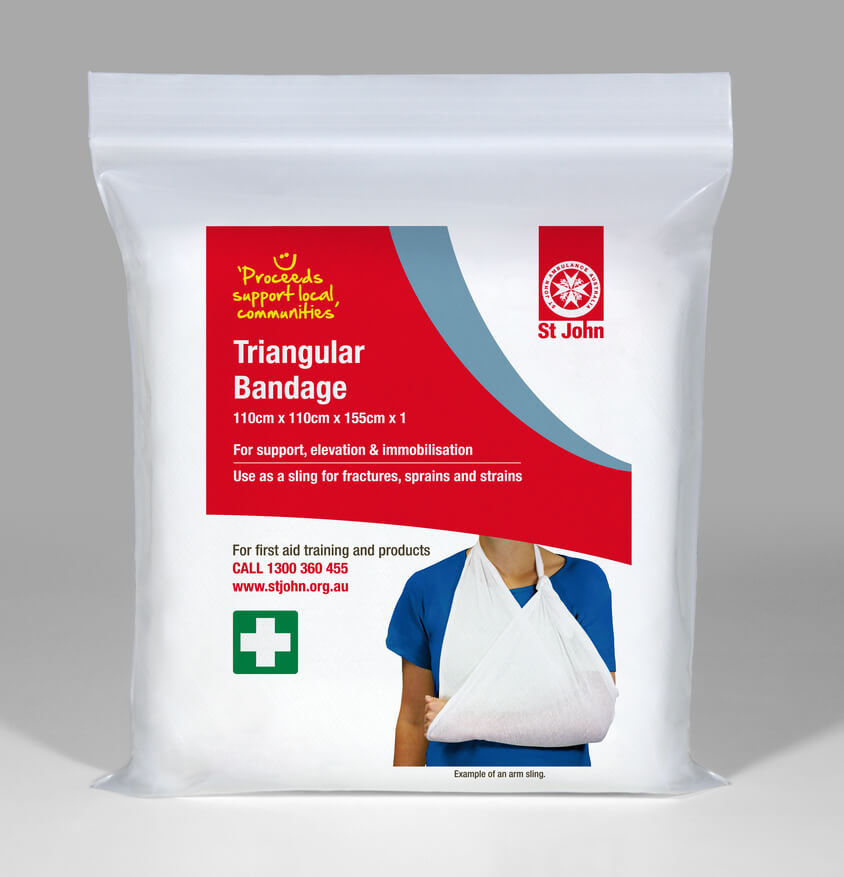
Triangular bandages are the most versatile single item in any first aid kit. Made from soft non-stretch cotton or polyester (110cm x 110cm folded triangle), they serve multiple roles:
- Arm sling for suspected fracture or dislocation.
- Broad fold bandage to immobilise a leg fracture against the unaffected leg.
- Pad and pressure bandage for severe bleeding.
- Head dressing for scalp wounds.
- Emergency tourniquet for life-threatening limb haemorrhage when nothing else is available.
Stock at least 2 triangular bandages per first aid kit. Browse bandages and crepe for the full range. For holding dressings on fingers or limbs, add a stretchy conforming gauze bandage in 2.5cm, 10cm or 15cm.
Crepe and heavy crepe bandages
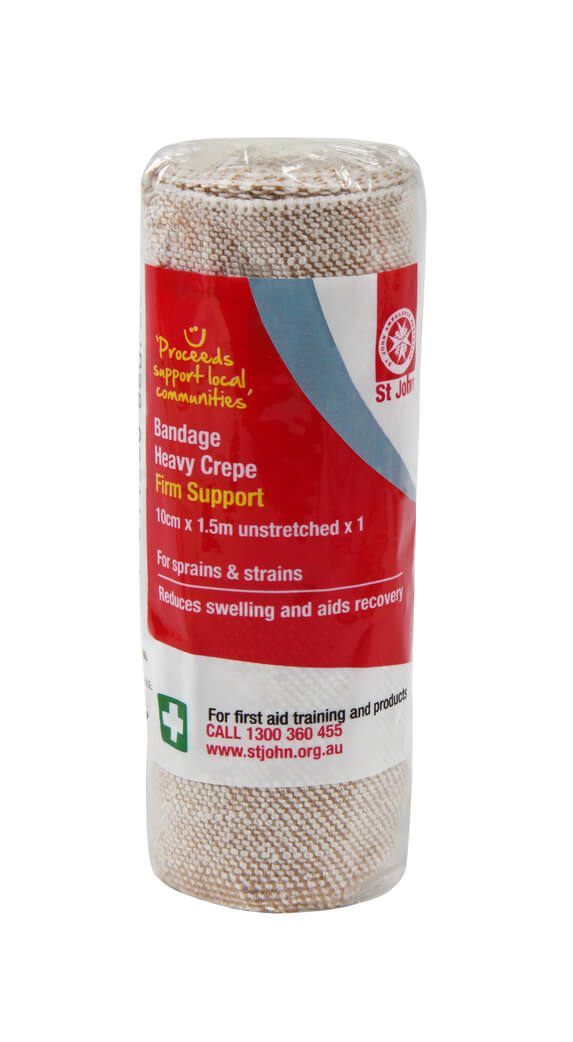
Crepe bandages are elastic woven bandages used for compression and support:
- Standard crepe (5cm-7.5cm) — light support for sprains and securing dressings.
- Heavy crepe (10cm x 1.5m) — firmer compression for ankle/knee sprains and securing larger dressings.
- Pressure immobilisation for snake/funnel-web bites (use broad heavy crepe per ANZBA/healthdirect guidelines).
Heavy crepe is the workhorse bandage in workplace and sports first aid kits.
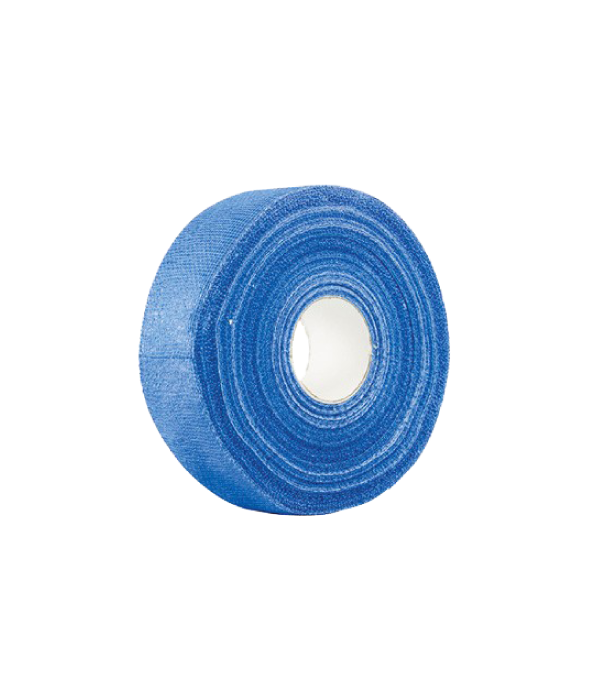
Cohesive bandages
Cohesive bandages stick to themselves but NOT to skin, hair, or clothing. The blue colour stands out for clinical and food-service settings. Uses:
- Securing dressings without tape (no skin irritation).
- Light support for joints during sports.
- Animal first aid (vet-style application).
- Padding bandage layers.
Dressings: when to use each type
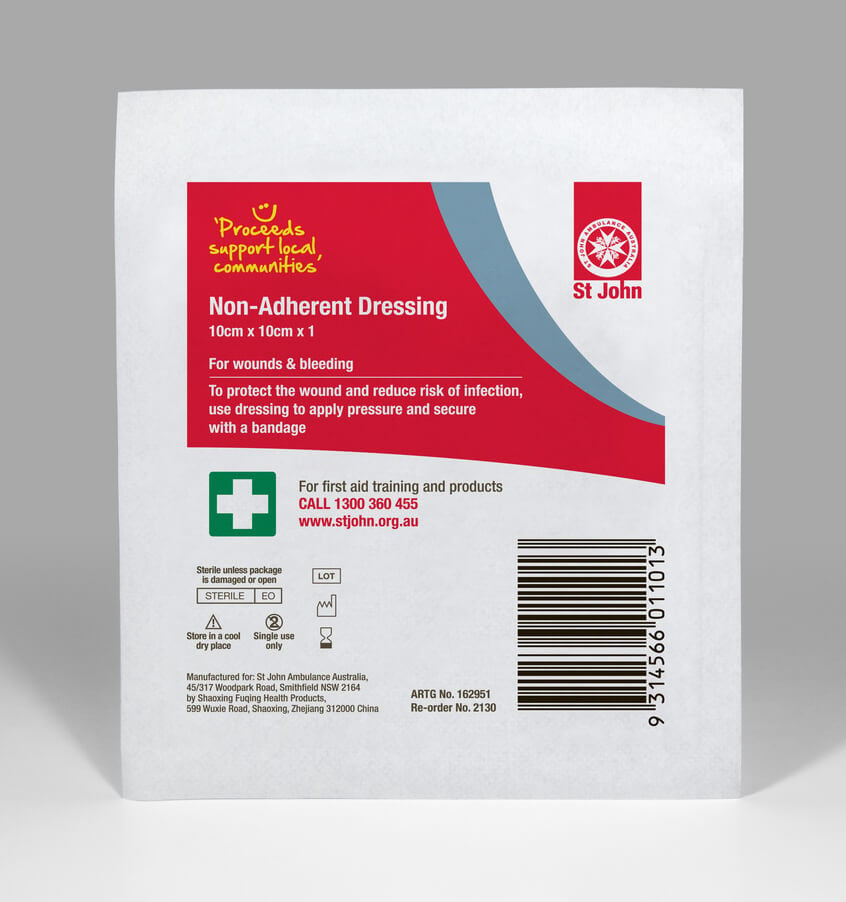
Non-adherent dressings
Non-adherent dressings (10cm x 10cm or 5cm x 5cm) have a smooth coating that prevents the dressing from sticking to a healing wound surface. Use them when:
- Wound is starting to heal and produces exudate.
- Removing standard gauze would pull off new tissue.
- Treating burns where dressings need painless changes.
- Paediatric wounds where minimising change-time pain matters.
Browse our full range of wound dressings.
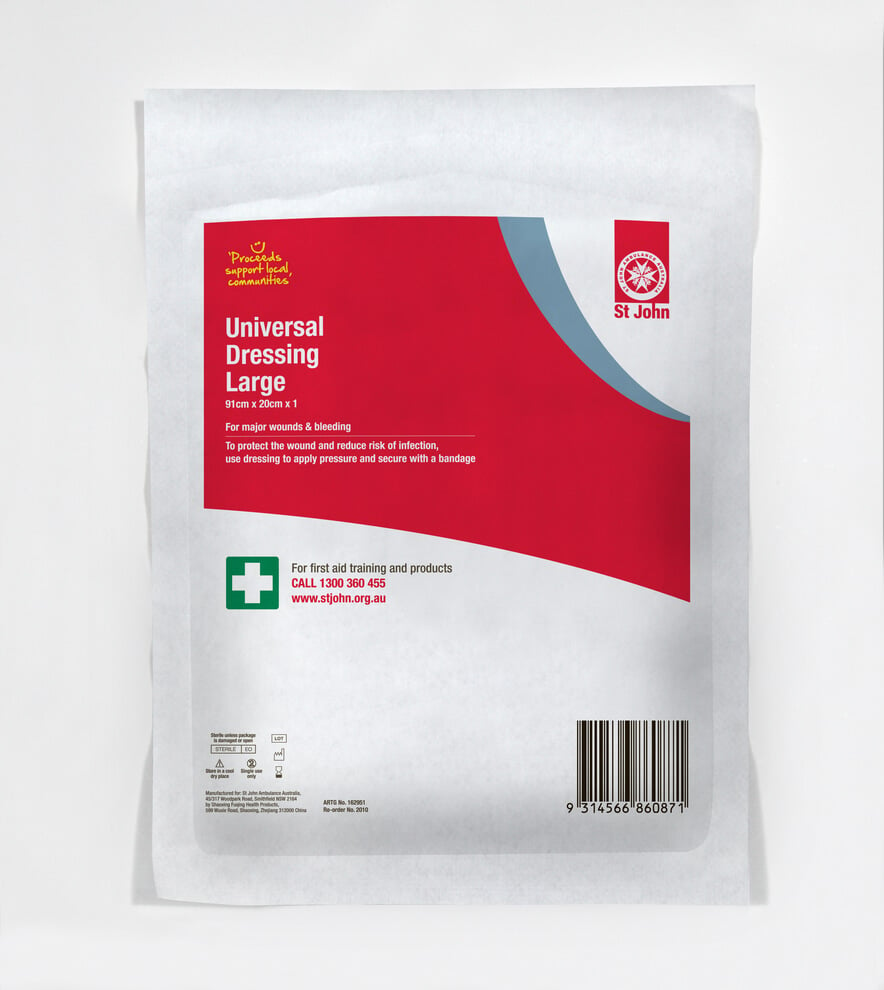
Large universal dressings
Large universal dressings (20cm x 91cm) are designed for major limb wounds — deep lacerations, post-trauma bleeding control, or burns over significant body area. The combination of absorbent layer + integrated bandage means one-step application during emergencies. Workplace and ambulance kits should include at least 1-2.
Eye pad dressings
Eye pad dressings are oval sterile pads designed for eye injury first aid. Apply over the eye with the eye gently closed, then secure with tape or a head-wrap bandage. For serious eye injuries, see our workplace eye safety guide.
Gauze: cleaning and absorbing
Sterile gauze swabs
Sterile gauze swabs (7.5cm x 7.5cm packs of 5) are the universal wound-cleaning material. Use them for:
- Cleaning a fresh wound with saline.
- Absorbing wound exudate during dressing changes.
- Applying pressure to control bleeding.
- Cleaning around the wound edges.
Always use STERILE gauze on open wounds — never tissue paper or cotton wool which leave fibres in the wound.
Non-sterile gauze pads
Non-sterile gauze pads are for skin not directly broken — padding under bandages, splint support, or absorbing fluid from healing closed wounds. Cheaper bulk packs suit clinical and aged-care environments.
Step-by-step wound care
1. Stop the bleeding
Apply firm direct pressure with a clean dressing for at least 5-10 minutes. Elevate the limb if possible. Don’t lift to peek — that disrupts clotting. If bleeding doesn’t stop after 10 minutes of solid pressure, call 000 and continue pressure until paramedics arrive.
2. Clean the wound
Rinse with cool running water or sterile saline to remove dirt and debris. Wipe AROUND (not into) the wound with sterile gauze swabs from inside to outside. Avoid antiseptic solutions on deep wounds — they can damage healing tissue.
3. Dress the wound
Apply a non-adherent dressing directly over the wound. Cover with absorbent gauze. Secure with cohesive bandage, crepe bandage, or tape. The dressing should be snug but NOT cut off circulation — check fingertips and toes remain pink and warm.
4. Document and review
Workplace first aiders should complete a Register of Injuries entry. Re-check the wound at 24 hours for signs of infection: increasing redness beyond the wound edges, swelling, warmth, pus, odour, or fever. Any of these = see a doctor.
Building a wound care kit
Home family kit
- 1 triangular bandage
- 2 crepe bandages (5cm + 10cm)
- 1 pack non-adherent dressings (5 x 10x10cm)
- 1 pack sterile gauze swabs (5 x 7.5cm)
- Eye pad dressing
- Adhesive plasters in assorted sizes
- Cohesive bandage (1)
- Saline ampoules for irrigation
Workplace WHS-compliant kit (low-risk office)
- 2 triangular bandages
- 2 heavy crepe bandages (10cm)
- 2 packs non-adherent dressings
- 1 large universal dressing
- 1 pack sterile gauze swabs (5 x 7.5cm)
- 2 eye pad dressings
- Adhesive plasters and tape
- Cohesive bandages (2)
High-risk workplace kit (construction, manufacturing)
- 4 triangular bandages
- 4 heavy crepe bandages (10cm)
- Bulk packs of non-adherent dressings (5 + 10cm sizes)
- 2-3 large universal dressings
- 2-3 packs sterile gauze swabs
- 4+ eye pad dressings
- 2 emergency burn dressings
- Pressure-immobilisation bandages (for snake/funnel-web exposure)
Browse our full workplace first aid kit range for ready-made compliant kits.
Common wound care mistakes
Using cotton wool or tissue paper as a dressing
Fibres get embedded in the wound and create infection foci. Always use sterile gauze, dressing pads or non-adherent material designed for wound contact.
Applying antiseptic to deep wounds
Strong antiseptics (Betadine concentrate, undiluted Dettol) damage healing tissue. Save antiseptic creams for minor superficial cuts; for deeper wounds use sterile saline and let the body’s natural defences work.
Bandaging too tight
Cutting off circulation causes tissue damage. Always check fingertips/toes remain pink and warm after bandaging. Loosen if numbness, tingling or colour change.
Forgetting tetanus status
Any wound that breaks the skin can introduce tetanus bacteria. If the casualty’s last tetanus booster is more than 5 years ago and the wound is dirty or deep, see a GP within 24-48 hours.
When to call 000 for a wound
Call an ambulance immediately for:
- Bleeding that doesn’t stop after 10 minutes of firm pressure.
- Deep wounds with visible bone, tendon, fat or muscle.
- Embedded objects (don’t remove — secure with padding).
- Crush injuries.
- Wounds across the chest, abdomen, neck or groin.
- Signs of severe blood loss (pale, clammy, weak pulse, dizziness).
- Suspected internal bleeding.
Frequently asked questions
What is the difference between a bandage and a dressing?
A dressing covers the wound itself (gauze, non-adherent pad, hydrogel) and stays in contact with the injured skin. A bandage holds the dressing in place AND provides additional functions like compression (crepe), support (triangular), or self-adhesion (cohesive). Most wounds need both: dressing first, then bandage to secure.
When should you use a triangular bandage?
Triangular bandages are first aid multi-tools - use them as an arm sling for fractures, a folded compress bandage to control bleeding, a head dressing, a broad fold to immobilise a leg fracture, or a tourniquet in life-threatening limb haemorrhage. The 110cm x 110cm size suits adult and most paediatric needs.
Are non-adherent dressings better than gauze for cuts?
Yes, for healing wounds with weepy or granulating tissue. Non-adherent dressings have a smooth coating that prevents the dressing from sticking to the healing surface, so changes are painless and don’t pull off new tissue. Use sterile gauze swabs for initial cleaning, then switch to non-adherent for ongoing dressing.
What size dressing do you need for a workplace first aid kit?
Australian Safe Work Australia code-of-practice first aid kits should include a mix: small dressings (5x5cm) for cuts, medium (10x10cm) for grazes and burns, large universal (20x91cm) for major limb wounds, eye pads (single eye dressing), and triangular bandages (head/sling/multi-use). Quantities scale with staff size and workplace risk.
How often should you change a wound dressing?
Clean superficial wounds: change daily until healed (usually 5-7 days). Wounds with significant exudate, infection signs (redness, swelling, warmth, odour) or used with topical treatments: change every 12-24 hours or per medical advice. Soiled or wet dressings: change immediately. Always wash hands before and use sterile dressings on open wounds.
Sources: healthdirect.gov.au — Cuts and grazes, AIHW — Injury overview, Safe Work Australia — First aid, St John Ambulance fact sheets.