


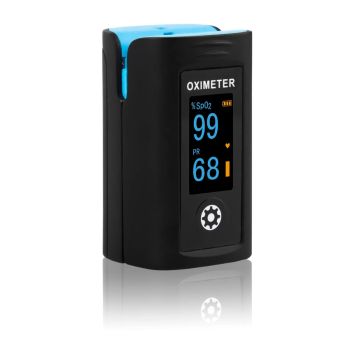
Fingertip Pulse Oximeter - SpO2, Pulse Rate and Perfusion Index
Special Price
$47.30
Regular Price
$64.90
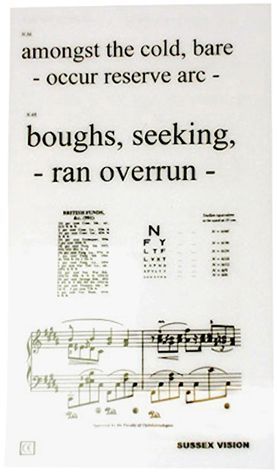
A near vision eye chart, designed to be held at normal reading distance rather than read across a room. It screens close-range reading vision - the kind that declines with age and that people notice first when small print becomes hard work.
Hold the chart at the reading distance it specifies, usually around 40cm, under good even lighting with no glare on the card. Test each eye separately with the other covered, then both together, and keep any glasses the person normally reads with in place unless you are specifically testing without them. Record the smallest line read comfortably rather than the smallest line guessed at. Two things this is not: it is not a distance vision test - that is a Snellen chart, a different chart used at several metres - and it is not an eye examination. Screening finds people who should be assessed; it does not diagnose, and it will not detect glaucoma, cataract, macular change or anything else that needs an optometrist or ophthalmologist. Any change in vision, pain, flashes, floaters or sudden loss needs proper assessment regardless of what the chart shows.
General practice and clinic screening, workplace and pre-employment vision checks, occupational health, aged care, and first aid rooms. Browse related clinical equipment, or see the wider medical supplies range at MediBC.
Screening close-range reading vision at normal reading distance. It is the chart used to check how well someone reads small print, rather than how well they see across a room.
Distance. A near vision chart is held at about reading distance and tests close work. A Snellen chart is read from several metres away and tests distance acuity. They measure different things and are not interchangeable.
At the distance printed on the chart, typically around 40cm. Holding it closer or further changes the result, so use the stated distance and keep it consistent between tests.
No. It is a screening tool. It cannot detect glaucoma, cataract, macular change or most eye disease. Anyone with a change in vision, pain, flashes, floaters or sudden loss needs an optometrist or doctor.
Normally yes, wearing whatever the person usually reads with, since you are testing their functional reading vision. Record whether the test was done with or without correction.