

Magnifying Glass 2x and 6x - 72mm Acrylic Lens, Handheld
Miscellaneous
$14.86
Secure checkout
VISA
Mastercard
Apple Pay
Google Pay
Also accepted
AMEX
Afterpay
Zip
Klarna
PayPal
In stock
Only 1000 left
SKU
425
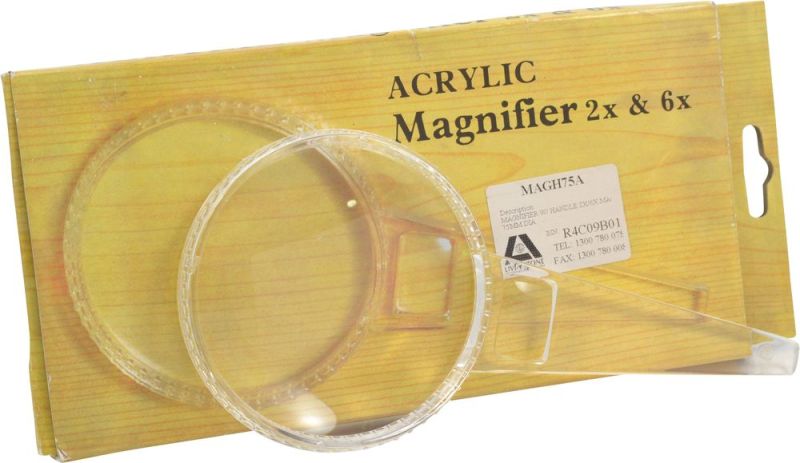
A handheld magnifying glass with a 72mm acrylic lens at 2x magnification and a 6x inset lens set into it, on a 19cm overall handle. It is a general-purpose visual aid for a first aid room, treatment area or supply cupboard - the thing you reach for to read a batch number, check an expiry date printed in 4pt type, or look closely at a splinter before deciding what to do about it.
Features
- 2x main lens with a 6x inset lens for finer detail
- 72mm diameter acrylic lens, lighter and less fragile than glass
- 19cm overall length including the handle
- Lightweight and portable, no batteries or setup
- No built-in illumination - use it with good ambient or task light
Specifications
- Product code: MAGH75A
- Magnification: 2x main lens, 6x inset lens
- Lens diameter: 72mm
- Lens material: Acrylic
- Overall length: 19cm including handle
- Illumination: None
Which magnifying glass lens to use, 2x or 6x?
The two lenses do different jobs and the trade-off is real. The 2x main lens gives a wide field of view, a forgiving depth of field and a steady image, which is what you want for scanning a label, reading instructions or finding the detail you are after. The 6x inset lens enlarges far more, but the viewing area shrinks, the depth of field becomes shallow and every small hand movement shows - so it needs to be held closer and steadier, usually with the object resting on a surface. Neither lens creates detail that poor lighting has hidden. Magnification enlarges what is already visible; it does not brighten it, which is why an unlit magnifier and a good task lamp belong together.
Common uses
Reading batch numbers, expiry dates and small print on medication and consumable packaging; checking first aid kit contents against a register; inspecting a splinter or foreign body before removal; and close inspection work generally in clinics, aged care, laboratories and workshops. For testing close-range reading vision properly, use a near vision eye chart instead. It pairs naturally with splinter probes for foreign-body work, or browse the wider medical supplies range at MediBC.
Magnifying Glass FAQs
What is a magnifying glass used for?
Enlarging small visual detail so it can be seen clearly - fine print, labels, batch and expiry information, kit contents, small components, and close inspection of an object or a splinter. In a clinical setting it is a visual aid, not a diagnostic instrument, and it does not replace proper assessment.
Is 2x or 6x magnification better?
Neither, they suit different tasks. Use the 2x main lens to scan a wider area with a steady, forgiving image. Switch to the 6x inset lens when you have found the detail and need it much larger, accepting a smaller viewing area and the need to hold it closer and steadier.
Does this magnifying glass have a light?
No. There is no built-in illumination, so use it with good ambient or task lighting. If you need light and magnification together, an illuminated magnifying lamp is the better choice.
What size is the lens?
The lens is 72mm in diameter. The 19cm figure is the overall length of the magnifier including its handle, not the lens size.
Is the lens glass or acrylic?
Acrylic. That makes it lighter and far less likely to shatter if dropped than a glass lens, which suits a first aid room or a kit that gets moved around. Acrylic scratches more easily than glass, so store it where the lens is not rubbing against other items.
Frequently bought together