


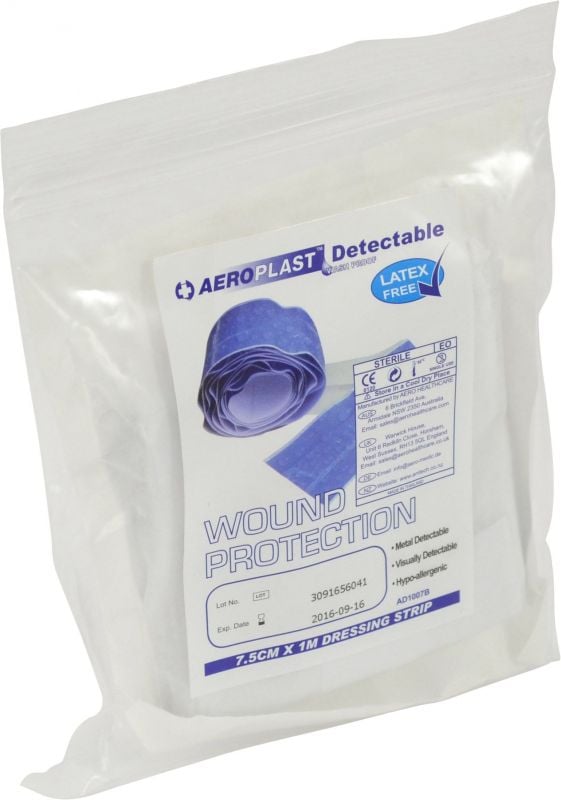
Aeroplast Blue Dressing Length 7.5cm x 1m Xray detectable
Aero Wound Dressings
$30.67
Secure checkout
VISA
Mastercard
Apple Pay
Google Pay
Also accepted
AMEX
Afterpay
Zip
Klarna
PayPal
In stock
Only 1000 left
SKU
9005L
Aeroplast Detectable is a metal detectable dressing measuring 7.5cm x 1m, combining bright blue visual detection with metal detection. It is sterile, waterproof, breathable, hypoallergenic and latex free, with a centralised wound pad and a high level of adhesion - built for the manufacturing and processing sector.
Why choose a metal detectable dressing
The case for it is a commercial one as much as a clinical one. Any form of food handling demands strict hygiene, contamination of any scale entering the food chain is potentially disastrous and extremely costly, and a lost plaster is one of the most ordinary ways it happens. A metal detectable dressing gives you a cost-effective wound care solution with multiple forms of detection, safeguarding the business against avoidable litigation.
Two detection methods is the point of difference. Blue makes a detached dressing visible on a line or a bench; the metal-detectable element means it is also picked up by inline metal detection if it is missed by eye and travels with product. One method can fail; two rarely fail together, which is what an auditor is looking for.
The build quality matters because a dressing that lifts is a dressing that gets lost. It has a high level of adhesion and is waterproof - essential in washdown areas and wet processing - while remaining breathable and conformable so it stays on a moving knuckle through a shift. It is sterile, with a centralised wound pad.
Key features
- Metal detectable AND bright blue visual detection
- Sterile
- Waterproof - suits washdown and wet processing
- Breathable
- High level of adhesion
- Conformable
- Hypoallergenic adhesive, latex free
- Centralised wound pad
- 7.5cm x 1m - cut to length
Specifications
| Product | Aeroplast Detectable Blue Dressing |
| Dimensions | 7.5cm x 1m |
| Detection | Metal detectable and visually detectable (bright blue) |
| Sterile | Yes |
| Waterproof | Yes |
| Breathable | Yes |
| Adhesive | High adhesion, hypoallergenic, latex free |
| Wound pad | Centralised |
| Sector | Manufacturing and processing, food handling |
Common uses
Food manufacturing and processing, commercial kitchens, catering, and any site running inline metal detection as a critical control point. Where visual detection alone satisfies the food safety plan, the standard blue detectable dressing is the lower-cost option. Fingers take most of the injuries in this sector, so detectable finger dressings are usually stocked alongside. See our kitchen, catering and Food Act kits.
metal detectable dressing FAQs
What does metal detectable mean?
The dressing contains an element that inline metal detection equipment will register, so if it detaches and travels with product it can be picked up automatically. That is the backstop for when a detached dressing is not spotted by eye.
Why do I need two forms of detection?
Because either can be missed on its own. Blue makes a lost dressing visible on a line or bench; metal detection catches it if it has already entered product. Multiple forms of detection are what protect the batch, and the business, from an avoidable claim.
Is it sterile and waterproof?
Yes to both. Sterile out of the pack, and waterproof - which matters in washdown areas and wet processing, where a non-waterproof dressing lifts and becomes both a wound risk and a contamination risk. It is breathable as well, so it stays comfortable through a shift.
Will it stay on during a shift?
It is formulated with a high level of adhesion and is conformable, so it follows a moving knuckle or fingertip. Adhesion is the whole point in this sector - the cheapest dressing is expensive if it is the one that ends up in a product.
Should it be worn under a glove?
Follow your food safety plan. Common practice is a detectable dressing under a glove, recorded when applied and checked at breaks and at end of shift, with a defined procedure for what happens to product if a dressing goes missing.
What size wounds does it cover?
It is a 7.5cm x 1m strip cut to length, so one roll covers a fingertip through to a longer forearm wound. The wound pad is centralised, so cut with the pad over the wound.
A dressing protects a wound; it does not treat infection. Sterile - do not use if the packaging is damaged. Clean the wound before dressing, change dressings whenever they become wet, soiled or lifted, and seek medical advice for deep or contaminated wounds, bleeding that will not stop, or any sign of infection. In food handling environments, follow your organisation food safety plan regarding detectable dressings, glove use, recording and reporting.
| Brand | Aero Healthcare |
|---|
Frequently bought together
