


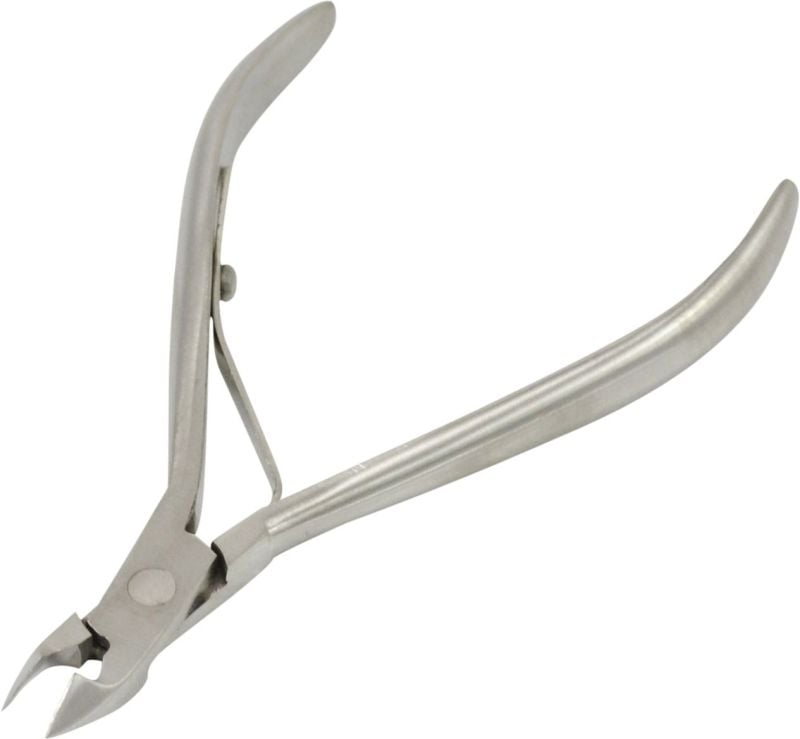
Cuticle Clippers 10.5cm - Precision Stainless Nippers
Miscellaneous
$9.02
Secure checkout
VISA
Mastercard
Apple Pay
Google Pay
Also accepted
AMEX
Afterpay
Zip
Klarna
PayPal
In stock
Only 1000 left
SKU
158
Cuticle clippers, 10.5cm, with a fine spring-loaded jaw for trimming cuticle and hangnails precisely. The short blade and close pivot give control that scissors cannot, which is what you need when working on a small area close to living skin.
Features
- 10.5cm length, sized for controlled one-handed use
- Fine precision jaw for cuticle and hangnails
- Spring action returns the jaw between cuts
- Smooth handles for grip during detailed work
- Cleanable and reusable between uses
Specifications
- Length: 10.5cm
- Type: Cuticle nipper with spring action
- Use: Reusable, cleaned between uses
Using cuticle clippers without causing an infection
The cuticle is a seal, not a decoration. It closes the gap between nail plate and nail fold, and cutting into living tissue opens a direct route for bacteria and fungi into the nail bed - which is why paronychia so often follows an enthusiastic manicure. Trim only loose, dead cuticle and hangnails; do not cut the living seal back. Soften the skin first with warm water, make single clean cuts rather than tearing, and stop at the point where tissue is attached. Clean the clippers between uses and never share them between people without cleaning, since nail infections transfer readily on instruments. Anyone with diabetes, peripheral neuropathy or reduced circulation should have nail and cuticle care done by a podiatrist rather than at home, because a small wound on a foot in those circumstances is not a small problem.
Common uses
Podiatry and nail care, personal grooming, aged care nail maintenance, and first aid rooms handling hangnails and rough nail edges. Browse related medical supplies, or see first aid supplies at MediBC.
Cuticle Clippers FAQs
Should cuticles be cut at all?
Only loose, dead cuticle and hangnails. The living cuticle is a seal between nail plate and nail fold, and cutting it opens a route for infection into the nail bed.
Why do cuticle clippers work better than scissors?
The short blade and close pivot give far more control in a small area, and the spring action returns the jaw so you can make repeated precise cuts without repositioning your grip.
How should they be cleaned?
Clean between every use and never share them uncleaned. Nail infections transfer readily on instruments, which is the main risk with any shared nail tool.
Who should not cut their own cuticles?
Anyone with diabetes, peripheral neuropathy or reduced circulation should have nail and cuticle care done by a podiatrist. A small wound on a foot in those circumstances carries far more risk than it appears to.
What length are they?
10.5cm overall, which suits controlled one-handed use for detailed work.