


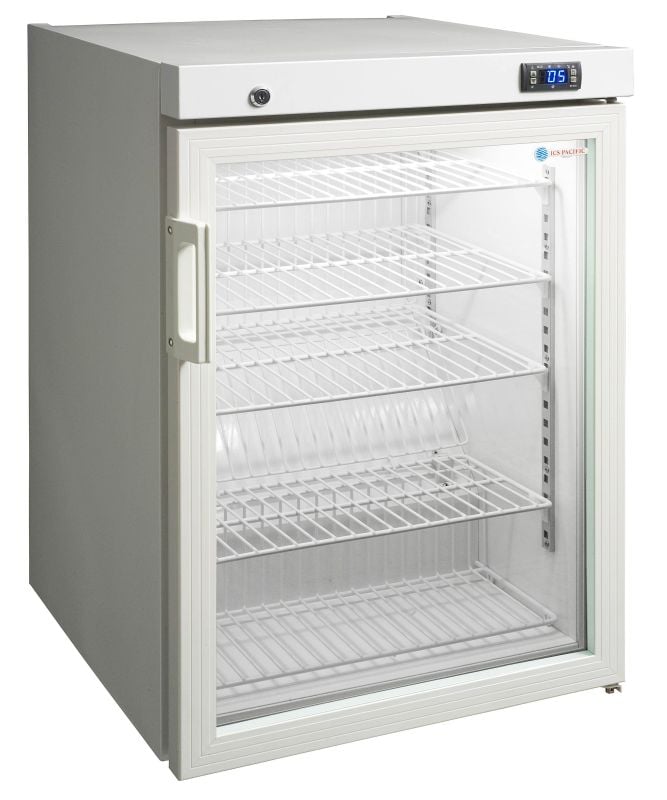
ICS Pacific PHARMA 1000 - 145L Vaccine Refrigerator with Glass Door
$3,332.15
Secure checkout
VISA
Mastercard
Apple Pay
Google Pay
Also accepted
AMEX
Afterpay
Zip
Klarna
PayPal
In stock
Only 1000 left
SKU
250109
The ICS Pacific Pharma 1000 is a 145-litre purpose-built vaccine refrigerator with a lockable, self-closing double-glazed glass door, so stock can be checked without opening the cabinet. It holds a stable +3 to +7 degrees and is QCPP compliant, which makes it suitable for pharmacies, medical centres and clinics running an immunisation service.
Why it has to be a purpose-built vaccine refrigerator
This is the part that catches practices out, and the national guidance is unambiguous about it. Vaccines must be stored between +2 and +8 degrees - the "Strive for 5" in the National Vaccine Storage Guidelines refers to +5 degrees, the midpoint of that range. Many vaccines are damaged or destroyed outside it.
Domestic refrigerators must not be used to store vaccines. The guidelines are explicit that domestic fridges, including bar fridges, commercial fridges and industrial fridges, are not built or designed for vaccine storage and must not be used, even temporarily. A household fridge cycles its temperature far more widely than the label suggests, and the damage to a vaccine is invisible - it does not look, smell or behave differently after a cold chain breach.
A purpose-built unit like this one is engineered to hold a narrow band rather than an average. The Pharma 1000 runs +3 to +7 degrees, tighter than the +2 to +8 the guidelines require, which is deliberate: it gives you headroom before an excursion becomes a breach.
Temperature monitoring and your records
Owning the right fridge is half of it. The guidelines require the temperature to be recorded twice daily, morning and afternoon, and most practices log minimum and maximum readings against the Strive for 5 temperature chart. Keep the log with the fridge, and know your cold chain breach procedure before you need it rather than after.
The glass door earns its place here for the same reason: every door opening is a temperature excursion, and being able to read stock levels through the glass removes a lot of unnecessary openings.
Pharma 1000 or Pharma 3000: which size
| Model | Capacity | Suits |
|---|---|---|
| Pharma 1000 (this one) | 145 litres | General practice, pharmacy, single-site clinic |
| Pharma 3000 | 350 litres | Larger practices, multi-clinician sites, seasonal campaign volumes |
Size up rather than down if you run flu campaigns. A fridge packed to capacity restricts air circulation, which is itself a cold chain risk, and the guidelines want air moving freely around stock rather than boxes jammed against the walls.
Specifications
| Model | ICS Pacific Pharma 1000 |
| Capacity | 145 litres |
| Temperature range | +3 to +7 degrees |
| Door | Lockable, self-closing, double-glazed glass |
| Shelving | 4 adjustable shelves plus a raised base shelf |
| Lighting | LED to all shelves |
| Noise | 35dB |
| Ambient rating | 10 to 32 degrees, maximum 60% humidity |
| Compliance | QCPP, Quality Care Pharmacy Program |
Check the ambient rating against where the fridge will actually stand. It is rated to a 32 degree room at up to 60% humidity, so a hot back room, a western-facing window or a space with poor airflow can push a compliant fridge outside its designed operating conditions.
Fit out the rest of the room with first aid room equipment, or browse the wider medical supplies range.
Vaccine fridge FAQs
Can vaccines be stored in a domestic or bar fridge?
No. The National Vaccine Storage Guidelines state that domestic refrigerators, including bar fridges, commercial fridges and industrial fridges, are not built or designed to store vaccines and must not be used for vaccine storage, even on a temporary basis. A purpose-built vaccine refrigerator is required.
What temperature do vaccines need to be stored at?
Between +2 and +8 degrees. "Strive for 5" refers to +5 degrees, the midpoint of that range and the target to aim for. Many vaccines are damaged or destroyed by temperatures outside the range, including by freezing.
How often does the temperature need to be recorded?
Twice daily, morning and afternoon, on each day the practice operates. Most services record minimum and maximum readings on the Strive for 5 vaccine fridge temperature chart, which the Department of Health publishes as a printable poster.
What happens if vaccines are left out of the fridge?
Treat it as a cold chain breach and follow your service's breach procedure: isolate the affected stock, label it "do not use", keep it refrigerated, and contact your state or territory immunisation program for advice on whether it remains viable. Do not simply put it back and carry on. Vaccine damage from a cold chain breach is not visible, so the stock will look completely normal either way.
What is QCPP compliance?
The Quality Care Pharmacy Program is the Australian community pharmacy quality standard. A QCPP-compliant vaccine refrigerator meets the requirements expected of pharmacies operating under that program, which matters if you are accredited or working toward it.
Why does the door matter?
Every door opening lets warm air in and starts a temperature excursion. A double-glazed glass door lets staff check stock levels and expiry dates without opening the cabinet at all, and the self-closing mechanism removes the most common human error, which is a door left ajar. The lock matters for the same reason vaccines are a controlled asset.
How much should I leave empty inside?
Enough for air to circulate freely around the stock. Packing a vaccine fridge to capacity restricts airflow and creates warm and cold spots, which is a cold chain risk in its own right. Keep stock clear of the walls, the floor and the air outlet, and if you regularly run close to full it is a sign to move up to the larger cabinet.
Does it come with a thermometer or data logger?
The cabinet has its own temperature display. Your monitoring obligations sit separately from the fridge itself, so check what your state or territory program and your accreditation require in terms of minimum and maximum thermometers, data loggers and alarms, and budget for them alongside the fridge rather than afterwards.
Sources. Storage temperature, the purpose-built refrigerator requirement, the position on domestic and bar fridges, and twice-daily recording are from the National Vaccine Storage Guidelines "Strive for 5", Australian Government Department of Health. Cabinet specifications are the manufacturer's. Last reviewed 17 September 2026.
Follow the National Vaccine Storage Guidelines and the requirements of your state or territory immunisation program. This information is a general guide for equipment selection and does not replace those guidelines or your own service's cold chain policy.
| Brand | ICS Pacific |
|---|