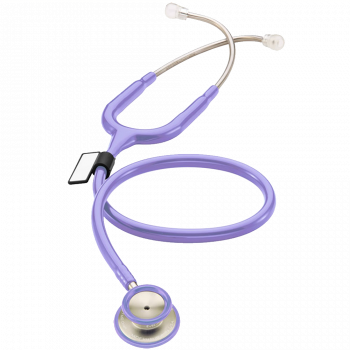


First Aid Dual Head Stethoscope
As low as
$107.96
Toilet safety rails give a fixed handhold either side of the toilet, so sitting down and standing up become a controlled movement rather than a drop and a heave. One of the cheapest changes you can make to a bathroom, and one of the most useful.
Standing up from a toilet is a low, unsupported lift from a seat well below chair height, done many times a day, often at night, on a hard floor with hard fixtures on every side. People compensate by grabbing whatever is nearest, which is usually a towel rail, a basin or the cistern. None of those are designed to take body weight, and that is the moment the fall happens.
Toilet safety rails replace all that improvisation with something intended for the load, positioned where the hands naturally go.
Pair them with the rest of your medical supplies, or see first aid supplies for the wider range.
Two things matter more than anything else on the spec sheet: the width between the arms, and the height relative to the seat. Too wide and the user has to reach outward at the moment they are least stable. Too narrow and getting on and off becomes a squeeze. Height should let the forearms come down naturally rather than the shoulders shrug up.
Check the weight capacity against the user’s weight with a margin, and check it suits your toilet: floor-standing frames, seat-mounted rails and wall-fixed grab rails all solve the problem differently and are not interchangeable in every bathroom.
| Brand | Medline |
| Type | Toilet safety rails |
| Purpose | Support for sitting and standing at the toilet |
| Suits | Reduced mobility, post-surgical recovery, falls prevention |
They provide a fixed handhold on both sides of the toilet so the user can lower and raise themselves under control, instead of grabbing a basin, towel rail or cistern that was never designed to take weight.
People with reduced leg strength, arthritis or balance difficulty, anyone recovering from hip or knee surgery, and older people living alone. Carers benefit too, because a self-supported transfer needs less physical assistance.
The arms should sit where the hands fall naturally, close enough that the user is not reaching outward, and at a height that lets the forearms come down rather than the shoulders lift. An occupational therapist can measure this properly for the individual.
No. A grab rail is fixed to the wall. Toilet safety rails sit either side of the toilet, often free-standing or seat-mounted. Which suits depends on the bathroom, the wall construction and how the person transfers.
It is strongly advisable, and usually required if equipment is being funded through a scheme. Poorly positioned rails can make a transfer less safe, which is the opposite of the intent.
Check the manufacturer specification against your own toilet and bathroom before ordering. Fit is the most common reason this category of equipment gets returned, particularly in small or awkwardly shaped bathrooms.
Mobility equipment should be selected and positioned for the individual, ideally on the advice of an occupational therapist or physiotherapist. This information is a general guide and is not clinical advice.
| Brand_ms | GoWISE |
|---|---|
| Manufacturer_ms | USA |
| Model Number_ms | K61SD521 |
| Type_ms | Stationary |
| MRI Compatible | yes |
| Trendelenburg | yes |
| Arm Type | Removable Desk Length |
| WC Leg Style | Elevating |
| WC Seat Depth | 12 in |
| Fabric Type_ms | Cloth |
| WC Seat Width | 14 in |
| Specific Use_ms | Hospital Bed |
| Casters | 5" and 6" |
| Operating Temperature Range_ms | 10°-30°C |
| Case material | Metal |
| Ecolabel_ms | yes |
| Working hours_ms | 30 minutes |
| Brand | Medline |