

Home and Car First Aid Bundle
$539.74
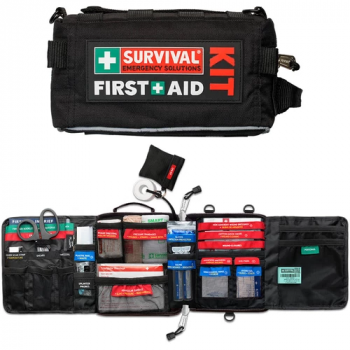
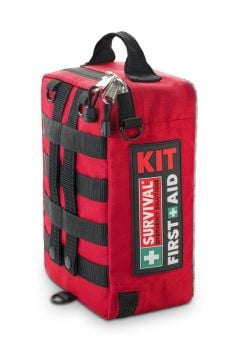
The SURVIVAL Home First Aid Kit is a household kit designed in Australia by first aid professionals, laid out so someone under stress can find things. Folds out to 79cm, packs down to 21 x 12 x 27cm, 1.6kg.
Not the dramatic scenarios. Kitchen burns and knife cuts, kids falling over, splinters, bites and stings, sprained ankles, headaches, and the grazes that come with a garden and a bicycle. A household kit earns its keep on the ordinary things, several times a year.
The dramatic case still matters, and that is where layout counts. Anyone can find a plaster given a minute. Finding a pressure bandage in the dark while someone is bleeding is a different problem, and it is why a kit designed for visual retrieval beats a box of loose supplies.
Somewhere every adult in the house knows, reachable without a chair, and not in the bathroom. Bathroom heat and humidity degrade adhesives and shorten shelf life on anything with an expiry date. A kitchen or hallway cupboard is better. Tell everyone where it is, including visitors who stay regularly.
If you drive, a house kit is not a car kit. See the SURVIVAL vehicle kit for that, and browse all first aid kits for workplace options.
A kit degrades quietly. Check it twice a year: replace anything used, anything expired, and any dressing whose pack has been opened or crushed. Add what your household specifically needs, since no standard kit anticipates your family: prescription medicines, an asthma reliever, an adrenaline autoinjector if someone is prescribed one, and anything for a child or an older relative living with you.
| Brand | SURVIVAL, designed in Australia |
| Intended use | Household and home emergency |
| Dimensions closed | 21cm long x 12cm wide x 27cm high |
| Length open | 79cm |
| Weight | 1.6kg |
| Layout | Fold-out, designed for visual retrieval under stress |
Somewhere every adult knows and can reach without climbing, and not in the bathroom. Heat and humidity there degrade adhesives and shorten shelf life. A kitchen or hallway cupboard is the usual sensible choice.
Twice a year, and after every use. The usual failure is not missing items but unreplaced ones, so set a calendar reminder rather than trusting yourself to notice.
21 x 12 x 27cm closed and 1.6kg, opening out to 79cm. It fits a cupboard shelf closed and lays out flat so you can see the contents rather than digging through them.
Yes. Prescription medicines, an asthma reliever, an adrenaline autoinjector if one is prescribed, and anything specific to a child or older relative. A standard kit cannot know your household.
Yes. A vehicle kit is built around roadside incidents and has to survive heat in a parked car. A home kit is larger, kept in stable conditions and aimed at everyday household injuries. Most people who drive want both.
Yes, and it matters more than the kit. Supplies do not tell you what to do. A first aid course, especially one covering CPR and choking, is the highest value thing a household can do, particularly with young children.
A first aid kit supports trained first aid and does not replace medical care. In an emergency call your local emergency number. Check contents and expiry dates regularly. This information is a general guide and is not medical advice.
| Brand | SURVIVAL |
|---|