


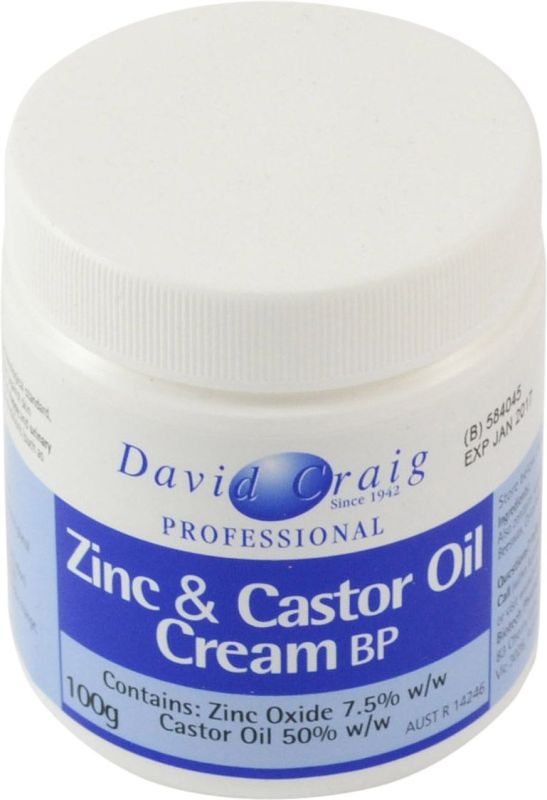
Zinc & Castor Oil Cream 100g
Nursing | First Aid Room Kits
$18.00
Secure checkout
VISA
Mastercard
Apple Pay
Google Pay
Also accepted
AMEX
Afterpay
Zip
Klarna
PayPal
In stock
Only 996 left
SKU
210002
Zinc and castor oil cream is the barrier preparation Australian families and aged care nurses have used for generations. Zinc oxide forms a protective, mildly astringent film over irritated skin while castor oil softens it and helps the cream stay where it is put. This is the 100g tube.
Why zinc and castor oil cream still works
It is a barrier, not a treatment, and that distinction is the whole point. Nappy rash and incontinence-associated skin damage are caused by prolonged contact with moisture and irritants. Nothing heals that skin while the contact continues, so the useful intervention is a physical layer between the skin and the wet - which is exactly what zinc oxide provides.
The castor oil earns its place too. It keeps the zinc in a soft, spreadable base that does not crack or flake off, and it makes the cream easier to apply over skin that is already sore. A stiffer zinc paste protects just as well but hurts more to apply and more to remove, which matters when you are doing it several times a day to a distressed baby.
It is inexpensive, has a long shelf life, and needs no refrigeration - so it is worth keeping before you need it rather than after. It is also one of the few products equally at home in a nappy bag and an aged care trolley, since the problem it solves is the same at both ends of life.
Key features
- Zinc oxide barrier - shields skin from moisture and irritants
- Castor oil base - soft, spreadable, stays in place
- For nappy rash and incontinence-associated skin damage
- Also protects skin around wound dressings and stoma sites
- Traditional formulation, long shelf life
- 100g tube
- No prescription required
Specifications
| Product | Zinc and castor oil cream |
| Size | 100g |
| Zinc oxide | Barrier and mild astringent |
| Castor oil | Emollient base |
| Type | Barrier cream (non-medicated) |
| Main uses | Nappy rash, incontinence care, moisture-damaged skin |
| Application | Apply a generous layer to clean, dry skin at each change |
| Do not use on | Broken, weeping, blistered or infected skin |
| Availability | No prescription required |
Common uses
Nappy changes are the classic use - a generous layer at every change, on skin that has been cleaned and properly dried first, since sealing moisture underneath defeats the purpose. Incontinence care in aged care and home nursing is the other major use, for exactly the same reason. It also protects intact skin around dressings, stoma sites and skin folds where friction and moisture combine. For a plain occlusive barrier without zinc, petroleum jelly is the alternative, and Kenkay Dual Purpose Zinc and Castor Oil Cream is the branded equivalent. Stocked with our home and family first aid supplies. If you would rather have a jar labelled specifically for nappy rash, see the Kenkay nappy rash cream, which is lanolin and fragrance free.
zinc and castor oil cream FAQs
What is zinc and castor oil cream used for?
Mainly as a barrier against moisture - nappy rash in babies and incontinence-associated skin damage in adults. Zinc oxide forms a protective layer over irritated skin and castor oil keeps that layer soft and spreadable. It is also used to protect intact skin around dressings and in skin folds.
Does it treat nappy rash or just prevent it?
It works by protecting rather than treating. Nappy rash persists while skin stays in contact with moisture and irritants, so putting a barrier between the two is what allows the skin to recover. Rash that is spreading, blistered, weeping or bright red with satellite spots may be thrush or infection and needs a doctor or pharmacist.
How often should I apply it?
At every nappy change, or every time skin is cleaned in incontinence care. Apply generously - a thin smear is not a barrier. The key step people skip is drying the skin properly first, because sealing moisture under the cream is worse than no cream.
Can I use it on broken or weeping skin?
No. It is for intact or mildly irritated skin. Skin that is broken, weeping, blistered or looks infected needs assessment rather than a barrier cream, and applying an occlusive layer over an infection can make it worse.
What is the difference between this and petroleum jelly?
Petroleum jelly is a pure occlusive - it blocks moisture and nothing more. This adds zinc oxide, which is mildly astringent and calming on irritated skin as well as protective. For nappy and incontinence care the zinc version is generally preferred; for chapped lips or cracked heels, plain petroleum jelly is the simpler choice.
Is it safe for newborns?
Zinc-based barrier creams are widely used from birth, but check with your maternal and child health nurse, midwife or pharmacist for a newborn, especially if the skin is already broken or you are unsure what the rash is.
For external use only. Do not apply to broken, weeping, blistered or infected skin. This information is a general guide and does not replace advice from your doctor, pharmacist or child health nurse - seek advice if a rash spreads, blisters, weeps, or does not improve within a few days.