

Hydralyte Sachets (10)
Other First Aid Supplies
€17.07
Secure checkout
VISA
Mastercard
Apple Pay
Google Pay
Also accepted
AMEX
Afterpay
Zip
Klarna
PayPal
In stock
Only 1000 left
SKU
400325
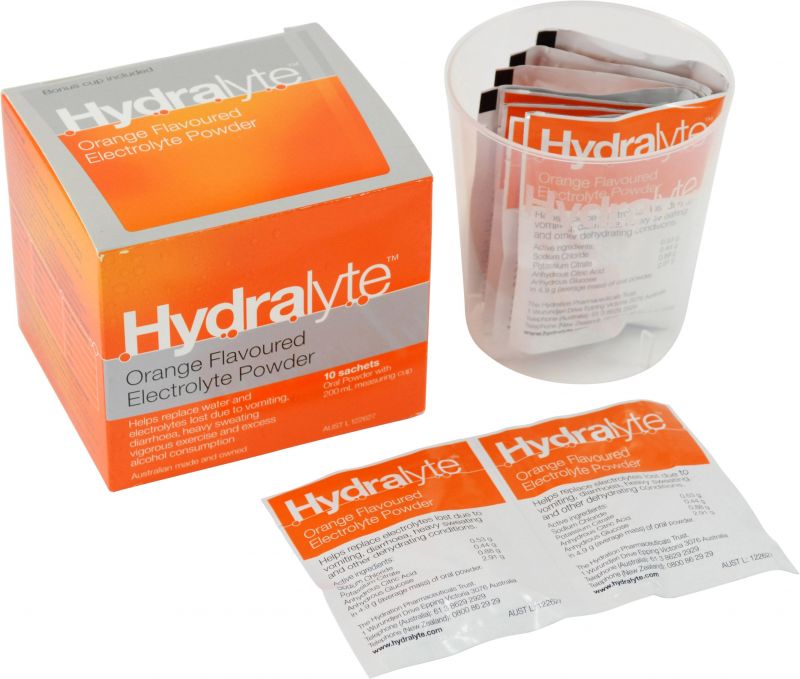
Hydralyte sachets replace the electrolytes lost through vomiting, diarrhoea, heavy sweating and other dehydrating conditions. Each sachet dissolves into a measured oral rehydration drink containing sodium, potassium, glucose and citrate in a set ratio - the point being that it is formulated, not just flavoured. This is the 10-sachet pack.
Why choose Hydralyte sachets over water or soft drink
Water alone replaces volume but not what was lost with it. An episode of vomiting or diarrhoea strips sodium and potassium out along with the fluid, and drinking plain water dilutes what is left. Each sachet supplies sodium chloride 0.53g, potassium citrate 0.44g, anhydrous citric acid 0.88g and anhydrous glucose 2.91g in roughly 4.9g of powder - the salts as well as the water.
The glucose is there for a specific physiological reason, not for taste. Sodium and glucose are absorbed together across the gut wall, so including glucose in the right proportion is what lets the sodium - and the water with it - be taken up when the gut is upset. That co-transport ratio is the entire design principle behind oral rehydration formulas, and it is why soft drink and sports drink are poor substitutes: far too much sugar, almost no sodium.
Sachets suit the household that wants rehydration on hand without dedicating fridge space. They are shelf-stable, light, and each one is a single measured dose - so there is nothing to estimate at 3am, and nothing that goes off between the gastro episodes you are actually buying them for. Ten to a pack covers a typical episode for one person.
Key features
- Replaces electrolytes lost to vomiting, diarrhoea and heavy sweating
- Sodium chloride 0.53g and potassium citrate 0.44g per sachet
- Anhydrous glucose 2.91g - enables sodium and water absorption
- Anhydrous citric acid 0.88g
- Approximately 4.9g of powder per sachet
- Single measured doses - no guesswork
- Shelf-stable, 10 sachets per pack
Specifications
| Product | Hydralyte Sachets |
| Pack size | 10 sachets |
| Sodium chloride | 0.53g per sachet |
| Potassium citrate | 0.44g per sachet |
| Citric acid (anhydrous) | 0.88g per sachet |
| Glucose (anhydrous) | 2.91g per sachet |
| Powder mass | Approximately 4.9g average per sachet |
| Non-active | Natural colour, natural and nature-identical flavours, sucralose |
| For | Vomiting, diarrhoea, heavy sweating and other dehydrating conditions |
Common uses
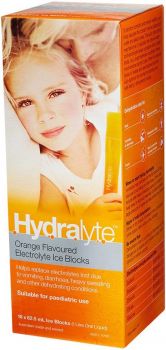
Gastro is the obvious reason, but the sachets earn their place just as often in heat - outdoor trades, sport, and travel to hot climates, where sweat losses build up quietly across a day. Households with young children tend to keep both formats: sachets for adults and for making up a drink, and Hydralyte ice blocks for a child who will not drink but will take an ice block. If diarrhoea symptoms also need controlling for travel or work, Gastro-Stop is the companion product - though rehydration remains the part that matters clinically. Stocked with our home and family first aid supplies.
Hydralyte sachets FAQs
Why not just drink water?
Because water replaces the fluid but not the sodium and potassium lost with it, and drinking large volumes of plain water can dilute the electrolytes you still have. A formulated oral rehydration drink replaces both, in the proportions the gut can actually absorb.
Why is there glucose in it?
Sodium and glucose are absorbed together across the gut wall, so the glucose is what allows the sodium - and the water with it - to be taken up efficiently. It is a transport mechanism, not sweetening. That is also why sports drinks and soft drinks are poor substitutes: too much sugar and far too little sodium.
What is in each sachet?
Sodium chloride 0.53g, potassium citrate 0.44g, anhydrous citric acid 0.88g and anhydrous glucose 2.91g, in approximately 4.9g of powder. Non-active ingredients are natural colour, natural and nature-identical flavours and sucralose.
When should I use them?
For dehydration from vomiting, diarrhoea, heavy sweating and other dehydrating conditions - gastro, heat exposure, outdoor work and travel are the common ones. Start early rather than waiting for obvious dehydration, and sip steadily rather than drinking a large volume at once.
Sachets or ice blocks?
Sachets are shelf-stable, compact and better for adults, travel kits and workplaces. Ice blocks are frozen and are usually the easier option for a child, or for anyone too nauseated to drink - small frozen amounts often stay down when a glass will not.
When do I need medical help instead?
If someone cannot keep any fluid down, if there is blood in the vomit or stools, if there is high fever, confusion, very little urine or ongoing symptoms beyond a couple of days, or for infants and older adults who dehydrate faster. Oral rehydration is first-line, not a reason to delay assessment.
Always read the label and follow the directions for use, including the correct volume of water per sachet. Seek medical advice if vomiting or diarrhoea persists, if fluids cannot be kept down, if there is blood in the vomit or stools, or if signs of dehydration develop. Infants, young children, older adults and people with kidney or heart conditions should seek medical advice - this information is a general guide only.
| Brand | Hydralyte |
|---|
Frequently bought together