

I-Gel Airway
Oxygen & Resuscitation Equipment
€33.93
Secure checkout
VISA
Mastercard
Apple Pay
Google Pay
Also accepted
AMEX
Afterpay
Zip
Klarna
PayPal
In stock
Only 1000 left
SKU
WEB-IGA
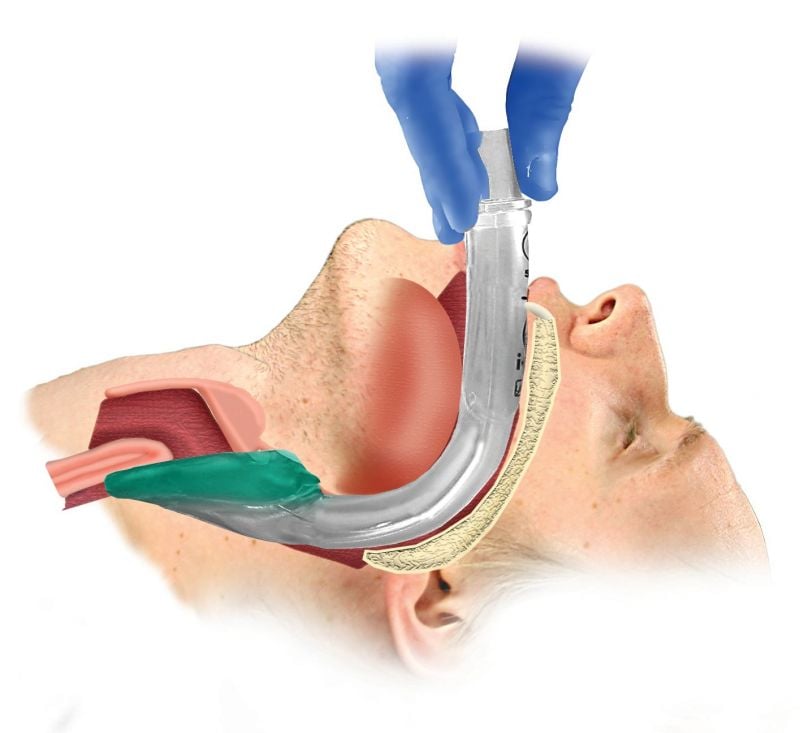
The i-gel airway is a second generation supraglottic airway with a non-inflatable cuff, moulded from a medical grade thermoplastic elastomer to mirror the perilaryngeal anatomy. Nothing to inflate means nothing to over-inflate, which is where much of the compression and displacement trauma associated with cuffed devices comes from.
Why a non-inflatable supraglottic airway
A conventional laryngeal mask seals by inflating a cuff against the perilaryngeal tissue. Get the volume wrong and you either lose the seal or press too hard on mucosa, and cuff pressure creeps upward during a case as nitrous oxide diffuses in.
The i-gel instead takes an anatomical impression of the perilaryngeal framework. The seal comes from shape and from the material warming to body temperature, not from pressure. In practice that means faster insertion, one less thing to set, and no cuff pressure to monitor.
i-gel airway sizing
Size is chosen by patient weight, not by age or by eye. This is the single decision that determines whether the device works.
| Size 1 | Neonate, 2 to 5 kg |
| Size 1.5 | Infant, 5 to 12 kg |
| Size 2 | Small paediatric, 10 to 25 kg |
| Size 2.5 | Large paediatric, 25 to 35 kg |
| Size 3 | Small adult, 30 to 60 kg |
| Size 4 | Medium adult, 50 to 90 kg |
| Size 5 | Large adult, 90 kg and above |
The adult ranges overlap deliberately. For a patient between sizes, local practice generally favours the larger size for a better seal, but follow your own institutional guidance and the instructions for use.
Where it is used
Elective anaesthesia for suitable patients, resuscitation, and pre-hospital and emergency airway management where a supraglottic device is indicated. It is widely carried by ambulance services precisely because insertion is quick and needs less manipulation than a cuffed device.
Stock it with the rest of your medical supplies, or see Guedel airways for basic oropharyngeal airway management.
A supraglottic airway is not a definitive airway. It does not protect against aspiration the way a cuffed tracheal tube does, and it is for use by clinicians trained and credentialled in airway management. Follow the manufacturer’s instructions for use and your own institutional protocol. Single use only, and never re-process a single-use airway.
Specifications
| Type | Second generation supraglottic airway |
| Cuff | Non-inflatable, anatomically moulded |
| Material | Medical grade thermoplastic elastomer |
| Sizes | 1, 1.5, 2, 2.5, 3, 4, 5 |
| Selection | By patient weight |
| Use | Single use |
i-gel airway FAQs
What size i-gel airway do I need?
Choose by patient weight: size 1 for 2 to 5 kg, 1.5 for 5 to 12 kg, 2 for 10 to 25 kg, 2.5 for 25 to 35 kg, 3 for 30 to 60 kg, 4 for 50 to 90 kg, and 5 for 90 kg and above. Weight, not age, and not estimated by eye.
Does the i-gel cuff need inflating?
No. The cuff is non-inflatable. It seals by its moulded shape against the perilaryngeal anatomy, aided by the thermoplastic elastomer softening at body temperature. There is no cuff pressure to set or monitor.
How is it different from a laryngeal mask?
A classic laryngeal mask seals with an inflated cuff. The i-gel seals anatomically without inflation, which removes cuff over-inflation as a failure mode and generally makes insertion quicker. Both are supraglottic devices and neither is a definitive airway.
Is it a definitive airway?
No. A supraglottic airway does not give the aspiration protection of a cuffed tracheal tube. It is an airway adjunct with defined indications, used by trained clinicians within a protocol that includes what to do if it fails.
Can it be reused or reprocessed?
No. It is a single-use device. Reprocessing a single-use airway is outside the manufacturer’s instructions and is not something to attempt regardless of how the device looks after use.
Which size for a patient between two ranges?
The ranges overlap by design. Common practice for adults is to take the larger size for a better seal, but this is a clinical judgement and should follow your institution’s guidance and the instructions for use rather than a product page.
Who should be using one?
Clinicians trained and credentialled in airway management: anaesthetics, emergency, intensive care, and pre-hospital providers operating under protocol. Insertion is straightforward, which is not the same as it being a device for untrained hands.
Sources. Size range, patient weight bands, cuff type and material are from Intersurgical, the manufacturer. Last reviewed 21 September 2026.
For use by trained healthcare professionals in accordance with the manufacturer’s instructions for use and local protocol. This information is a general guide and is not clinical advice.
Frequently bought together