


Low Voltage Rescue Kit (LVR Kit)
Farming | Mining | Remote Area
€362.52
Secure checkout
VISA
Mastercard
Apple Pay
Google Pay
Also accepted
AMEX
Afterpay
Zip
Klarna
PayPal
In stock
Only 998 left
SKU
9977
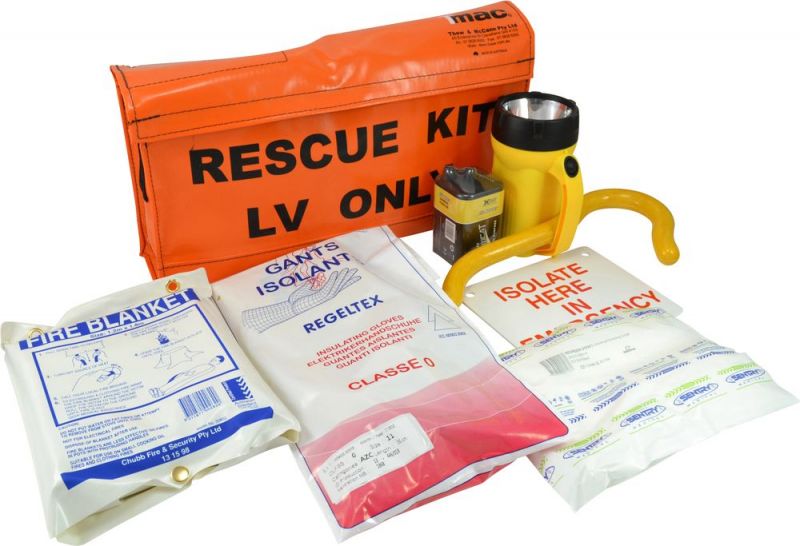
This Low Voltage Rescue Kit (LVR kit) holds the equipment needed to safely rescue a person in contact with a live low-voltage source, and is designed for workers in the electrical industry. It is suitable for use up to 1000V. Every item in it exists to solve one problem: getting a casualty free without the rescuer becoming the second casualty.
Why choose this Low Voltage Rescue Kit
The kit is organised around the rescue sequence rather than being a general first aid box. The Low Voltage Rescue Hook allows a casualty to be moved clear of a live conductor without direct contact; the 1000V insulating gloves protect the rescuer if contact is unavoidable; the "Isolate Here" sign stops the supply being re-energised while the rescue is under way. Instinct says grab the person - and in an electrical incident that instinct kills rescuers.
Only after that does it address the injury. A burn dressing covers electrical and arc-flash burns, and the fire blanket handles ignited clothing or a small fire at the point of contact - both realistic consequences of an electrical incident, and both things a standard first aid kit is poorly set up for.
Two small items matter more than they look. The Test Due Label exists because insulating gloves are only rated while they remain in test - untested gloves are not protection, they are a false sense of one - so the kit carries its own reminder of when it must be re-certified. The torch is there because isolation frequently means you have just switched off the lights.
Key features
- Designed for low voltage rescue in the electrical industry
- Suitable for use up to 1000V
- 1000V insulating gloves (2)
- Low Voltage Rescue Hook - non-contact casualty removal
- "Isolate Here" sign - prevents re-energisation during rescue
- Burn dressing and fire blanket for electrical burns and ignition
- Torch and Test Due Label included
- Supplied in a rescue kit bag
Specifications
| Product | Low Voltage Rescue Kit (LVR Kit) |
| Rated for | Up to 1000V |
| Burn Dressing | 1 |
| Fire Blanket | 1 |
| 1000V Insulating Gloves | 2 |
| "Isolate Here" Sign | 1 |
| Low Voltage Rescue Hook | 1 |
| Rescue Kit Bag | 1 |
| Test Due Label | 1 |
| Torch | 1 |
Common uses
Electrical contractors, switchboard and distribution work, construction sites, mining and industrial maintenance, and any site where workers perform live low-voltage work or work near it - many of which mandate an LVR kit and current LVR training on site. The rescue hook is the item most often replaced or duplicated across vehicles: the Low Voltage Rescue Hook is available separately, and a spare 1.2 x 1.8m fire blanket is worth having at the board itself. Also see our construction site and builders first aid kits for the general first aid a site still needs alongside it.
Low Voltage Rescue Kit FAQs
What is a low voltage rescue kit?
It is the emergency equipment used by trained personnel to free a casualty from contact with a live low-voltage source and treat the immediate consequences - a rescue hook for non-contact removal, insulating gloves, isolation signage, and burn and fire equipment.
What is considered low voltage in Australia?
Under Australian electrical standards, low voltage generally means not exceeding 1000V AC or 1500V DC. This kit is rated for use up to 1000V. Anything above that range is high voltage and requires different equipment, training and procedures entirely.
What is in this kit?
Burn dressing (1), fire blanket (1), 1000V insulating gloves (2), "Isolate Here" sign (1), Low Voltage Rescue Hook (1), rescue kit bag (1), Test Due Label (1) and torch (1). Contents vary between suppliers, so check the listed contents rather than assuming a generic LVR list.
Why is there a Test Due Label?
Because insulating gloves carry a rating only while they remain within their test period. Gloves that are out of test, or that have been punctured or perished, do not provide the protection stamped on them. The label records when re-testing is due so the kit is not relied on past that date.
Can anyone use a low voltage rescue kit?
No. It is for personnel with current low voltage rescue training, working to their site procedures. The equipment does not substitute for training - knowing the isolation sequence and when it is safe to approach is the part that saves lives.
What should be done first in an electrical incident?
Do not touch the casualty while they may still be in contact with a live source. Isolate the supply if it can be done safely and mark it so it cannot be re-energised, or use the insulated rescue hook to move them clear. Then call 000, begin resuscitation if required, and treat burns.
For use by personnel with current low voltage rescue training, working in accordance with their site procedures and the relevant Australian electrical standards. Rated for use up to 1000V - not for high voltage work. Insulating gloves must be inspected before every use and kept within their test period; equipment that is out of test, damaged or perished must not be relied upon. Never approach a casualty who may still be in contact with a live source. In an emergency, call 000.
Frequently bought together
You may also need