

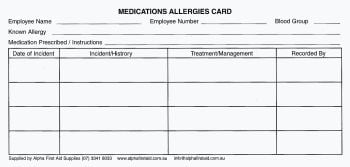
Allergy Cards (10)
€3.74
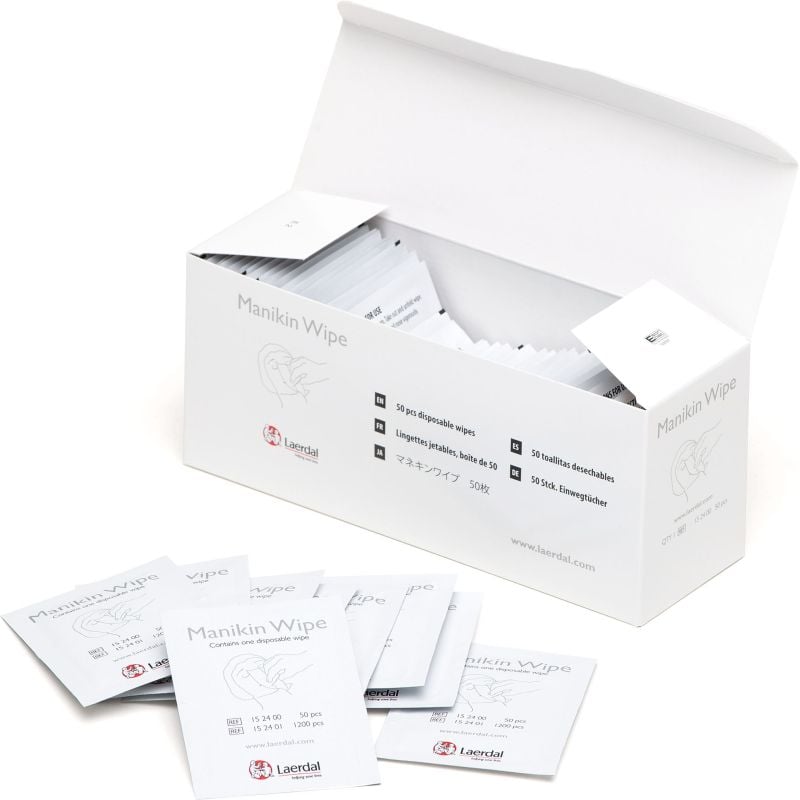
Resusci manikin wipes for cleaning CPR training manikins between sessions. They do the job a face shield cannot: a shield stops mouth contact during a session, but the manikin face, chest and airway surfaces still need wiping down afterwards, and household cleaners can damage the skins they are used on.
Purpose-made manikin wipes exist because face skins are soft, expensive and chemically fussy. Cleaning them with whatever is under the sink degrades the material, and a cracked or tacky face skin is both unhygienic and unpleasant enough to distract a class.
They also make hygiene auditable. A training provider asked how it manages infection control between cohorts wants a defensible answer — dedicated wipes, used to a routine, is one; a bottle of spray from the kitchen is not.
Use them alongside per-student manikin face shields: shields during the session, wipes between sessions. A larger pack of 50 suits high-throughput providers.
| Type | Manikin cleaning wipes |
| Use | Between training sessions |
| Suits | Adult, junior and infant manikins |
| Pricing unit | Pack |
| SKU | RES-WIPE |
RTOs, hospitals, schools and workplaces maintaining CPR manikins. Use with the Brayden Pulse and Resusci Junior. Also see the AEROWIPE alcohol manikin swabs and the larger pack of 50.
Face shields or manikin wipes between users, with face skins and airway parts replaced periodically. Treat it as a standing consumable cost, not a one-off — it is the line most often left out of a purchase comparison and the one that decides whether a manikin is still usable in year three.
Substantially. Compression technique, depth and hand position all differ — two fingers or two encircling thumbs rather than two hands. Practising infant technique on adult anatomy trains the wrong motor pattern, which is why a dedicated infant manikin exists at all.
Face and body skins, airway parts or valves, and hygiene items between students. Check the consumable list for your specific model rather than assuming parts are shared across brands — they usually are not.
It depends on your instructor-to-student ratio far more than on the manikin. The practical constraint is hands-on repetitions per learner: two manikins for eight students gives each person a fraction of the practice that six manikins would.
These are standard teaching manikins used across workplace, community and clinical training. Whether a specific model satisfies a particular accredited unit of competency is a question for your training package — confirm rather than assume.
You must not rely on the information on this site as an alternative to medical advice from your medical physician or other qualified healthcare provider. Consult your healthcare provider immediately if you think that you may have a medical emergency or for the diagnosis and treatment of injuries. Always seek the advice of your physician or other qualified healthcare provider before starting any new treatment or with any questions that you may have regarding a medical condition or injury.
| Brand | Laerdal |
|---|