

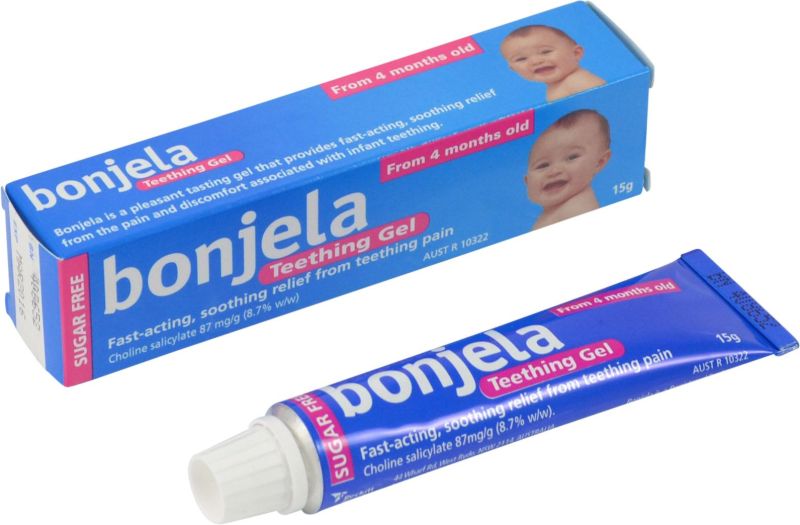
Bonjela Teething Gel 15g
Miscellaneous
$24.41
Secure checkout
VISA
Mastercard
Apple Pay
Google Pay
Also accepted
AMEX
Afterpay
Zip
Klarna
PayPal
In stock
Only 1000 left
SKU
99403
Bonjela Teething Gel is a sugar-free gel for the pain and discomfort of infant teething, containing choline salicylate 87mg/g (8.7% w/w). The pack states it is for use from 4 months old. 15g tube, AUST R 10322.
What is actually in this teething gel
Choline salicylate. That is a salicylate, the same family as aspirin, and it is the reason this gel needs to be used strictly as the pack directs rather than reapplied freely through a difficult night.
It is worth knowing before you buy, because many parents assume a teething gel is an inert soother. This one is a medicine with an active ingredient, a maximum frequency and a reason for both.
Do not exceed the dose or frequency on the pack, and do not use it for longer than the pack states. Salicylate toxicity in infants from repeated teething gel application is documented in the Australian paediatric literature, in cases where a gel was applied far more often and for far longer than directed. Speak to your pharmacist before use, particularly if your child is unwell, taking any other medicine, or has a viral illness such as chickenpox or influenza. Seek medical advice immediately if your child becomes drowsy, breathes rapidly, vomits repeatedly or seems unwell after use.
Ask the pharmacist, and ask about alternatives
Because of the salicylate content, this is a product to buy after a conversation rather than off a shelf. There are teething products formulated without choline salicylate, and for a young infant a pharmacist may well point you to one of those. That is a reasonable outcome and worth asking about directly.
What helps besides a teething gel
Most teething discomfort is managed without medication at all: a clean chilled (not frozen) teething ring, a cold washer to chew, gentle gum pressure with a clean finger, and wiping dribble away to stop a rash. Those carry no dose limit and no active ingredient, and for many babies they are enough.
Browse medical supplies, or see first aid supplies.
Specifications
| Active ingredient | Choline salicylate 87mg/g (8.7% w/w) |
| Brand | Bonjela, by Reckitt |
| Size | 15g |
| Age on pack | From 4 months old |
| Sugar | Sugar free |
| Colour | Colour free |
| Registration | AUST R 10322 |
Bonjela Teething Gel FAQs
What is the active ingredient in Bonjela Teething Gel?
Choline salicylate 87mg/g, which is 8.7% w/w. Choline salicylate is a salicylate, the same drug family as aspirin. The gel is also sugar free and colour free.
From what age can it be used?
The pack states from 4 months old. Because of the salicylate content, discuss it with your pharmacist before using it on a young infant, and ask what non-salicylate options exist.
How often can I apply it?
Only as often as the pack directs, and no more. This is the most important instruction on the product. Documented cases of salicylate toxicity in infants involved a gel being applied many times a day over an extended period.
Is there a teething gel without salicylate?
Yes, teething products are made without choline salicylate. If you would rather avoid a salicylate in a young infant, ask your pharmacist for one of those specifically.
Can I use it if my baby is unwell?
Ask a pharmacist or doctor first, especially during a viral illness. Salicylates are approached cautiously in children with viral infections, so a child who is unwell is a reason to check rather than continue.
What else helps a teething baby?
A chilled but not frozen teething ring, a cold clean washer to chew, gentle pressure on the gum with a clean finger, and keeping the chin dry to prevent a dribble rash. None of these have a dose limit.
When should I see a doctor instead?
Teething does not cause high fever, diarrhoea or a very unsettled, floppy or unwell baby. If those are present, it is not teething and needs review. Seek advice immediately if your child is drowsy, breathing rapidly or vomiting after using the gel.
Sources. Active ingredient, strength, pack age and registration are taken from the product pack. Salicylate toxicity from repeated teething gel use in infants is reported in the Medical Journal of Australia (2011) and the Journal of Paediatrics and Child Health (2018). Last reviewed 23 September 2026.
Always read the label and use only as directed. Do not exceed the stated dose or frequency. If symptoms persist, talk to your health professional. This information is a general guide and is not medical advice.
Frequently bought together