


Reviewed by the Medibc First Aid Team — last updated May 2026.
The single most dangerous moment in workplace first aid isn't the injury itself — it's the casualty transfer. An unconscious worker dropped from a stretcher, a spinal injury aggravated by a poor lift, or a heart attack patient delayed by stair-descent confusion can turn a survivable incident into a fatal one. Safe Work Australia's Code of Practice requires every workplace to have an evacuation plan AND the equipment to execute it.
This guide covers the four stretcher types you need to know (foldaway, scoop, sled, stair chair), when each one applies, what splints and air splints add to your rescue kit, and the WHS rules for stretcher inventory and training.
When do you need a workplace stretcher?
The "before paramedics arrive" rule
Australian metropolitan paramedic response times average 8-12 minutes for Priority 1 calls. Remote workplaces (mines, farms, construction beyond 30 minutes from the nearest hospital) routinely face 30-90 minute waits. In any environment where you need to MOVE a casualty before professional help arrives — out of an enclosed space, away from immediate danger, or down to ground level — you need a stretcher.
WHS risk assessment triggers
Your workplace WHS risk assessment should flag stretcher requirements when:
- The workplace is multi-storey AND has more than 50 workers
- The workplace is remote (paramedic ETA over 30 minutes)
- The work involves elevated platforms, confined spaces, or unstable ground
- The workforce includes high-risk roles (welding, electrical, machinery)
- The workplace serves customers in stretcher-need conditions (gyms, sports clubs, aquatic centres)
Industry-specific requirements
Construction, mining, and outdoor education have separate industry Codes that mandate stretcher provision and specifications. Check your sector's WHS Code in addition to the general one. The Australian Red Cross publishes free first aid risk assessment templates customised by industry.
Type 1: Foldaway carry stretcher (with wheels)
What it is
A one-piece carry stretcher with collapsible alloy frame, fabric or vinyl deck, carry handles at both ends, and (in better models) wheels at one end. Folds to a compact package for cabinet storage. Used for: rolling/lifting a conscious or semi-conscious casualty onto the deck, then carrying or wheeling out.
When to use
First-choice stretcher for flat-floor workplaces: offices, factories, warehouses, retail centres, schools. Casualty must be conscious, alert, and have no suspected spine/pelvic injury. Two trained workers can comfortably operate it.
Limitations
NOT for spinal injury — rolling the casualty onto the stretcher could cause secondary injury. NOT for narrow staircases or steep grades — the wheels don't help and the rigid frame is hard to manoeuvre. NOT for unstable casualties — the casualty rolls or falls off easily.
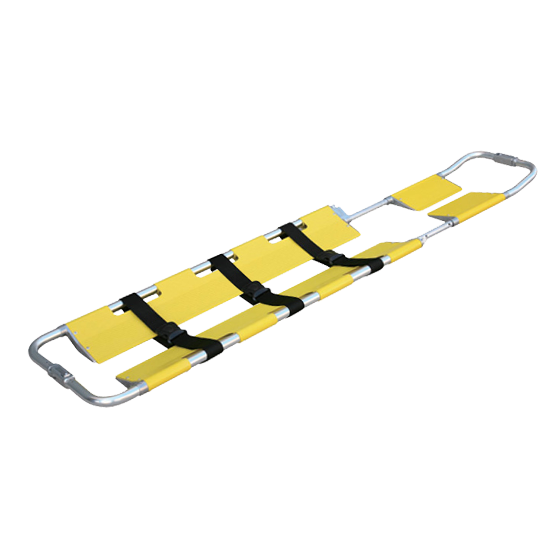
Type 2: Scoop stretcher (split-frame)
What it is
A two-piece alloy stretcher that splits lengthwise. Each half slides under the casualty from each side (rolling the casualty 5-10 degrees), then the halves clip together in the middle without lifting the casualty. Once secured, lift via head and foot ends.
When to use (spinal-safe scenarios)
The ONLY safe stretcher for suspected spinal injury, head injury with unconsciousness, multi-trauma, or any casualty unable to roll. Standard in ambulances, hospitals, sports medicine clinics, and high-risk workplaces (construction, sports clubs, marine).
Training requirement
Scoop stretcher operation requires HLTAID014 advanced first aid certification. Sequence: stabilise the head, split the scoop, position each half by sliding (not lifting), lock the centre clips, secure the casualty with 3-4 straps, lift in coordinated 1-2-3 count, transfer onto wheeled stretcher or ambulance trolley.
Type 3: Evacuation sled (for stairs and rough terrain)
What it is
A flexible plastic or fabric sled with hand-loops, head strap, body straps, and a pull tether. The casualty lies fully on the sled with body strapped in place. ONE rescuer can pull the sled by the tether down stairs, through corridors, or over rough ground — the rigid sled bottom slides smoothly.
When to use
High-rise office buildings (descend 10+ floors of stairs solo). Multi-storey factories with no lifts or lift power loss. Aged care facilities for fire evacuation. Mining operations with confined access. Marine operations (boat to dock). Any environment where stairs or narrow passages block wheeled stretchers.
The strap-in sequence
Sled evacuation depends on perfect strapping. Standard order: 1) casualty supine on the sled, head at the tether end; 2) head strap (firm but not tight); 3) chest strap; 4) hip strap; 5) leg strap. Test by gently rocking the sled before pulling — the casualty should not slide. Train at least 4 workers per workplace in sled use.
Type 4: Stair chair (for conscious patients)
What it is
A folding chair with shoulder straps for the casualty, lap belt, foot rest, and handles at the back and front. Best example: AERORESCUE alloy collapsible stair chair. Folds flat for cabinet storage.
When to use
Conscious, alert casualty who cannot walk but can sit upright. Common scenarios: cardiac chest pain, dizziness/syncope, leg/foot injury preventing standing, post-seizure recovery, heat exhaustion. The casualty sits in the chair, rescuers carry up or down stairs by the handles. Two-person operation.
Why it matters
Most workplace casualties are conscious. Rolling them onto a flat stretcher is unnecessary and uncomfortable. A stair chair lets them maintain dignity, see where they're going, and assist with their own transfer. Ideal in office, hospitality, retail, aged care.
Splints and immobilisation
Why splints matter before transport
Any suspected fracture, dislocation, or major sprain should be immobilised BEFORE the casualty is moved. Movement of broken bone ends causes additional soft tissue damage, blood vessel injury, and severe pain — sometimes triggering shock. Even a "minor" wrist injury should be splinted before a 30-minute drive to hospital.
Aluminium foam splints (mouldable)
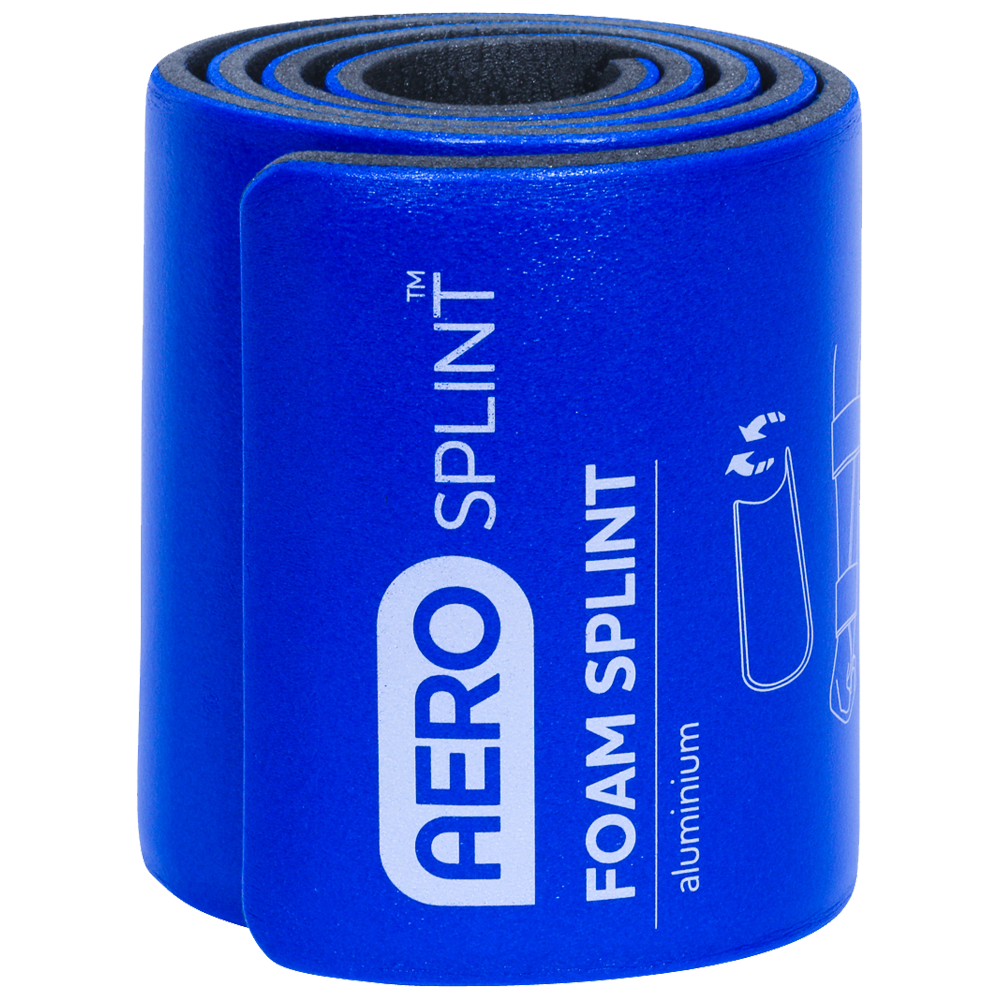
Rolled or folded sheets of soft aluminium sandwiched in foam padding. Cut to length, bend to fit the limb's natural angle, secure with crepe bandage. Versatile: same splint works for wrist, forearm, finger, ankle. Stock 2-3 in mixed sizes in every workplace kit. The AEROSPLINT rolled foam splint fits in a small first aid kit pocket.
Air splints (inflatable)
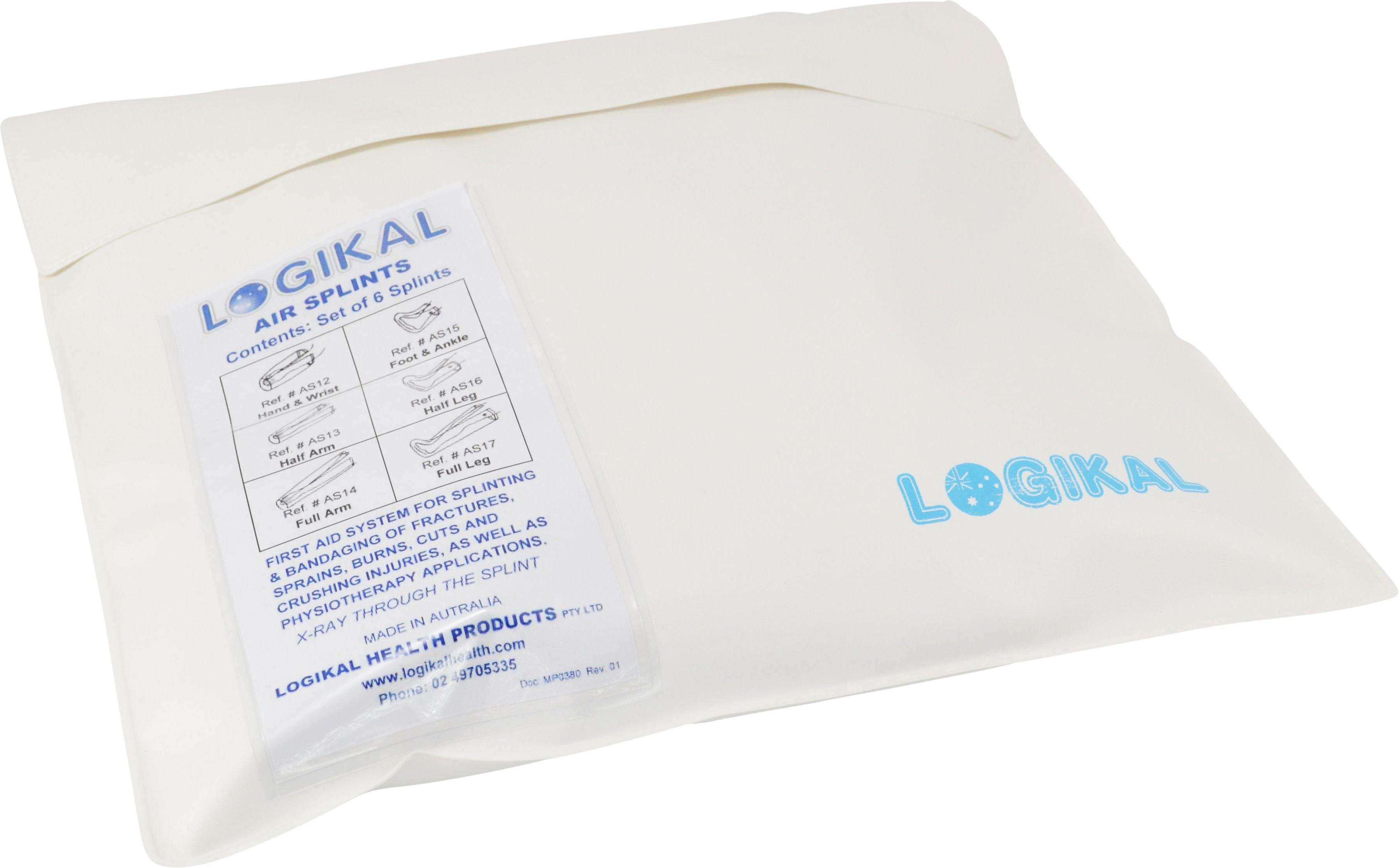
Clear plastic sleeves that fit around the limb and inflate by mouth (or pump in advanced kits). The inflated splint provides 360-degree immobilisation PLUS mild compression that helps slow venous bleeding. Best for: closed fractures, transport over rough terrain, suspected hairline fractures where the casualty can move slightly. The complete air splint set covers all limb sizes (hand/wrist, half arm, half leg, full leg).
When NOT to use a splint
Compound (open) fracture with bone visible — cover with dressing, do not realign, transport without splint pressure. Severe deformity with compromised circulation (cold/blue extremity) — splint in position found, do not straighten. Pelvis or hip fractures — use a pelvic binder, not a limb splint; transport on a scoop stretcher only.
Workplace stretcher storage and access
Where to store
Stretchers and stair chairs need wall-mount brackets or floor-stand storage near the first aid cabinet but NOT inside the cabinet (too big). Best placement: a clearly-labelled "Emergency Equipment" cupboard within 30 metres of the highest-occupancy work area, or in a marked spot on the first aid room wall.
Multi-storey workplaces
One stretcher per floor for low-rise (under 4 floors). High-rise: one wheeled stretcher per lift bay, one evacuation sled per 5 floors stored in the fire-stair landing. Stair chairs at each floor first-aid station.
Signage requirements
Australian Standard AS 1319 green-and-white emergency equipment sign above the stretcher storage location. Sign visible from 7+ metres. Include arrows pointing to the equipment from the workplace's main pedestrian thoroughfares.
Training, drills and WHS records
Training requirements
Stretcher operation is part of HLTAID014 (Provide advanced first aid). Workplaces should have at least 2 advanced-first-aid-trained workers per shift. CPR refresh (HLTAID009) every 12 months. Full HLTAID014 renewal every 3 years.
Quarterly drills
Every 3 months, run a stretcher drill: nominate a "casualty", set up the stretcher, log-roll, carry 10 metres, navigate one obstacle (door, corner, stairs depending on workplace). Document: drill date, participants, equipment used, issues identified, corrective actions.
Post-incident review
After any real stretcher use: incident debrief within 24 hours, equipment inspection (re-clean, check straps, refill consumables), training gap analysis (did everyone know their role?), WHS record update.
Industry-specific recommendations
Construction sites
Scoop stretcher + cervical collar + aluminium splint set + air splint set at site office. Stair chair if elevated platforms or scaffolding are in use. Pre-position equipment at each major work zone over 100 metres from the office.
Mining and remote workplaces
Full rescue inventory: scoop stretcher, evacuation sled (for shaft/tunnel work), foldaway with wheels, air splints, aluminium splints, cervical collars, pelvic binder. Helicopter-evacuation-rated stretchers (basket aviation type) for remote sites.
Schools and childcare
Child-sized stretcher (foldaway, 1.2m). Stair chair for first aid room transfers. Soft-paediatric aluminium splints (rolled foam type). Always conduct evacuation drills with the actual stretcher, not just verbally walked through.
Sports clubs and gyms
Scoop stretcher mandatory under sports medicine guidelines (suspected concussion = spinal precaution). Field-ready aluminium splint set. Pop-up CPR mat. Visible "First Aid & Stretcher" sign at the sideline or club entrance.
Aged care and disability services
Hoist + transfer board for daily moves. Foldaway stretcher and stair chair for emergencies. Air mattress overlay for casualty transport to ambulance. Pressure-mapping cushion on long-distance transfers.
Frequently asked questions
What's the difference between a scoop stretcher and a foldaway stretcher?
A scoop stretcher splits lengthwise into two halves that slide under a casualty from each side, reducing spinal movement during transfer - essential for suspected spinal injury, unconscious casualties, or anyone unable to roll. A foldaway stretcher is a one-piece carry stretcher that the casualty is rolled or lifted onto - used for conscious patients with non-spinal injuries, or moving a casualty over distance. Workplaces with potential head/spine injury risk (construction, sport, transport) should stock BOTH.
When do you use an evacuation sled vs a wheeled stretcher?
Evacuation sleds (like Med Sled) are designed for HIGH-RISE building evacuations, stair descents, mines, ships, and any environment where wheels can't roll. The casualty lies on the sled and rescuers PULL with a tether - one person can move a 100kg casualty down stairs. Wheeled stretchers (foldaway with wheels) suit flat workplaces, factory floors, large offices. Choose by your worst-case egress route: if any rescue path includes stairs or narrow passages, sled wins.
Do you need training to use a workplace stretcher?
Yes. Stretcher operation is covered in HLTAID014 'Provide advanced first aid' but not in HLTAID011 basic first aid. Workplaces with on-site stretchers should: have at least 2 workers trained in advanced first aid; conduct quarterly stretcher drills (set up, log-roll a 'casualty', carry 10 metres, descend a flight of stairs); document the drill in WHS records. Untrained use can cause secondary injury to casualty AND back injury to rescuer.
How are workplace air splints different from aluminium foam splints?
Air splints inflate around the limb providing 360-degree immobilisation AND mild compression to slow bleeding. Best for: distal limb fractures, suspected hairline fractures, transport over rough terrain. Aluminium foam splints (rolled or folded sheets of soft aluminium with foam padding) MOULD to any limb shape - bent to fit, holds position. Best for: angulated fractures, anatomic deformity, finger/wrist splinting. Workplace kits should ideally have both: 1 set air splints + 2-3 aluminium foam splints in mixed sizes.
Where do stretchers and splints fit in workplace WHS compliance?
Safe Work Australia's Code of Practice 'First Aid in the Workplace' lists stretchers as 'specialised equipment' required when workers may need to be moved before paramedics arrive - mines, remote sites, large warehouses, multi-story factories, sports clubs. Industry-specific Codes (Construction WHS, Mining WHS, Outdoor Education) prescribe stretcher specifications. Document your stretcher inventory in the WHS first aid risk assessment and review annually.
Read next: Stretcher and rescue equipment slot into the broader DRSABCD action plan — the Australian primary survey for any emergency response.
Workplace Stretcher & Rescue Equipment
AERORESCUE alloy stretchers, evacuation sleds, stair chairs, air splints and aluminium foam splints for workplace and outdoor rescue.
AERORESCUE Foldaway Stretcher with Wheels
Wheeled foldaway carry stretcher for flat workplace floors.
Shop Now
AERORESCUE Alloy Scoop Stretcher
Split-design scoop for suspected spinal & unconscious casualties.
Shop Now
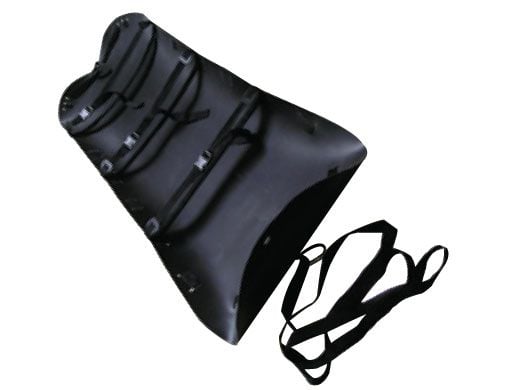
Med Sled Evacuation Stretcher with Tether
High-rise & stair evacuation sled, 1-person operable.
Shop Now
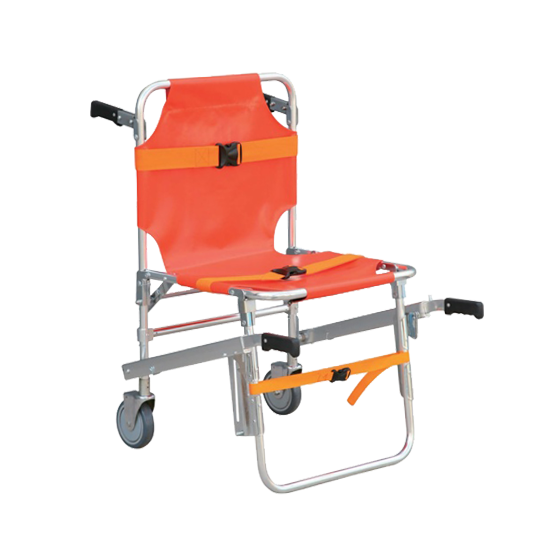
AERORESCUE Collapsible Stair Chair
Seated patient transfer chair for conscious casualties & stairs.
Shop Now
Sources: Safe Work Australia — First aid in the workplace, healthdirect.gov.au — First aid, Australian and New Zealand Committee on Resuscitation (ANZCOR), Australian Red Cross.