


Reviewed by the Medibc First Aid Team — last updated May 2026.
According to Safe Work Australia, more than 30,000 Australian workers report respiratory-related work injuries each year — from dust inhalation on construction sites to infectious disease exposure in healthcare. The right face mask, worn correctly, is one of the cheapest and most effective controls available. But picking the wrong mask, or using a right one incorrectly, gives a false sense of safety.
This guide explains the four mask families Australian workplaces actually use (surgical, P2/N95, CPR pocket masks, bag-valve-masks), the standards that govern them, when each is required, and the fit-check / replacement rules every WHS officer should know.
The four mask families — what each one does
1. Surgical (medical) masks
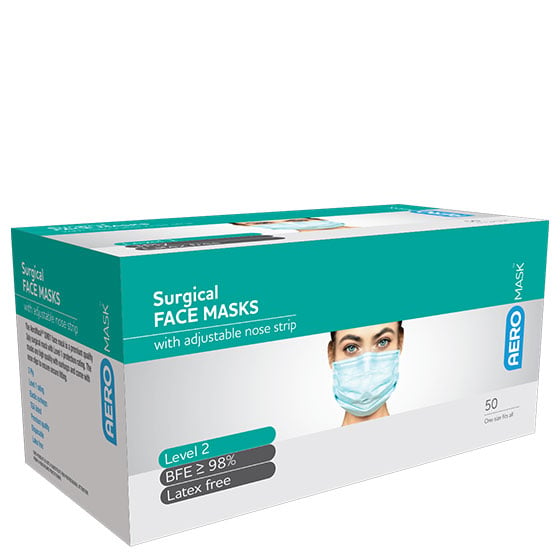
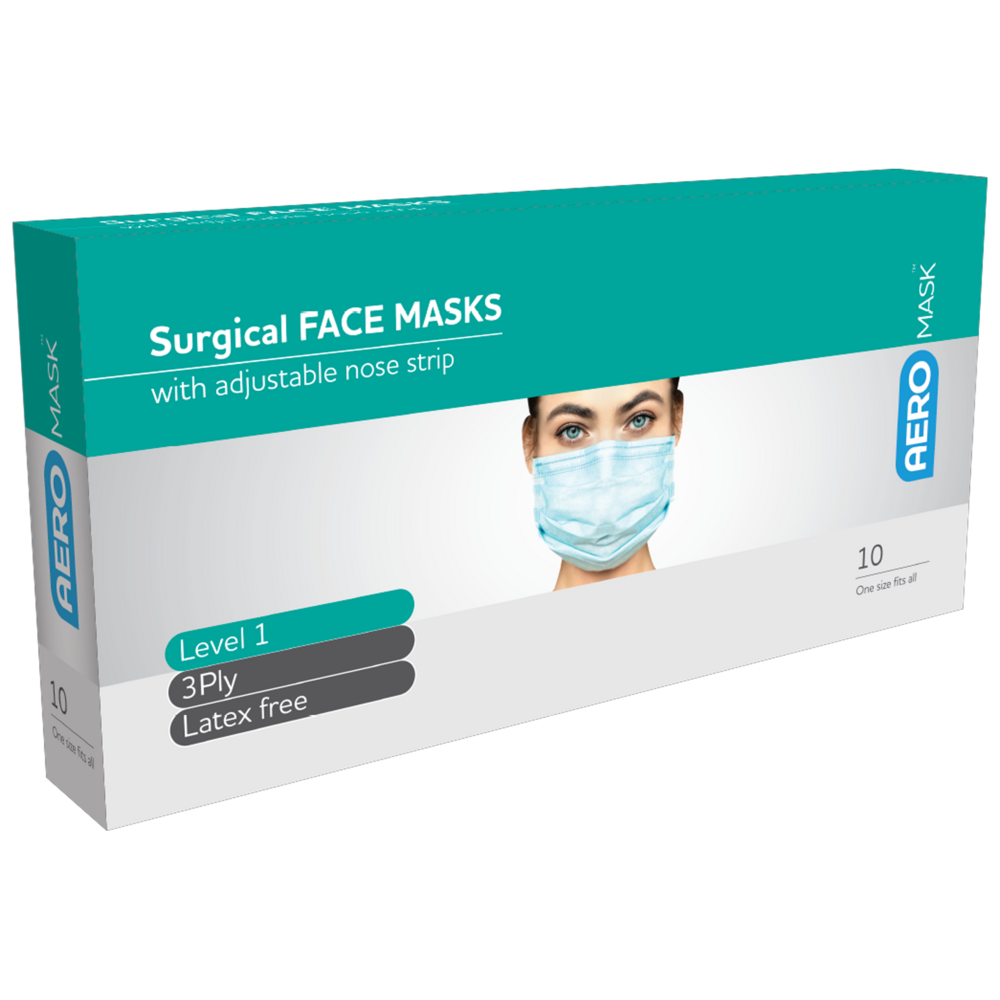
Pleated, ear-loop or tie-back masks made from non-woven polypropylene. Regulated by AS 4381 and TGA-registered as medical devices. Three Australian levels: Level 1 (low fluid resistance, general use), Level 2 (moderate, most clinical work), Level 3 (high, surgery / heavy splatter). Block large droplets and splatter — designed mainly to protect OTHERS from the wearer's exhaled droplets. They do NOT seal to the face and DO NOT filter fine aerosols.
2. P2 / N95 respirators (fit-tested)
Tight-fitting respiratory protective devices that filter at least 94% (P2, Australian) or 95% (N95, US) of airborne particles down to 0.3 microns. Governed by AS/NZS 1716 (manufacture) and AS/NZS 1715 (selection, use, maintenance). REQUIRE annual fit-testing for workers in healthcare, mining, construction (dust), and any aerosol-generating procedure. Protect the WEARER from inhaled hazards — the opposite priority to surgical masks.
3. CPR pocket masks
Single-use clear PVC mask with a one-way valve that allows the rescuer to give breaths without direct mouth-to-mouth contact. Carried in a pocket pouch or first-aid kit. The Australian and New Zealand Committee on Resuscitation recommends a pocket mask for every workplace first aider — it protects against blood and saliva exposure during rescue breathing.
4. Bag-valve-masks (BVM)
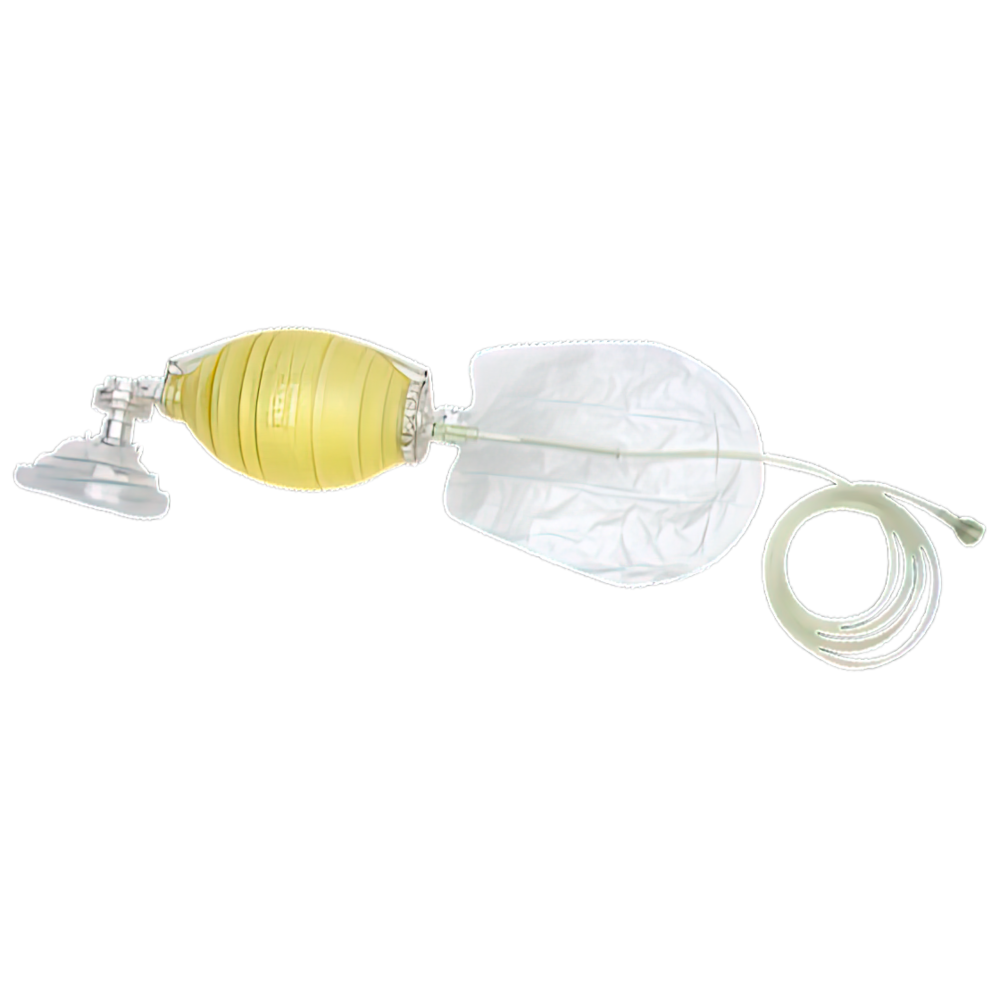
Clinical-grade manual resuscitator: self-inflating bag, valve, and face mask. Used by trained first aiders (HLTAID014+), paramedics and clinical staff to ventilate an unconscious non-breathing casualty. Connects to oxygen tubing to deliver 100% FiO2 with reservoir bag. Standard kit in workplace first aid rooms, ambulances and clinics.
Australian Standards governing masks & respirators
AS 4381 — single-use medical face masks
Defines the three barrier protection levels (1, 2, 3) for medical/surgical masks. Tests bacterial filtration efficiency, breathability, fluid resistance, and flammability. All Australian surgical masks should display their AS 4381 level on the box.
AS/NZS 1716 — respiratory protective devices
Manufacturing standard for P1/P2/P3 respirators (Australian equivalents of N95/N99/N100). Tests filter efficiency, breathing resistance, valve performance, and head harness. Look for the "AS/NZS 1716" mark on respirator packaging.
AS/NZS 1715 — selection, use and maintenance
Practical companion standard: how to choose the right respirator for the hazard, fit-test, train workers, store and dispose of respirators. Workplaces requiring P2/N95 respirators must comply with both 1716 (the device) and 1715 (the program).
Surgical mask vs P2/N95 — quick decision guide
Use a surgical (Level 1-3) when:
- Routine clinical care, dental work, food prep, light first aid
- The goal is to protect OTHERS (you might cough/sneeze)
- Workplace requires "source control" during respiratory illness season
- Light splash protection in non-aerosol-generating tasks
Use a P2/N95 when:
- Aerosol-generating procedures (intubation, CPR, dental scaling, suctioning)
- COVID-19, TB, measles, or any airborne-infectious patient
- Construction dust (cement, silica), demolition, sanding
- Bushfire smoke or hazard reduction burns
- Spray painting, welding fume, agricultural chemical application (consult SDS)
The common mistake
Wearing a P2/N95 with a beard, untrimmed stubble, or without a fit-test gives ZERO seal — effectively a surgical mask. Workers requiring respirator-grade protection must be clean-shaven where the mask seals.
CPR pocket masks — the first aider's must-carry
Why every workplace first aider needs one
Modern CPR guidelines (ANZCOR 2021) recommend a barrier device for rescue breathing whenever available. A CPR pocket mask:
- Prevents direct mouth-to-mouth contact (blood, saliva, vomit, infectious disease)
- Includes a one-way valve so casualty exhalations don't return to the rescuer
- Some include an O2 inlet port for supplemental oxygen
- Folds into a pocket pouch or key-ring for emergency access
How to use a CPR pocket mask
- Open the mask and pinch the inflatable cushion around the casualty's nose and mouth.
- Hold the mask in place using both thumbs (E-C grip) on the cushion and fingers along the jaw.
- Tilt the head back to open the airway.
- Deliver 2 breaths over 1 second each — you should see the chest rise.
- Continue 30 compressions to 2 breaths until paramedics arrive.
Stocking pocket masks at work
Place a pocket mask in: every workplace first aid kit, every first aid officer's personal kit, vehicle first aid kits, school first aid rooms, sports club kits. The hard-cover version protects the seal during storage and is more durable than soft-pouch versions.
Bag-valve-mask (BVM) — clinical resuscitation
What it does
The BVM is a manual ventilator. With one hand sealing the mask to the face and the other squeezing the bag, the rescuer delivers a measured tidal volume (around 500–600 ml for an adult) of air or oxygen. With an attached oxygen reservoir bag and 10-15 L/min O2 flow, the BVM can deliver close to 100% oxygen — far more than mouth-to-mouth (which delivers ~16% O2).
Who uses it
BVM operation is part of HLTAID014 advanced first aid and HLTAID015 (Provide advanced resuscitation). Workplaces with advanced first aiders — mining, construction, remote, sports clubs — should stock adult + child + infant BVMs. Standard in ambulances, hospitals, and clinical first aid rooms.
Use technique
Two-rescuer ventilation works best: one holds the mask with both hands (better seal), the other squeezes the bag. With single rescuer, use the E-C grip (thumb and index finger form C on the mask, other three fingers form E along the jaw). Squeeze the bag over 1 second per breath. Deliver 1 breath every 6 seconds for an adult in respiratory arrest (no compressions); 30 compressions to 2 breaths if also doing CPR.
High-flow oxygen masks
Non-rebreather mask
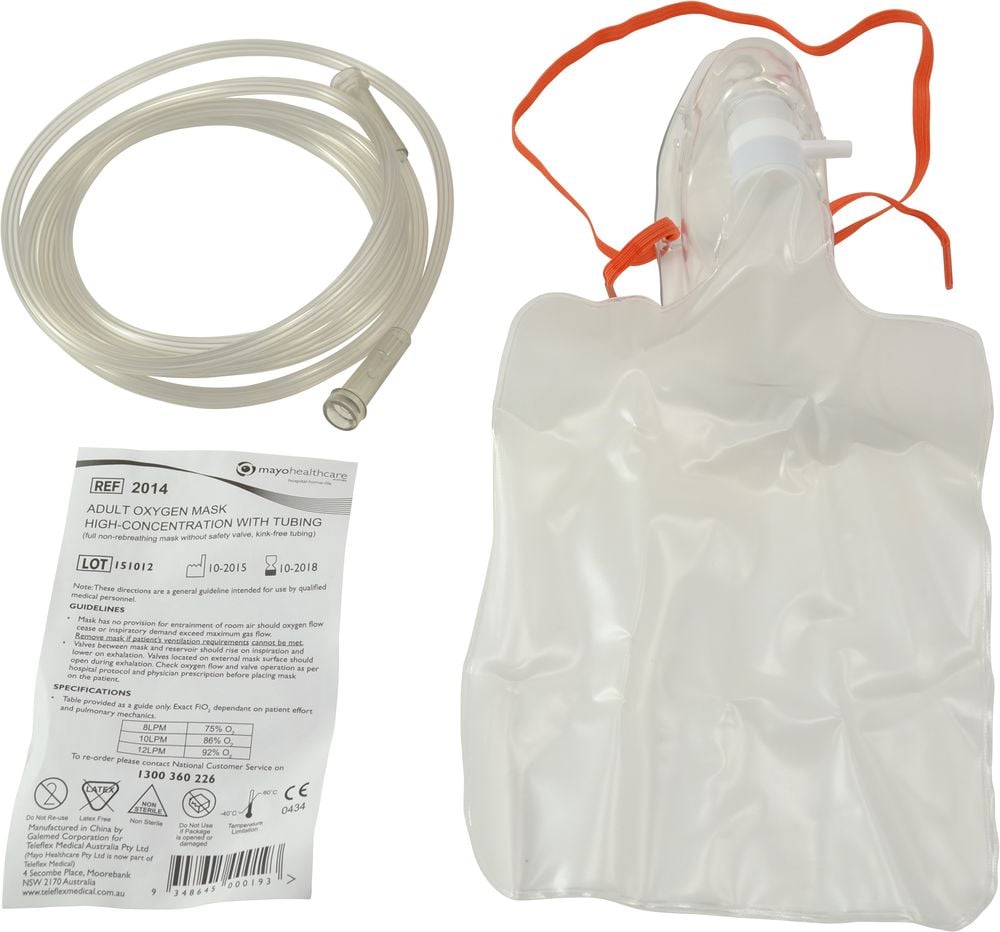
A reservoir-bag mask that delivers up to 95% O2 at 10–15 L/min flow. Used in pre-hospital and clinical care for: cardiac chest pain, severe trauma, smoke inhalation, anaphylaxis, severe asthma, COPD exacerbation (with caution). The one-way valves prevent the casualty from re-breathing exhaled CO2.
Simple face mask + nasal cannula
Lower-flow alternatives. Simple mask: 6–10 L/min, delivers 35–60% O2. Nasal cannula: 1–6 L/min, 24–44% O2 — more comfortable for long-term use, doesn't impair speech or drinking. Choose based on the casualty's needs and oxygen flow available.
Fit-testing P2/N95 respirators — the legal requirement
Why fit-testing matters
A P2/N95 only works if it seals to the face. Studies show 30-50% of untrained wearers get inadequate seals on first attempts. AS/NZS 1715 requires fit-testing for every worker required to wear a respirator — including healthcare workers, miners, construction workers in dusty trades, and emergency responders.
Qualitative vs quantitative fit-test
Qualitative: The worker wears the respirator under a hood. The tester sprays bitter (Bitrex) or sweet (saccharin) aerosol. If the worker can taste it, the fit failed. Cheap, common in clinical settings.
Quantitative: A machine measures particle concentration inside vs outside the respirator, giving a numerical "fit factor". Required in higher-stakes industries. More accurate but expensive.
Annual + when respirator changes
Fit-test annually, AND any time: a new respirator model is issued, the worker's face shape changes (significant weight change, dental work, surgery), or there's been a near-miss/failure in use.
Industry-specific mask requirements
Healthcare
Surgical Level 2 for routine patient care. P2/N95 for: COVID/TB/measles patients, aerosol-generating procedures, OT (operating theatre). Annual fit-testing mandatory. Stock children's masks for paediatric wards.
Construction & mining
P2 minimum for: silica dust (concrete cutting, sanding), wood dust, asbestos work (P3 with full suit), painting, welding (P2/P3 + fume extraction). Bushfire periods: P2 mandatory for outdoor workers.
Food & hospitality
Surgical Level 1 or food-grade beard nets during food prep. Discard between shifts. Some establishments now stock disposable face shields too (splatter protection).
Schools & childcare
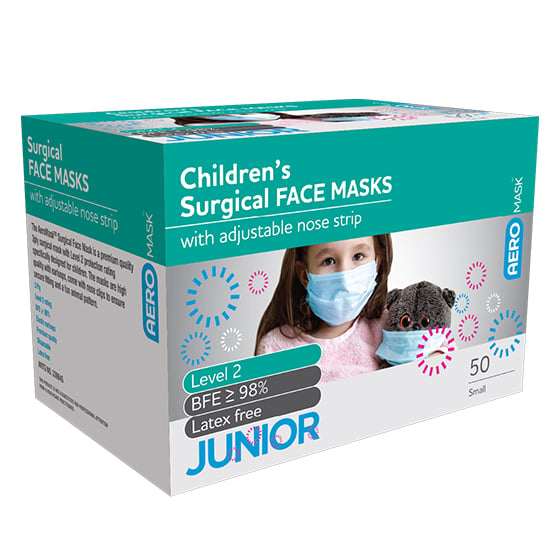
Child-sized surgical masks for outbreak periods. Workplace first aid officers carry adult + child CPR pocket masks. Train students aged 10+ on correct mask use during health-promotion weeks.
Mask storage, training and disposal
Storage
Original sealed boxes, below 30°C, away from direct sunlight, off the floor. Check expiry dates quarterly — masks have a 3-5 year shelf life. Workplace first aid cabinet should hold at least 2 weeks of normal-use volume.
Training
WHS-mandated training covers: when to wear which mask, donning sequence, user seal check (for P2/N95), discard timing, safe doffing (don't touch the front), hand hygiene before and after. Document training in the WHS register.
Disposal
Single-use masks go into clinical waste (in healthcare) or general waste (in offices/retail). Bin should be lined and lidded. Hand hygiene immediately after disposal. Never reuse, even briefly — the inside-out becomes outside-in and the seal is compromised after removal.
Frequently asked questions
What's the difference between a surgical mask and a P2/N95 respirator?
Surgical (medical) masks block large droplets and splatter - designed mainly to protect OTHERS from your exhaled droplets. They do NOT seal to the face. P2/N95 respirators are fit-tested respiratory protective devices that filter at least 94% (P2) or 95% (N95) of airborne particles down to 0.3 microns AND form a tight facial seal to protect the WEARER from airborne pathogens, dust and aerosols. AS 1716 governs respirators in Australia; AS 4381 covers medical masks. Use surgical for routine clinical/food work; P2/N95 for COVID-suspected, TB-suspected, dust, smoke, and aerosol-generating procedures.
When do you use a CPR pocket mask vs a bag-valve-mask?
A CPR pocket mask (single-use, fits in a key-ring pouch) is the FIRST-RESPONDER tool - one rescuer can give rescue breaths through a one-way valve, preventing direct mouth-to-mouth contact. A bag-valve-mask (BVM) is a clinical-grade resuscitator with a self-inflating bag - used by trained first aiders (HLTAID014+), paramedics and clinical staff to ventilate an unconscious non-breathing casualty, typically alongside CPR. ANZCOR Guideline 8.4 recommends BVM with oxygen when available. Workplaces with HLTAID014 first aiders should stock both.
Are Australian workplaces required to provide face masks for staff?
Yes - under WHS law, employers must provide PPE 'so far as reasonably practicable' when workplace hazards include airborne pathogens, dust, fumes, or splash risk. The Safe Work Australia model Code of Practice 'Personal Protective Equipment' requires: PPE supplied at no cost to workers, fit-tested for respirators (P2/N95), regular replacement, training in correct use. Specific industries have additional duties - healthcare (during patient care), construction (dust), food prep (splatter), aged care, cleaning with chemicals.
How do you fit-check a P2/N95 respirator?
User seal check (do every time you put one on): 1) Cup both hands over the respirator and inhale sharply - the mask should pull onto your face. 2) Cover with hands and exhale gently - air should NOT leak out around the edges. If you feel leakage at the nose, adjust the metal nose-clip; at the cheeks, re-position the straps. Fit-TESTING (annual, by a trained tester using bitter/sweet aerosol or quantitative machine) is different - required for healthcare and high-risk workers under AS/NZS 1715. A user seal check is NOT a substitute for an annual fit test.
How long can you wear a surgical mask or P2 before changing it?
Replace immediately if: damp, soiled, damaged, contacted with body fluids, after each patient in clinical settings, after touching the front. Otherwise: surgical masks typically last 4 hours of continuous wear; P2/N95 respirators up to 8 hours in dry conditions BUT must be discarded immediately after aerosol-generating procedures, between patients in healthcare, or when breathing becomes laboured (filter clogged). Never share or reuse a single-use mask. Industrial P2 in dusty environments often needs replacement well before 8 hours - when breathing resistance noticeably increases.
Workplace Face Masks & Respiratory PPE
AEROMASK Level 2 surgical masks, CPR pocket masks, bag-valve-mask resuscitators and non-rebreather masks for Australian workplaces and first aiders.
AEROMASK Level 2 Surgical Mask (Box 50)
Australian Level 2 surgical masks for clinics & workplaces.
Shop Now
AEROMASK Level 2 Surgical Mask (Box 10)
Compact pack for first aid kits and small workplaces.
Shop Now
AEROMASK Children's Surgical Mask (Box 50)
Child-sized masks for schools, childcare and family use.
Shop Now
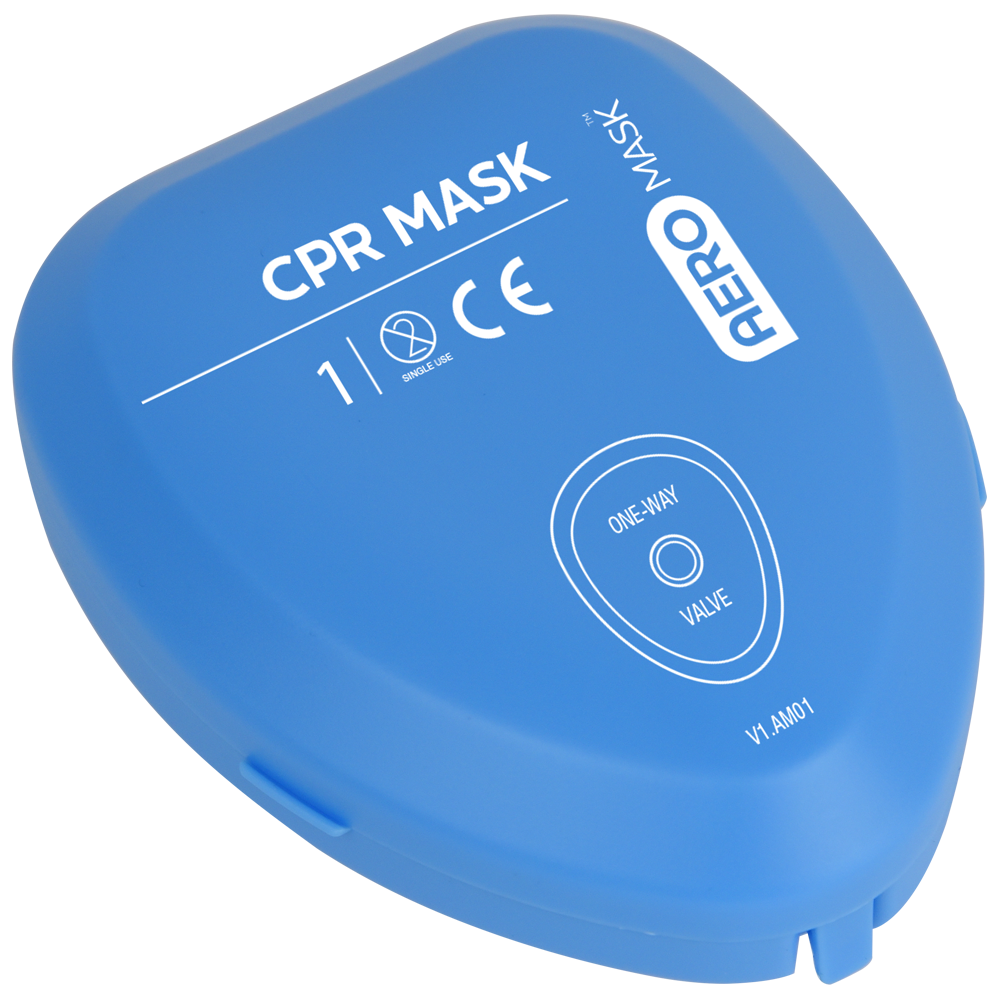
AEROMASK CPR Pocket Mask (Hard Cover)
One-way valve CPR mask, durable hard-case for workplaces.
Shop Now
Sources: Safe Work Australia — First aid in the workplace, healthdirect.gov.au — First aid, Australian and New Zealand Committee on Resuscitation (ANZCOR), Australian Red Cross.