


Reviewed by the Medibc First Aid Team — last updated May 2026.
Walk into any Australian pharmacy and you'll see at least five different wound antiseptics on the shelf: Betadine, chlorhexidine, AEROAID, Dettol, Savlon, plus alcohol swabs. They're not interchangeable. Using the wrong one can sting unnecessarily, fail to kill the right bugs, or in rare cases trigger an allergic reaction.
This guide breaks down the four antiseptic families used in Australian first aid (povidone-iodine, chlorhexidine, BAC/cetrimide, alcohol), when each one wins, who shouldn't use which, and how to stock a workplace or family kit properly. Based on healthdirect.gov.au wound care guidance and the ANZCOR first aid framework.
The first rule: water first, antiseptic second
Why rinse before antiseptic
The single most important step in minor wound care is mechanical cleansing — flushing dirt, debris and bacteria OUT of the wound with running tap water or saline. Antiseptics work on what's there; they can't penetrate clumps of dirt. Apply antiseptic AFTER the wound is visibly clean.
Tap water vs saline
Cool potable tap water is safe and effective for rinsing minor cuts and grazes. Saline ampoules (sterile 0.9% sodium chloride) are preferred for: eye irrigation (mandatory), deep wounds, wounds in immunocompromised people, and any wound where the local water supply isn't trusted. Workplace first aid kits should stock both.
Povidone-iodine (Betadine, AEROWIPE swabs)
What it is
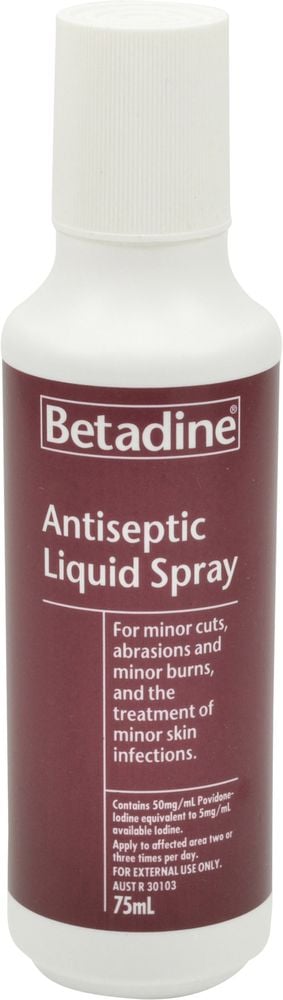
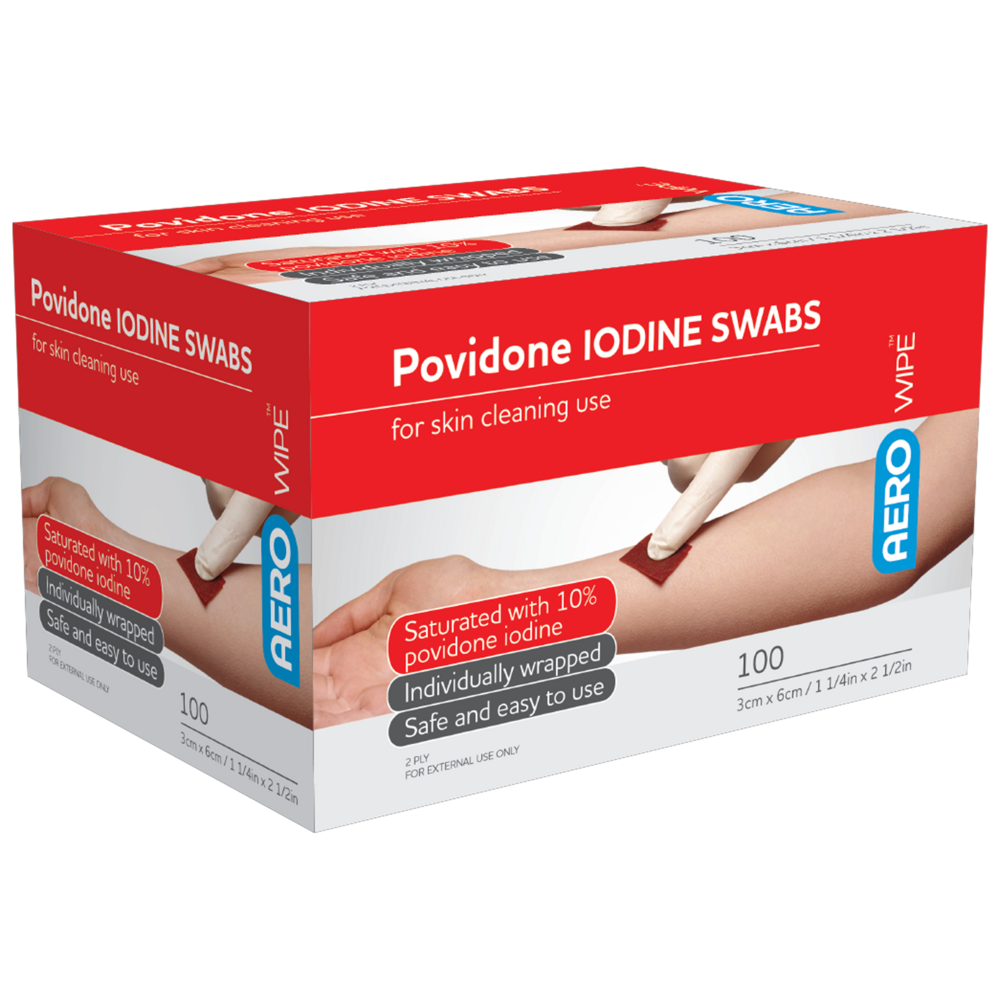
Povidone-iodine is iodine bound to a polymer carrier. Available as 10% spray (Betadine), 10% solution, surgical scrub, ointment, and single-use swabs. Releases iodine slowly on contact with skin — broad-spectrum antimicrobial activity against bacteria, viruses, fungi, and even some protozoa. For a small kit, the 15ml Riodine povidone iodine solution has a dropper tip. It also comes as a dry puffer powder, such as EDP antiseptic powder.
When to use it
- Minor cuts, grazes and abrasions after rinsing
- Post-surgical wound care (per surgeon's instructions)
- Skin prep before injections or minor procedures (alcohol swabs are alternative)
- Suspected bacterial contamination (animal bites, soil-exposed wounds)
When to avoid it
- Known iodine allergy (rare, ~0.5% population)
- Pregnancy beyond 1st trimester
- Newborns and infants under 6 months
- Thyroid disease (hyperthyroidism, Hashimoto's)
- Lithium therapy
- Large open wounds requiring prolonged application (systemic absorption risk)
The shellfish allergy myth
Some old first aid sources warn iodine allergy correlates with shellfish allergy. Modern allergy research has debunked this — shellfish allergy is to tropomyosin protein, not iodine. Shellfish-allergic patients can safely use Betadine in normal circumstances.
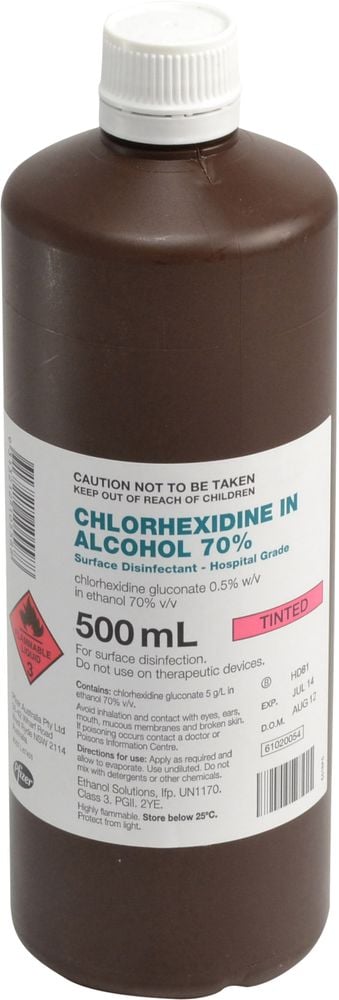
Chlorhexidine (Chlorhexidine 0.5% in alcohol 70%)
What it is
Chlorhexidine gluconate is a synthetic biguanide that binds to bacterial cell walls. Available as: aqueous 0.05% (gentle, wound irrigation), 0.5% in alcohol (skin prep, fast-acting), and 4% surgical scrub. The pink-tinted Australian variant is the clinical standard for pre-procedure skin prep.
When to use it
- Pre-procedure skin prep (injections, IV insertion, minor surgery)
- Hand hygiene in clinical settings (gentler than alcohol-only)
- Mouth rinses for oral hygiene (e.g., Curasept, Savacol — lower concentration)
- Bathing patients in some hospital infection-control protocols
- General workplace antiseptic where iodine is contraindicated
When to avoid it
Chlorhexidine allergy is rare but increasing (reports of anaphylaxis to chlorhexidine-impregnated catheters). Avoid in: known allergy, infants under 2 months (developing skin), eye contact (irritant), middle-ear exposure (can damage hearing). The alcohol form stings open wounds — use aqueous 0.05% for direct wound contact.
Chlorhexidine vs Betadine
Both work. Studies show chlorhexidine in alcohol gives slightly better pre-surgery skin antisepsis. Betadine is broader-spectrum (effective against more virus families). Most Australian first aid contexts: either works for minor wounds. Pick based on contraindications and the user's comfort.
BAC / cetrimide / AEROAID (gentle aqueous antiseptics)
What it is
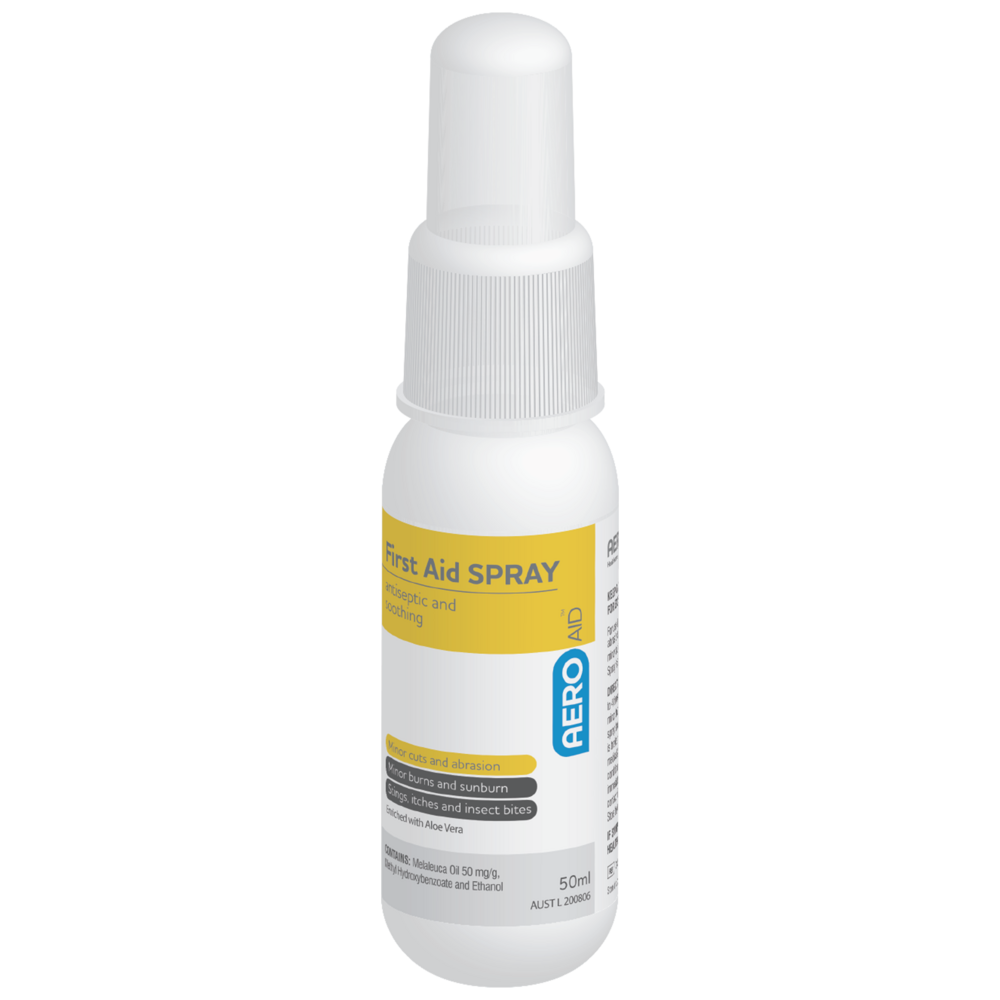
AEROAID is a popular Australian-formulated aqueous antiseptic combining benzalkonium chloride (BAC) and cetrimide. Both are quaternary ammonium compounds (quats) with bactericidal action. The aqueous formulation means much less sting on application than alcohol-based products.
When to use it
- Children and sensitive-skin adults (low sting)
- Minor cuts, grazes, blisters
- Workplace first aid where iodine staining isn't wanted (clinical environments, food prep)
- When the casualty has iodine or chlorhexidine allergy/contraindication
Trade-offs
Less broad-spectrum than Betadine. Faster contact time required for full bactericidal effect. Not used in pre-surgical scrub (chlorhexidine and Betadine dominate there). But for general workplace and family first aid, AEROAID is an excellent gentle option.
Available forms
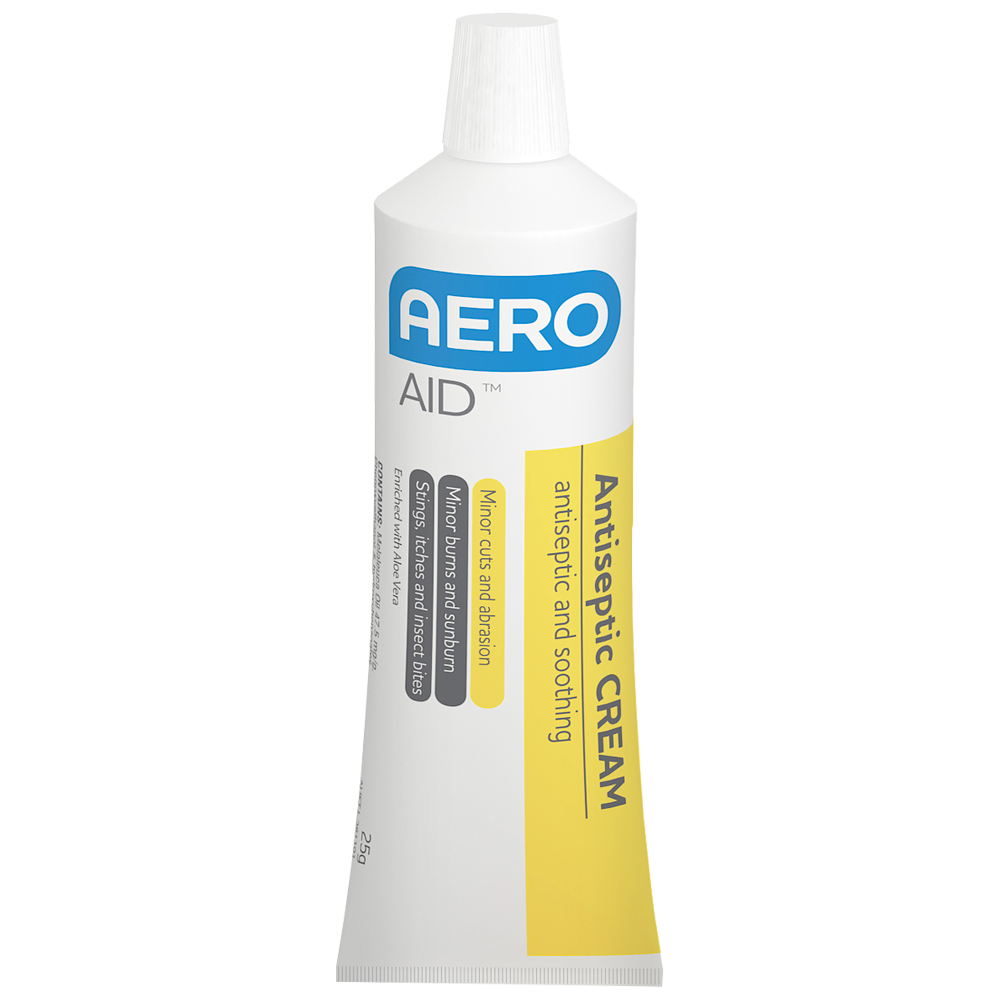
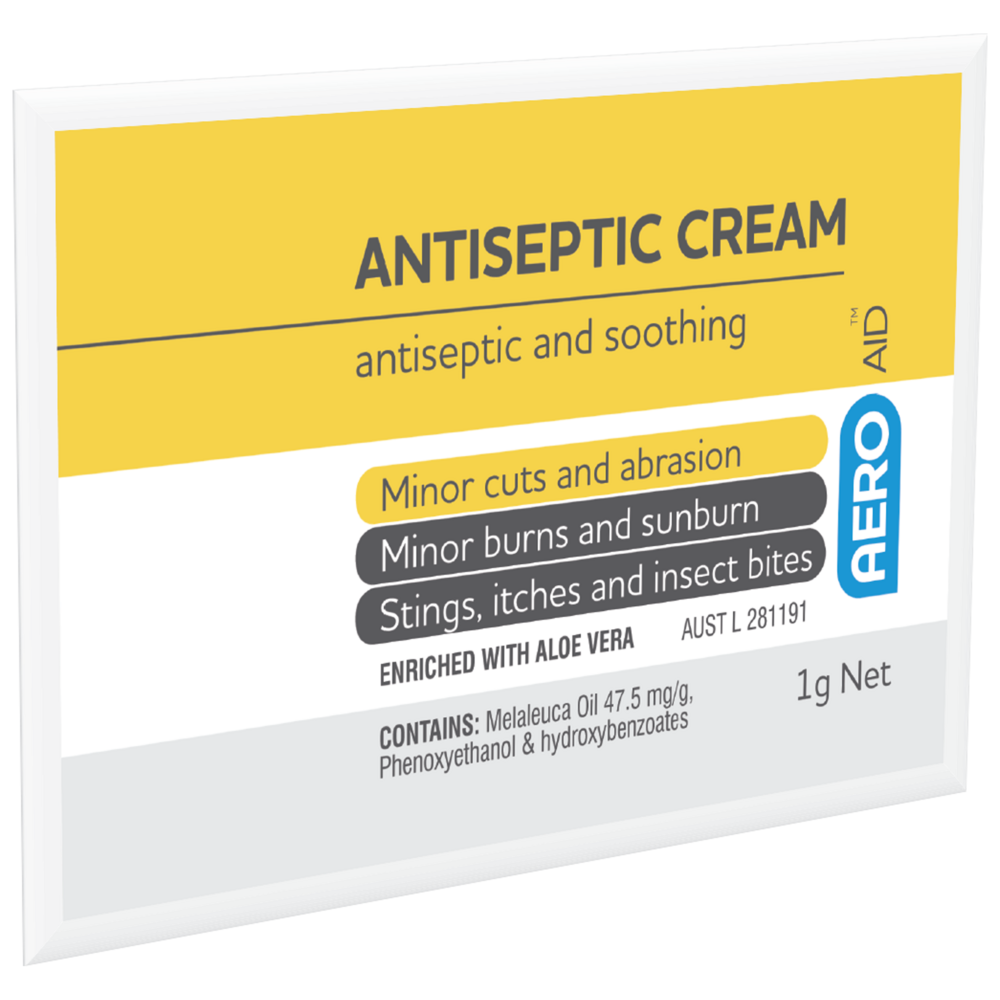
AEROAID comes in spray bottles (50ml/200ml), cream tubes (25g), and single-use sachets (1g) ideal for travel kits and one-off applications — same patient, same exposure, then discarded.
Alcohol-based antiseptics — the BEFORE-injection swab
What they're for
70% isopropyl alcohol swabs and chlorhexidine-in-alcohol are designed for INTACT SKIN antisepsis — pre-injection, pre-IV-insertion, pre-blood-draw. Alcohol denatures bacterial proteins on contact, dries fast, leaves no residue. Cheap, sterile, single-use sachets.
Why NOT on open wounds
Alcohol on broken skin: severe stinging, damages exposed tissue, slows healing, can drive bacteria deeper. For open wounds use Betadine, chlorhexidine aqueous, AEROAID, or simple saline irrigation — never alcohol alone.
Stocking alcohol swabs
Workplaces with first aiders trained to give adrenaline (anaphylaxis), administer insulin, or check blood glucose need alcohol swabs in their kit. Pack 50-100 minimum in a workplace cabinet.
Saline — the universal first-line wound cleanser
Sterile vs improvised saline
15ml sterile sodium chloride 0.9% ampoules are the safest universal wound and eye cleanser. They're: sterile, isotonic (won't sting healthy tissue), preservative-free, and identical to natural tears. Stock 10+ in a workplace kit for eye irrigation alone.
When saline is enough
For superficial grazes in a clean environment, saline rinsing alone is sufficient — you don't always need antiseptic. The mechanical flushing removes most surface bacteria, and intact immune function handles the rest. Reserve antiseptic for: visibly contaminated wounds, animal bites, splinters, deeper cuts, or any wound on a high-risk individual.
Stocking a workplace first aid antiseptic kit
Minimum (low-risk office, 25 workers)
- 10x saline ampoules (15ml) for eye + wound irrigation
- 1x AEROAID spray (50-100ml) OR Betadine spray (75-100ml)
- 50x alcohol swabs (single-use) for skin prep
- 1x povidone-iodine swabs (box of 100) for contaminated wound cleaning
Standard (medium workplace, 25-100 workers)
Above plus: AEROAID single-use sachets (10x) for mobile/portable kits, 1x chlorhexidine 0.5% in alcohol 70% (500ml) for clinical skin prep, additional 20x saline ampoules.
High-risk (construction, mining, healthcare)
Above plus: 500ml saline irrigation bottle, chlorhexidine surgical scrub for hand prep, multiple Betadine spray bottles distributed across the site, individual alcohol-swab sachets in personal kits.
Step-by-step minor wound first aid
1. Wash YOUR hands
Soap and water or alcohol sanitiser. Put on disposable gloves if available.
2. Stop the bleeding
Direct firm pressure with a clean cloth or gauze for 5-10 minutes. Elevate above heart level if possible. Most minor wounds stop within this time.
3. Inspect the wound
Check for embedded debris (glass, grit, splinter). Tweezers can remove visible debris — do NOT dig for anything embedded deeply. Seek medical care for embedded objects, deep wounds, animal bites, rusty objects (tetanus risk).
4. Rinse
Cool running tap water OR sterile saline. 30 seconds minimum, longer if visibly dirty. Aim the stream INTO the wound from above.
5. Pat dry
Sterile gauze, patting not rubbing. Leave the wound moist not soaking.
6. Apply antiseptic
Spray, swab, or pour antiseptic over the wound AND the surrounding 2cm of intact skin. Allow 30 seconds contact time before covering.
7. Cover with non-adherent dressing
Cohesive bandage or adhesive plaster for small cuts. Larger wounds: non-adherent dressing pad + crepe wrap. Change daily or when soiled. Browse our bandage and dressing range.
8. Watch for infection
Over the next 48 hours, signs of infection: increasing redness, swelling beyond 1cm of wound edge, warmth, pus, increasing pain, fever, red streaks. Any of these — see a GP within 24 hours.
Special cases
Animal and human bites
HIGH infection risk. Irrigate aggressively with saline, apply Betadine or chlorhexidine, cover, and ALWAYS seek medical assessment within 24 hours (often within 8 hours for cats and humans). Tetanus and rabies considerations may apply.
Burns
Do NOT apply antiseptic to fresh burns — cool with running water for 20 minutes first, then cover with non-adherent burn dressing or cling film. Burn infection prevention starts at the GP/hospital level.
Children
AEROAID is the most child-friendly (low sting). Betadine is safe for children over 2 years for short-term, small-area use. For babies under 6 months with a graze: rinse with saline, cover with a band-aid, see GP if not healing in 48 hours — skip antiseptic application.
Diabetics and immunocompromised
Lower threshold for medical care. Any wound that isn't fully closed and healing within 7 days needs a GP review.
Frequently asked questions
Should I use Betadine, chlorhexidine, or AEROAID on a wound?
Different antiseptics for different wounds. Betadine (povidone-iodine) - broad spectrum, kills bacteria + viruses + fungi - good for minor cuts, grazes and post-surgical wound care. Chlorhexidine - excellent for skin prep before procedures and broader workplace first aid. AEROAID (BAC/cetrimide) - gentle aqueous antiseptic, mild stinging, suitable for kids and sensitive skin. Saline only for eye irrigation or cleansing deep wounds. NEVER use alcohol-based antiseptics on open wounds (severe sting + tissue damage).
Can I use Betadine on a child?
Yes for short-term, small-area use on children over 2. AVOID large-area or prolonged use in newborns and infants under 6 months - iodine can be absorbed through the skin and affect thyroid function. Also avoid in: pregnancy (after 1st trimester), thyroid disease, lithium therapy, known iodine allergy. Children under 2 with significant skin breaks - use AEROAID or saline irrigation instead, see a doctor.
How do you clean a minor wound properly?
ANZCOR + healthdirect recommend: 1) Wash your hands first. 2) Stop bleeding with direct pressure for 5-10 minutes. 3) Rinse the wound under cool running tap water (or saline ampoule) - NOT antiseptic at this stage. 4) Pat dry with clean gauze. 5) Apply antiseptic (Betadine, chlorhexidine or AEROAID) to the wound and surrounding skin. 6) Cover with non-adherent dressing. 7) Seek medical care if: wound is deep, won't stop bleeding, has embedded debris, was caused by a rusty object or animal bite, or shows infection signs over 24-48 hours.
What antiseptics should every workplace first aid kit have?
Safe Work Australia model Code of Practice recommends: saline ampoules (15ml x 10+ for eye and wound irrigation), Betadine OR chlorhexidine antiseptic (50-100ml spray or solution), individual antiseptic swabs (alcohol or povidone-iodine, 50+) for skin prep before plasters. AEROAID is a popular Australian general-purpose option. Stock at least 2 different agents to cover allergies and contraindications. Check expiry dates quarterly - most antiseptics have a 2-3 year shelf life unopened, 1-2 years once opened.
What's an iodine allergy and how do I know if someone has one?
True iodine allergy is rare - around 0.5% of the population. Signs: itchy rash, redness, swelling or hives at the application site within minutes to hours of Betadine contact. Severe reactions can include difficulty breathing or anaphylaxis. People with shellfish allergy do NOT automatically have iodine allergy (that's a longstanding myth). If unsure, ask the casualty 'have you ever had a skin reaction to Betadine or iodine?' before applying. Have chlorhexidine or AEROAID available as the alternative.
Wound Antiseptics & Cleansers
AEROAID, Betadine, chlorhexidine and povidone-iodine swabs — the antiseptics every Australian workplace and family first aid kit should carry.
Sources: healthdirect.gov.au — First aid, Australian Red Cross, Australian and New Zealand Committee on Resuscitation (ANZCOR), Therapeutic Goods Administration.