


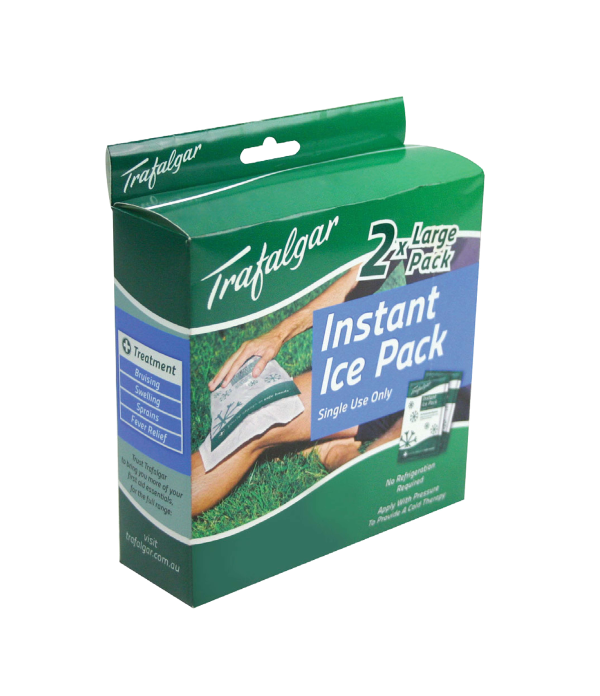
Instant Ice Pack Large Pack
Home | Family First Aid
£4.13
- No Freezing or Refrigeration Required
- Provides Approximately 20 Minutes of Cooling
- Suitable for Inflamed Areas and Fever Relief
- Ideal for Sporting Injuries
Secure checkout
VISA
Mastercard
Apple Pay
Google Pay
Also accepted
AMEX
Afterpay
Zip
Klarna
PayPal
In stock
Only 990 left
SKU
101451
An instant ice pack in the larger size, activated by squeezing or striking rather than freezing. The extra surface area suits a knee, shoulder, thigh or back, where a small pack only covers part of the injury.
When the large instant ice pack is the right one
Size is the whole decision here. A small pack is right for an ankle, a wrist or a bump on the head. It is not right for a quadriceps strain or a shoulder, where you end up holding a pack that covers a third of the area and moving it around.
Sidelines, gyms, workshops and sports kits are where the large size earns its place, because that is where the bigger muscle-group injuries happen. Need the compact version instead? See the standard instant ice pack, or browse first aid supplies.
How to use it safely
Activate as directed, then wrap it in a thin cloth before it touches skin. Never apply it directly. Cold burns from ice packs are common and entirely avoidable, and a larger pack against bare skin covers more area to injure.
The usual guidance for a fresh soft tissue injury is around 15 to 20 minutes at a time with breaks, not one long application. Take it off sooner if the skin turns white, numb or mottled.
Do not use it on broken skin, or on anyone who cannot tell you how it feels or move it away themselves including people with reduced sensation, circulatory problems, diabetes or cognitive impairment without clinical advice. If the pack splits, discard it and rinse the contents off skin and out of eyes with plenty of water.
Why single use suits a kit
Nothing to refreeze and nothing to forget to put back. A gel pack is cheaper over time but only if someone actually returns it to the freezer, which in a shared workplace or a sports bag is exactly what does not happen. Replace it after use and check expiry dates when you audit the kit.
Specifications
| Type | Instant chemical cold pack, large |
| Activation | Squeeze or strike, no freezing required |
| Coverage | Larger area: knee, shoulder, thigh, back |
| Use | Single use, disposable |
| Storage | Ambient, ready in the kit |
| Application | Wrap in cloth, never directly on skin |
Large instant ice pack FAQs
How is the large pack different from the standard one?
Coverage area. The large size suits a knee, shoulder, thigh or back; the standard size suits an ankle, wrist or a bump. Same activation, same single use.
Does it need freezing?
No. Squeezing or striking it starts a chemical reaction that cools the pack within seconds, which is why it suits a vehicle, sideline or kit with no freezer nearby.
How long should I leave it on?
Around 15 to 20 minutes at a time with breaks in between, rather than one long application. Remove it sooner if the skin goes white, numb or blotchy.
Can I apply it directly to skin?
No. Wrap it in a thin cloth or towel. Direct contact causes cold burns, and a larger pack simply exposes more skin to that risk.
Is it reusable?
No, it is single use. Once the reaction has run the pack is spent. Replace it in the kit afterwards so the kit is ready next time.
How cold does it get compared with ice?
Not as cold, and it does not last as long. The trade is availability against duration, and in the first minutes after an injury the pack you have beats the one in a freezer elsewhere.
Cold therapy supports first aid and does not replace assessment. Seek medical attention for suspected fractures, dislocations, numbness or pain out of proportion to the injury. This information is a general guide and is not medical advice.