


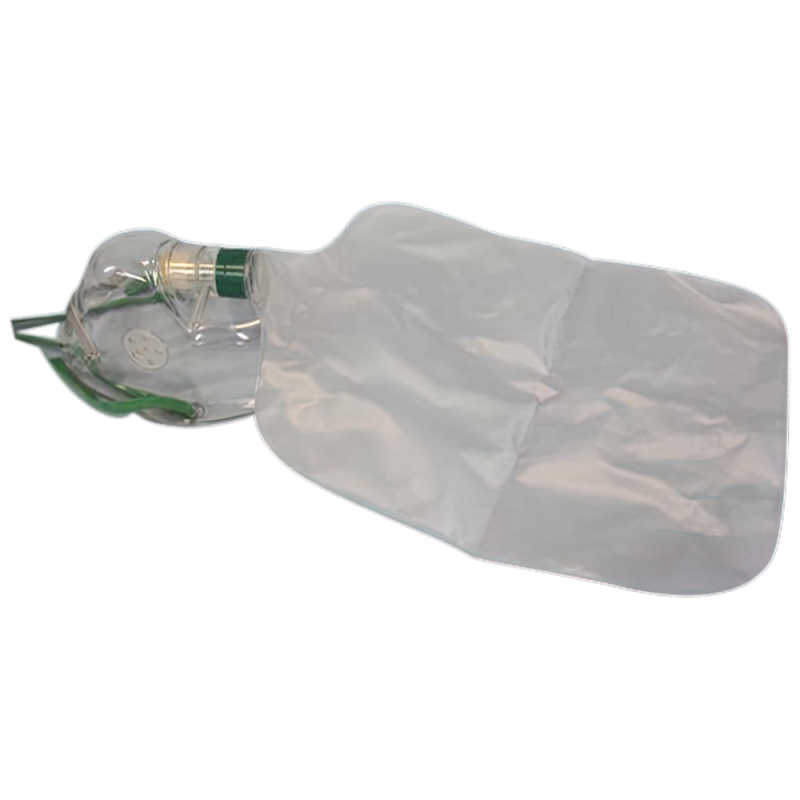
Non-Rebreather Oxygen Mask - Child (GST FREE)
Paramedic Supplies
£4.69
Oxygen Therapy Mask Non-Rebreather
Secure checkout
VISA
Mastercard
Apple Pay
Google Pay
Also accepted
AMEX
Afterpay
Zip
Klarna
PayPal
In stock
SKU
DS0681
A child-size non-rebreather oxygen mask with reservoir bag, by AeroRescue, for delivering high-concentration oxygen in an emergency. Supplied in a carton of 40, which is the sensible quantity for an ambulance service, school, sports club or first aid room that needs paediatric capability on hand rather than one mask in a drawer.
How a non-rebreather mask works
Two things distinguish it from an ordinary oxygen mask. A reservoir bag fills with oxygen between breaths, so a full breath's worth is waiting rather than being drawn from the flow alone. And one-way valves do two jobs: they stop the wearer drawing in room air, and they push exhaled air out of the mask rather than back into the bag, where it would dilute the oxygen.
That combination is what lifts the delivered concentration well above what a simple mask can manage, and it is why the device only performs as intended when the flow is high enough to keep the bag filled.
Flow rate and oxygen concentration
According to the Cleveland Clinic, a non-rebreather mask typically runs at about 12 to 15 litres of oxygen per minute, and most studies report it delivering 60% to 90% FiO2. Inflate the reservoir bag before the mask goes on the patient, and keep the flow high enough that the bag does not collapse completely as they breathe in. A bag that empties on every breath is telling you the flow is too low.
Flow rate and oxygen targets are clinical decisions made under your own service's protocols, and in children particularly so. Treat the figures above as what the device is designed around, not as a substitute for your protocol.
The risk worth knowing. Cleveland Clinic puts it plainly: the biggest risk of a non-rebreather mask is that it can cause suffocation, because it does not allow the wearer to inhale any outside air. Someone must stay with the patient and watch that the oxygen supply does not run out. On a child, with a smaller cylinder and a faster respiratory rate, that margin is thinner again. Check cylinder contents before you start, not after.
Which oxygen mask: the types compared
| Device | What it is | Typically for |
|---|---|---|
| Non-rebreather (this one) | Reservoir bag plus one-way valves | Emergency high-concentration oxygen where the patient is still breathing on their own |
| Simple oxygen therapy mask | Plain mask, no reservoir, no valves | Routine oxygen therapy at moderate concentrations |
| Nasal cannula | Two soft prongs at the nostrils | Lower-concentration oxygen, better tolerated, lets the patient talk and eat |
The choice is driven by how much oxygen is needed and what the patient will tolerate. Children in particular often refuse a close-fitting mask, which is a practical reason services carry more than one option. We do not stock Venturi masks, which are the fourth type you will see referenced.
Specifications
| Brand | AeroRescue |
| Type | Non-rebreather oxygen mask with reservoir bag |
| Size | Child |
| Design flow rate | About 12 to 15 litres per minute |
| Delivered concentration | Reported at 60% to 90% FiO2 |
| Carton quantity | 40 |
| GST | GST free |
Adult size: Non-Rebreather Oxygen Mask Adult. Also stocked: 2m oxygen tubing with vinyl connectors and the adult mask supplied with tubing and reservoir bag. Browse the wider medical supplies range.
Non-rebreather oxygen mask FAQs
How much oxygen does a non-rebreather mask deliver?
Most studies report 60% to 90% FiO2, which is the highest concentration achievable without moving to a bag-valve-mask or an advanced airway. It depends on how well the mask seals and whether the flow is high enough to keep the reservoir bag filled.
What flow rate should it be run at?
Cleveland Clinic gives about 12 to 15 litres per minute as typical. The practical check is the reservoir bag: it should stay at least partly inflated through each breath. If it collapses completely when the patient inhales, turn the flow up. Follow your own service protocol, which takes precedence over any general figure.
What does "non-rebreather" actually mean?
It refers to the one-way valves. They prevent exhaled air returning into the reservoir bag, so the patient is not rebreathing their own carbon dioxide and the oxygen in the bag stays undiluted. A simple oxygen mask has neither the bag nor the valves.
Should I inflate the bag before putting the mask on?
Yes. Fill the reservoir bag before the mask goes on the patient, so the first breath draws from a full bag rather than an empty one. It takes a few seconds and it is the step most often missed under pressure.
Is there a risk with a non-rebreather mask?
Yes, and it should be understood before use. Because the mask does not let the wearer draw in outside air, Cleveland Clinic identifies suffocation as the biggest risk if the oxygen supply fails or runs out. Someone must stay with the patient and monitor both them and the cylinder contents throughout.
When would I use a nasal cannula instead?
When lower-concentration oxygen is appropriate and comfort or tolerance matters. A cannula lets a patient talk, drink and eat, and is far better tolerated over longer periods, particularly by children and by anyone distressed by a mask over the face. A non-rebreather is the emergency high-concentration option, not the everyday one.
What is the difference between the child and adult mask?
Size and fit. A mask that does not seal to the face leaks room air and drops the delivered concentration, which defeats the purpose, so paediatric capability means carrying the paediatric size rather than making an adult mask do. The adult version is listed separately.
Who should be using this?
Trained responders and healthcare providers working to a protocol. Oxygen is a therapeutic gas, and its administration, flow rate and targets are clinical decisions. This listing describes equipment for services that already have that training and those protocols in place.
Sources. Mask function, flow rate, delivered oxygen concentration and the suffocation risk are from Cleveland Clinic. Product specifications are the manufacturer's. Last reviewed 17 September 2026.
For use by trained responders and healthcare providers under appropriate clinical protocols. Oxygen flow rates and therapeutic targets are clinical decisions and your own service protocols take precedence over the general information on this page.
| Manufacturer_ms | Germany |
|---|---|
| Model Number_ms | K61SD521 |
| Ecolabel_ms | yes |
| Brand | AeroRescue |