

Tick Removal Spoon
£3.85
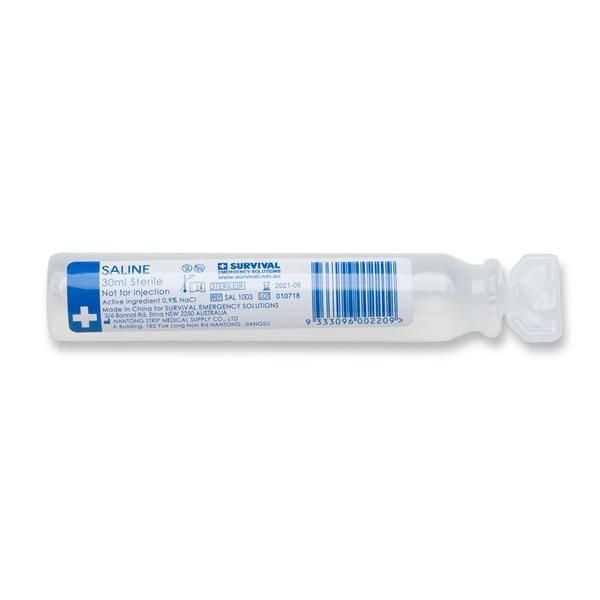
Sterile saline 30ml, a single small bottle for irrigating an eye or a wound. 30ml is a deliberate size: enough to flush properly once, small enough to live in a compact kit or a pocket without taking the space a 100ml bottle wants.
Saline is sterile and matched to the body’s own salt concentration, so it flushes a wound or an eye without stinging and without introducing anything. Tap water is fine in an emergency when nothing else is available, but it is not sterile, and on an eye it is noticeably more uncomfortable.
The other advantage is that a sealed single-use bottle is sterile at the moment you open it, which a part-used bottle in a kit is not.
For sustained eye irrigation after a chemical splash you want far more volume than this. Keep a larger bottle or a station for that, see the saline eye wash sachets for single-use eye flushing, and browse first aid supplies for the range.
Tilt the head so the affected eye is lower than the other one, and flush from the inner corner outward. That keeps contaminated fluid from running across the good eye, which is the mistake people make when they tilt the head straight back. Hold the lids open, and keep going.
| Type | Sterile saline solution |
| Size | 30ml |
| Use | Eye and wound irrigation |
| Sterility | Sterile until opened, single use |
| Suits | Compact and personal first aid kits |
Irrigating an eye or a wound. It flushes loose debris, grit and contaminants away without stinging, and it can also moisten a dressing that has dried onto a wound so it lifts off without tearing the surface.
No. It is sterile until opened and is intended for single use. Discard the remainder and replace the bottle in the kit, so the next person opens something sterile rather than something that has been sitting open in a box.
For a speck of dust, usually yes. For a chemical splash, no. That needs continuous irrigation for 15 to 20 minutes and urgent medical attention, which means a much larger volume or a running supply.
In an emergency, flushing with clean tap water immediately beats waiting for saline. But tap water is not sterile and stings more in an eye, so sterile saline is the better choice when you have it.
So the affected eye is lower than the unaffected one, and flush from the inner corner outward. That stops contaminated fluid washing into the other eye.
Yes, that is one of its main uses. Irrigate to lift loose dirt away, then dry the surrounding skin and dress the wound. It will not remove embedded material, which needs proper assessment.
Seek urgent medical attention for chemical splashes to the eye, penetrating eye injuries, embedded foreign bodies, and any wound that is deep, dirty or will not stop bleeding. This information is a general guide and is not medical advice.