


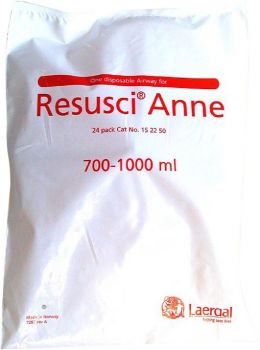
Resusci Anne Airways (24)
$215.48
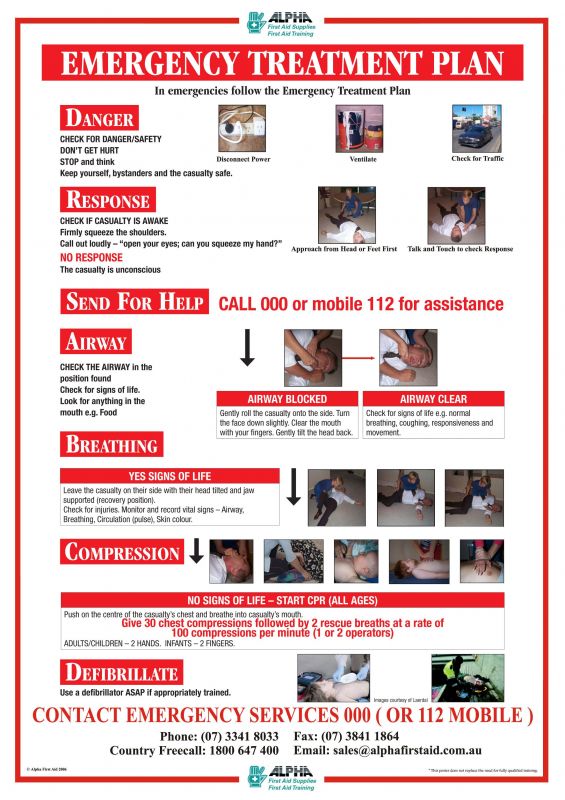
An A3 laminated CPR poster setting out the DRSABCD basic life support response as a wall reference. For workplaces, first aid rooms, training rooms, pools and site offices, where the person who needs it will be under pressure and reading fast.
In an actual emergency, people who have done the training still freeze. A poster does one job: it gives a sequence to follow when recall fails. It has to be readable at a glance from a few metres, which is why a wall chart beats a card in a kit or a page in a manual.
The secondary benefit is passive: a chart on the wall of a tea room is read idly hundreds of times over a year by people who will never open the first aid manual.
The Australian basic life support sequence, step by step:
Next to the first aid kit, next to the defibrillator cabinet, in the tea room, and in the plant or pool area. The test is simple: could someone standing where the incident is likely to happen see it without going to look for it? A chart in the manager’s office fails that test.
Keep it with your first aid kit, and browse first aid supplies for the rest of the room.
| Size | A3 |
| Finish | Laminated |
| Content | DRSABCD basic life support sequence |
| Suits | Workplaces, first aid rooms, training rooms, site offices |
| Durability | Wipeable, tolerates a damp or dusty environment |
Danger, Response, Send for help, Airway, Breathing, CPR, Defibrillation. It is the Australian basic life support sequence, and the order matters: checking for danger before approaching is what stops a rescuer becoming a second patient.
A3 and laminated. That reads at a glance from a few metres, which is the distance that matters when someone is crossing a room toward a collapsed person.
Beside the first aid kit, beside the defibrillator, and anywhere an incident is likely: plant rooms, pool areas, kitchens, workshops. Visible from where it would be needed, not filed in an office.
No. Workplace requirements generally cover trained first aiders, kit contents and access, not signage. A chart supports those arrangements; check the rules that apply to your workplace.
Because it goes on a wall in a real workplace. Lamination survives damp, dust, handling and wiping down, where plain paper curls and tears within months.
Resuscitation guidance is reviewed periodically. Check occasionally that your chart still reflects current resuscitation council guidance, and replace it when it does not, the same way you check kit expiry dates.
A wall chart is a memory aid and does not replace accredited first aid or CPR training. In an emergency call your local emergency number. This information is a general guide and is not medical advice.
| Brand | Alpha First Aid |
|---|