

Non Adherent Dressing Pad 7.5 x 10cm - Low-Stick Wound Pad
Fabric Dressings | Plastic Plasters
$0.71
Secure checkout
VISA
Mastercard
Apple Pay
Google Pay
Also accepted
AMEX
Afterpay
Zip
Klarna
PayPal
In stock
Only 1000 left
SKU
80222
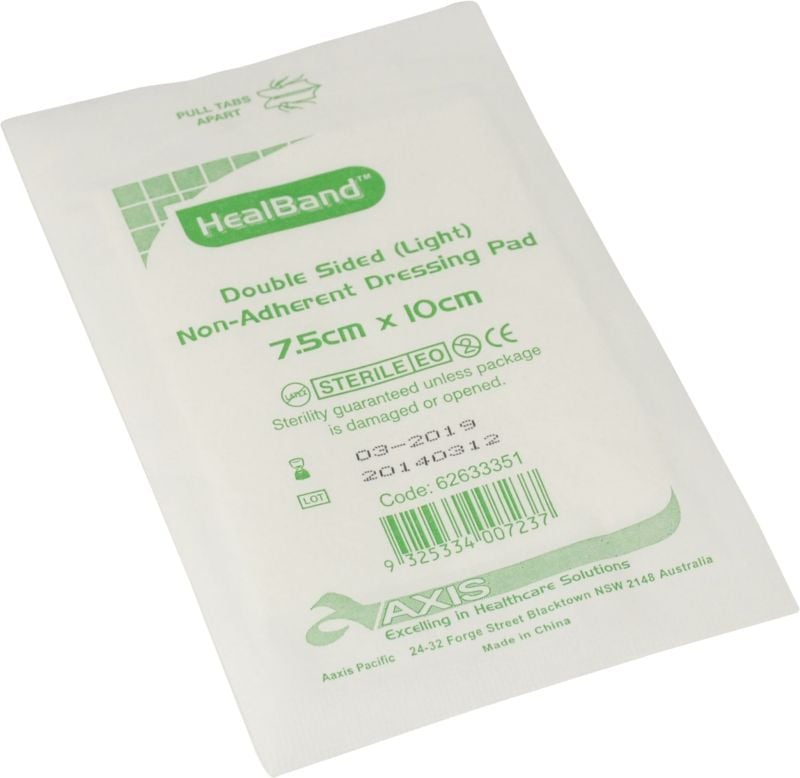
A non adherent dressing is designed to do one thing an ordinary gauze pad does badly: come off again without tearing the wound open. The low-adherent contact layer stops the dressing bonding to drying exudate, so a dressing change does not undo the healing underneath. This pad is 7.5 x 10cm.
Features
- Low-adherent wound contact layer that lifts off cleanly
- 7.5 x 10cm pad size for small to medium wounds
- Absorbent backing to manage light to moderate exudate
- Reduces pain and tissue damage at dressing changes
Specifications
- Size: 7.5 x 10cm
- Type: Non adherent (low-adherent) dressing pad
- Use: Grazes, lacerations, burns, sutured wounds, donor sites
When to use a non adherent dressing
Any wound where the dressing would otherwise stick: abrasions and grazes, superficial burns, skin tears, sutured wounds and healing surgical sites. The problem with plain gauze on these is that exudate dries through the weave and glues the pad to the new tissue, so removing it strips what has just formed and restarts the bleeding. A low-adherent layer prevents that, which matters most on fragile skin, on children, and anywhere dressings are changed frequently. It is a contact layer and absorbent pad, not a fixation - secure it with tape or a conforming bandage.
Common uses
First aid rooms, general practice, aged care and home wound management, and restocking workplace and vehicle kits. Cover it with sterile gauze swabs as a secondary layer. Browse more dressings and gauze, or the full first aid supplies range at MediBC.
Non Adherent Dressing FAQs
What is a non adherent dressing?
A dressing with a low-adherent contact layer that will not bond to the wound surface as exudate dries, so it lifts off at a dressing change without pulling away new tissue.
When should you use one instead of gauze?
On grazes, burns, skin tears and sutured wounds - anywhere plain gauze would dry into the wound. It is the standard choice on fragile skin and where dressings are changed often.
Which side goes against the wound?
The shiny or perforated low-adherent face goes against the wound, with the absorbent backing outward. Check the packaging, as construction varies between products.
How is it secured?
With tape, a conforming bandage or a retention bandage. The pad has no adhesive border of its own, so it needs fixing in place. On fragile skin, adhesive remover wipes help take the tape off at the next change without pulling.
How often should it be changed?
According to the wound and any clinical advice you have been given - typically when exudate has soaked through, the dressing has lifted, or at the interval set by the treating clinician.
Frequently bought together