


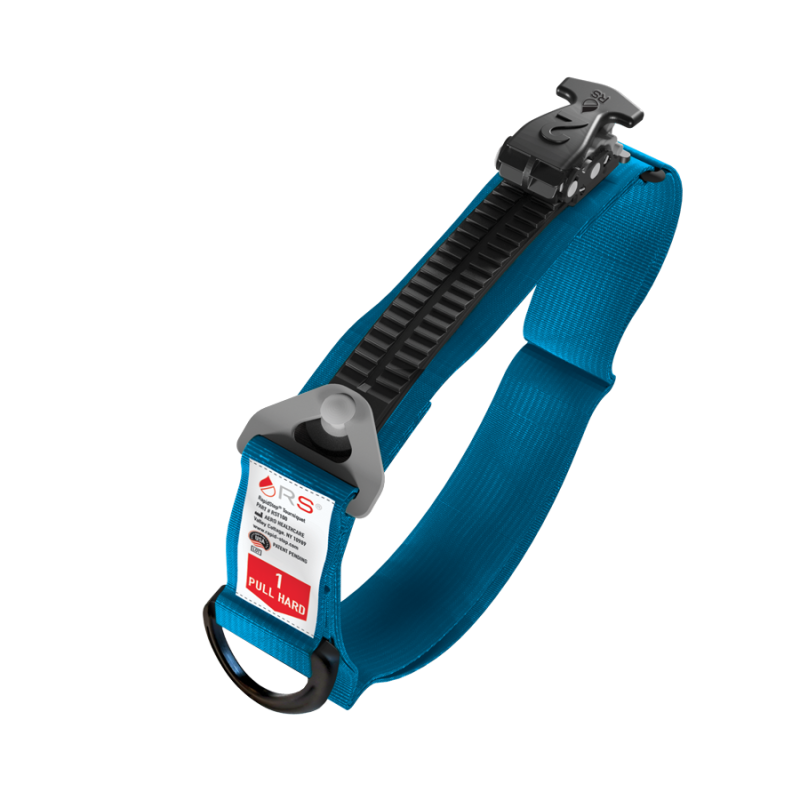
RapidStop Training Tourniquet Blue Strap (AU)
Tourniquets
$61.98
RAPIDSTOP Training Tourniquet (Blue Strap)
Secure checkout
VISA
Mastercard
Apple Pay
Google Pay
Also accepted
AMEX
Afterpay
Zip
Klarna
PayPal
In stock
SKU
RST102
This is a training tourniquet and must never be used on a casualty. The blue strap is the standard convention marking a device as practice-only, so a training tourniquet is never mistaken for a live one in a kit. It replicates the RapidStop's one-handed, gross-motor application so trainees build the correct technique.
Why choose the training tourniquet?
Two things go wrong without a dedicated training tourniquet. Repeated tightening degrades a tourniquet, so a unit practised on may fail when it is genuinely needed — and a live tourniquet used for training is a live tourniquet no longer sealed and ready.
The blue strap solves the second problem visually. Bleeding control kits are grabbed in a hurry by people who are frightened, and colour is the only cue that survives that. Training blue, operational black or high-vis orange.
Skills decay, so the case for owning one is ongoing rather than one-off. A tourniquet applied too loosely does not work at all, and regular refreshers are the only way to keep that from happening. Train alongside the arm and leg tourniquet trainers.
Key features
- TRAINING USE ONLY — not for use on a casualty
- Blue strap: the standard convention marking a practice device
- Replicates the live tourniquet's one-handed, gross-motor application
- Built for the repeated tightening cycles that wear out a live tourniquet
- Keeps operational tourniquets sealed and in service
Specifications
| Colour | Blue strap (training convention) |
| Use | Training only — NOT for casualty use |
| Application | One-handed, mirrors the live tourniquet |
| Pricing unit | Unit |
| Carton quantity | 25 |
| SKU | RST102 |
Common uses
Bleeding control courses and in-house drills. Use with the arm tourniquet trainer and leg tourniquet trainer. The live product is the RapidStop tourniquet; browse the tourniquet range.
training tourniquet FAQs
Can a training tourniquet be used in a real emergency?
No. It is a practice device and must not be relied on to stop bleeding. Store training and live tourniquets separately so the two can never be confused.
Why is the strap blue?
Blue is the widely used convention for bleeding-control training equipment, precisely so a device cannot be mistaken for a live one at a glance in a kit or on a training floor.
Why not practise with a live tourniquet?
Repeated tightening degrades it, so a practised-on unit may fail when needed. And a live tourniquet used in class is no longer sealed and ready for a real incident.
How often should people retrain?
Often enough that technique survives stress. Skills decay, and a tourniquet applied too loosely does nothing — regular refreshers are the reason to own a trainer rather than borrow one.
How tight should a tourniquet be?
Tight enough to stop arterial flow, which is tighter and more painful than most people expect. Continued bleeding means it is not tight enough. A pump-driven limb trainer is the only safe way to calibrate that.
You must not rely on the information on this site as an alternative to medical advice from your medical physician or other qualified healthcare provider. Consult your healthcare provider immediately if you think that you may have a medical emergency or for the diagnosis and treatment of injuries. Always seek the advice of your physician or other qualified healthcare provider before starting any new treatment or with any questions that you may have regarding a medical condition or injury.
| Manufacturer_ms | Germany |
|---|---|
| Model Number_ms | K61SD521 |
| Ecolabel_ms | yes |
| Brand | RapidStop |