


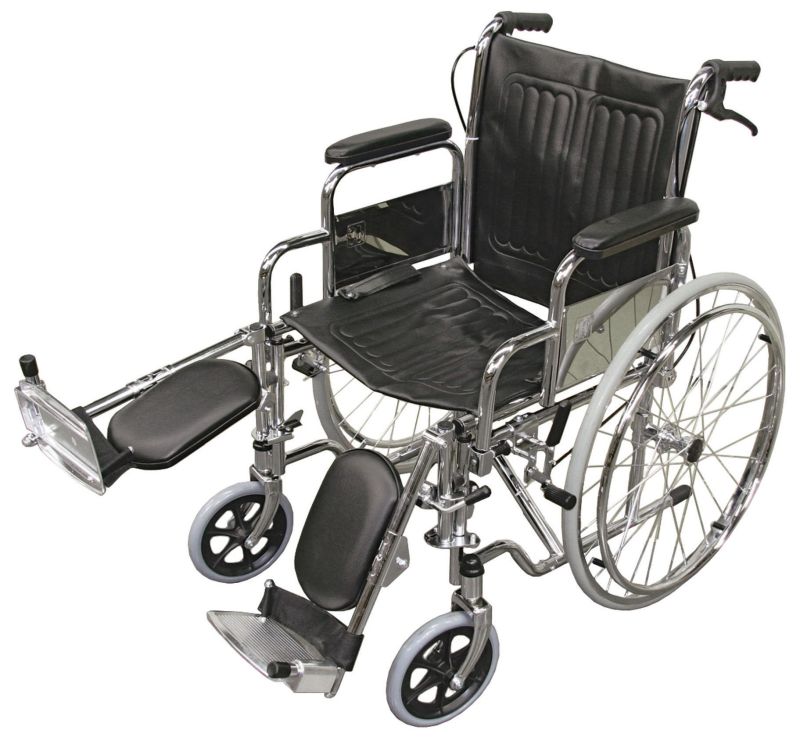
Wheelchair S/Steel Standard with Elevating Leg Rest - Solid wheels
Miscellaneous
$344.61
Secure checkout
VISA
Mastercard
Apple Pay
Google Pay
Also accepted
AMEX
Afterpay
Zip
Klarna
PayPal
Out of stock
SKU
250058
This standard stainless steel wheelchair has an elevating leg rest, swing-back sides and solid steel wheels. The stainless steel frame gives it a 22kg weight and a 100kg capacity, it folds to 28cm wide, and it carries quick release rear wheels, hand and united brakes, ankle straps, fold-away foot rests and tipping levers for an attendant.
Why choose a stainless steel wheelchair
The frame material is the reason to choose this one. A stainless steel wheelchair resists corrosion far better than a painted steel frame, which matters in the environments these actually live in - hydrotherapy and pool areas, washdown zones, coastal facilities and anywhere a chair gets cleaned with disinfectant several times a day. It is heavier than aluminium at 22kg, and that is the trade you are making.
The elevating leg rest is the clinical feature. Being able to raise and support the lower leg matters for oedema, post-operative limbs, plaster casts and anyone who cannot tolerate a dependent leg position. Paired with ankle straps and swing-away, elevating front riggings, the leg can be positioned and held rather than simply propped.
The rest is standard but worth checking against your setting: quick release rear wheels for transport and cleaning, hand brakes plus united brakes, swing-back sides for lateral transfers onto a bed or trolley, and tipping levers so an attendant can manage a kerb safely. Folded width is 28cm.
Key features
- Stainless steel frame - corrosion resistant
- Elevating leg rest with swing-away front riggings
- Swing-back sides for lateral transfers
- Solid steel rear wheels, 59cm
- Quick release rear wheels
- Hand brakes and united brakes
- Ankle straps
- Fold-away foot rests
- Tipping levers for the attendant
- Vinyl upholstery
- 100kg weight capacity
Specifications
| Product | Wheelchair S/Steel Standard with Elevating Leg Rest |
| Frame type | Stainless steel |
| Seat width | 46cm |
| Seat depth | 40cm |
| Seat to floor | 50cm |
| Back | Fixed, 42cm high |
| Arms | Fixed |
| Front riggings | Swing-away, elevating |
| Rear wheels | Steel, 59cm, single position axle |
| Upholstery | Vinyl |
| Product weight | 22kg |
| Width | 60cm (28cm folded) |
| Overall length | 109cm |
| Overall height | 89cm |
| Weight capacity | 100kg |
Common uses
Aged care, hydrotherapy and pool areas, hospital and clinic transfers, and first aid rooms holding a chair for the occasional casualty who cannot walk out. Where corrosion resistance is not the priority and lighter weight is, the standard aluminium wheelchair with drop back handles weighs 16kg instead of 22kg. For assisted transfers, a step stool is often used alongside. See our first aid room equipment.
stainless steel wheelchair FAQs
Why choose a stainless steel frame?
Corrosion resistance. Painted steel frames chip and rust where chairs are washed down, used near pools and hydrotherapy, or kept in coastal or humid facilities. Stainless steel handles repeated disinfection, at the cost of extra weight - 22kg against 16kg for the aluminium equivalent.
What is the elevating leg rest for?
Raising and supporting the lower leg, which matters for oedema, post-operative limbs, casts and anyone who cannot tolerate the leg hanging down. The swing-away elevating riggings and ankle straps let the leg be positioned and held rather than propped.
What is the weight capacity?
100kg. That is the maximum user weight, and it should not be exceeded - overloading affects frame integrity, brake performance and safe handling by an attendant.
Will it fit through a doorway?
It is 60cm wide in use and folds to 28cm. Measure your narrowest doorway and any lift before ordering; a chair that will not pass a bathroom door is a common and expensive surprise.
What are united brakes and tipping levers?
United brakes let both wheel brakes be applied together, so a chair is secured in one action before a transfer. Tipping levers let an attendant tilt the chair to negotiate a kerb or threshold safely rather than dragging it.
Can it be used for long-term daily mobility?
This is a standard transit-style chair with fixed arms and back, suited to transfers and occasional use. Someone using a wheelchair as their primary daily mobility needs an assessment by an occupational therapist for a properly prescribed chair.
Do not exceed the 100kg weight capacity. Wheelchairs should be set up, checked and used in accordance with the manufacturer instructions, with brakes applied before every transfer. For long-term or primary mobility use, seek assessment and prescription from an occupational therapist or physiotherapist - the wrong chair causes pressure injury, poor posture and falls. Inspect brakes, tyres, footplates and frame regularly.
Frequently bought together
You may also need