


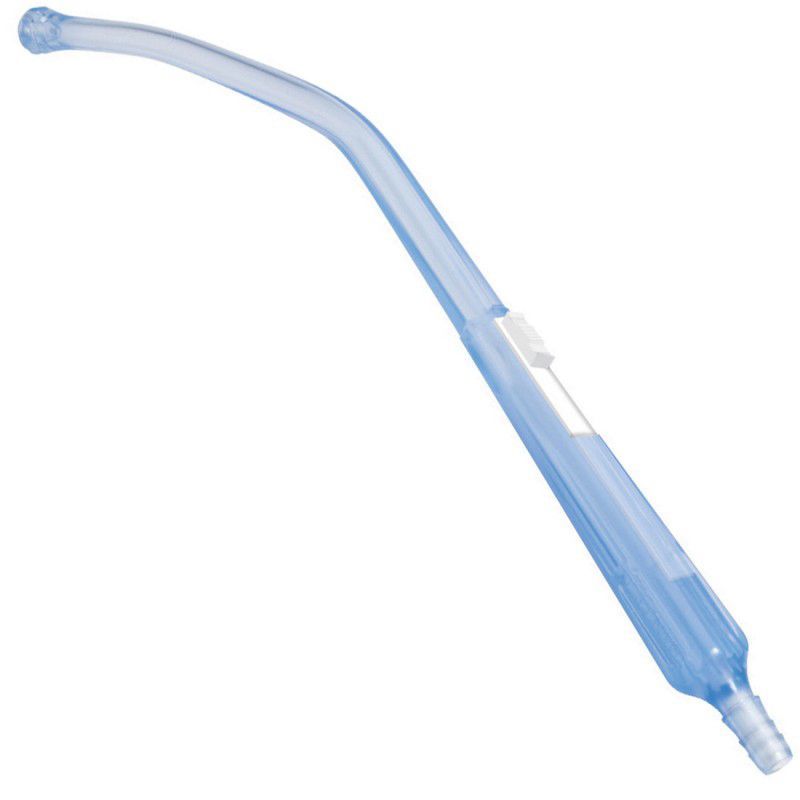
Yankauer Suction Head with Vent
Miscellaneous
$2.91
Secure checkout
VISA
Mastercard
Apple Pay
Google Pay
Also accepted
AMEX
Afterpay
Zip
Klarna
PayPal
In stock
Only 1000 left
SKU
99168
A Yankauer suction head is the rigid oral suction tip used to clear the mouth and pharynx of blood, vomit and secretions. This one is sterile and has a vent, which lets the operator control suction with a fingertip rather than at the machine.
Why choose a Yankauer suction head with a vent
The vent is the feature worth understanding. Covering the vent hole applies suction and uncovering it releases it, so the operator controls suction at the tip, instantly, without reaching for the unit. That matters because continuous suction on mucosa causes trauma and can strip oxygen from the airway - intermittent, controlled suction is the correct technique and a vented Yankauer suction head is what makes it possible one-handed.
A rigid tip does a job a soft catheter cannot. Vomit, blood clot and food debris in the mouth need a wide-bore rigid device to move at all, and the curved Yankauer shape reaches the back of the mouth while staying visible. This is oral suction equipment - a soft catheter is the tool for the nasal route.
It is supplied sterile, and it is a single-use item on a patient. Airway suction is done at the worst moment of a resuscitation, so it belongs pre-connected or immediately to hand on the suction unit rather than sealed in a drawer - and it should be part of the equipment check, not discovered missing mid-arrest.
Key features
- Rigid oral suction tip - clears blood, vomit and secretions
- Thumb vent for instant, one-handed suction control
- Curved shape reaches the posterior mouth under direct vision
- Sterile
- Wide bore - handles debris a soft catheter cannot
- For use with a suction unit
Specifications
| Product | Yankauer Suction Head with Vent |
| Type | Rigid oral (oropharyngeal) suction tip |
| Vent | Yes - thumb-controlled suction |
| Sterile | Yes |
| Route | Oral - not for nasal suction |
| Use | Single patient use, with a suction unit |
| Use by | Trained personnel, within scope of practice |
Common uses
Ambulance and retrieval services, emergency and theatre suites, dental surgeries, and industrial or remote-site medics carrying portable suction. It sits with the rest of the airway roll: a Guedel airway or nasopharyngeal airway to maintain patency, and a bag valve mask resuscitator where ventilation is needed. See our oxygen and resuscitation equipment.
Yankauer suction head FAQs
What is a Yankauer suction head used for?
Clearing the mouth and pharynx of blood, vomit and secretions so the airway stays patent. It is a rigid, wide-bore oral suction tip - the standard device for visible debris in the mouth during resuscitation or after trauma.
What does the vent do?
It gives the operator suction control at the tip. Cover the vent to apply suction, uncover it to release. That allows intermittent suction one-handed, which is the correct technique - continuous suction traumatises mucosa and removes oxygen from the airway.
How far should it be inserted?
Only as far as you can see. Blind insertion risks trauma and stimulating the gag reflex, which causes vomiting in a patient whose airway is already compromised. Suction on withdrawal and keep each attempt brief.
Can it be used for nasal suction?
No. It is a rigid oral device. Nasal suction uses a soft flexible catheter - a rigid tip in a nostril causes bleeding, and nasal bleeding on top of a compromised airway is a serious problem.
Is it reusable?
It is supplied sterile and is a single-patient item. Follow the manufacturer instructions and your infection control policy. Do not use it if the packaging is damaged or already open.
What should be checked before use?
That it is connected correctly to the suction unit, that the unit generates suction, and that the tubing is clear. A suction set that has never been test-run is discovered to be faulty at exactly the wrong moment - include it in scheduled equipment checks.
For use by appropriately trained personnel working within their scope of practice and local clinical guidelines. Sterile - do not use if the packaging is damaged. Suction only under direct vision, apply intermittently, and keep attempts brief. For oral suction only. This information is a general guide and does not replace training or clinical judgement. In an emergency, call 000.