

Written by the MediBC medical-supply team · Reviewed against Australian Resuscitation Council Guideline 9.1.3 (burns) and healthdirect burns-and-scalds first-aid guidance · Updated June 2026.
Burn first aid is the most time-sensitive decision in any workplace or home accident. The first 20 minutes after a burn determine the depth of damage that ultimately heals — get it wrong and a superficial burn becomes a full-thickness injury needing skin grafts. This guide walks through the Australian Resuscitation Council protocol and the AEROBURN hydrogel range that covers every realistic burn-care scenario for Australian first-aid kits.
AEROBURN is the dedicated burn product family in MediBC's catalogue — six products that, together, cover everything from a kitchen splash to a major industrial burn pre-transport. Every product is GST-free under Australian tax law because hydrogel burn dressings are classified as essential medical aids.
The Australian Resuscitation Council burn protocol
The protocol is identical for adults and children of any age. Memorise these four steps and the rest is detail.
Step 1 — remove the source of heat
Stop the burning process. Remove the casualty from the heat source, extinguish flames (stop-drop-roll for clothing fires), turn off electrical sources before touching, and lift the casualty away from radiant heat. Do not waste time with first aid while the casualty is still being burned.
Step 2 — cool with running water for 20 minutes
Cool the burn under running tap water at room temperature for 20 minutes. Not ice. Not cold blocks. Not a bag of frozen peas. Cool water only. The 20-minute window applies whether you start immediately or up to three hours after the burn. Even hours later, cooling still reduces tissue damage.
Step 3 — cover with a sterile non-adherent dressing
After 20 minutes of cooling, cover with a non-adherent dressing (AEROBURN low-adherent for larger burns, AEROBURN hydrogel for smaller ones). Cling-film-style polyethylene burn sheets work for emergency transport coverage when proper dressings are not available.
Step 4 — transport or treat
Decide whether to attend a GP, an emergency department, or manage at home. The escalation rules are in the next section.
When to call 000 and when to manage at home
Australian Resuscitation Council and healthdirect provide consistent escalation criteria. Use this rule set.
Call 000 or attend emergency for
Any burn larger than the casualty's palm (palm = about 1% body surface area; over 10% in adults or 5% in children is a major emergency). Burns on the face, hands, feet, genitals, or over a joint — even small ones risk function loss and scarring. Deep burns (white, leathery, or charred skin) regardless of size. Chemical or electrical burns. Burns in children under 5 or adults over 70 — both age groups have thinner skin and higher complication risk. Burns with breathing difficulty (smoke inhalation, facial burns near airway).
See your GP within 24-48 hours for
Smaller superficial burns showing persistent pain, blistering past 24 hours, or any sign of infection (red expanding margin, warmth, pus, fever). Burns where the casualty's tetanus vaccination is not up to date.
Manage at home with first-aid kit for
Small superficial burns (red, painful, no broken skin) under palm size. Cool 20 minutes, apply hydrogel or burn gel dressing, replace dressing every 24 hours, monitor for infection signs.
The AEROBURN hydrogel range — what each product is for
Six products cover every realistic burn-care scenario. Stock at least two — a tube and a small dressing — in any kit; stock the full range for high-risk workplaces (kitchens, foundries, electrical work, construction).
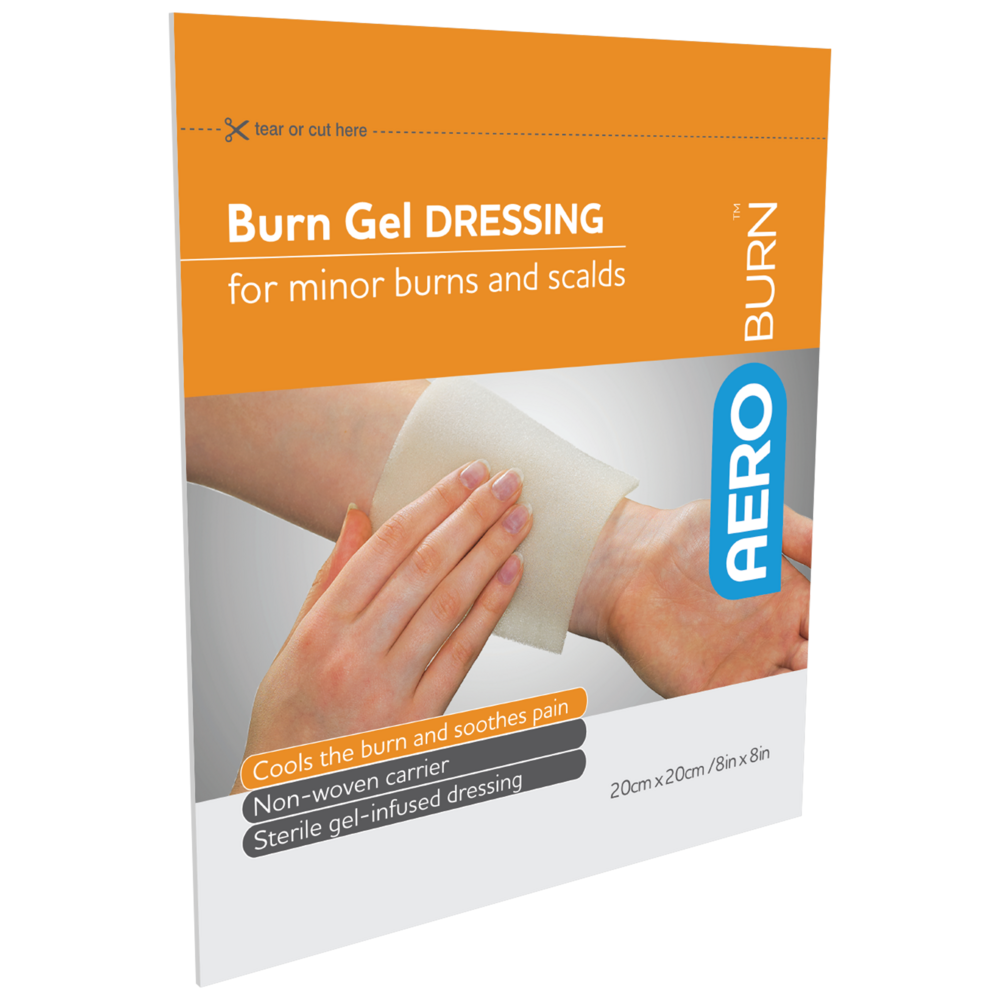
50g hydrogel tube — the everyday workhorse
Squeeze-tube hydrogel for the immediate response to small burns. Apply a thin layer directly to the cooled burn after 20-minute water cooling. Provides cooling sensation that continues for 1-2 hours and a barrier that reduces evaporative moisture loss. Reseal after use; one tube treats around 5-8 small burns over its shelf life.
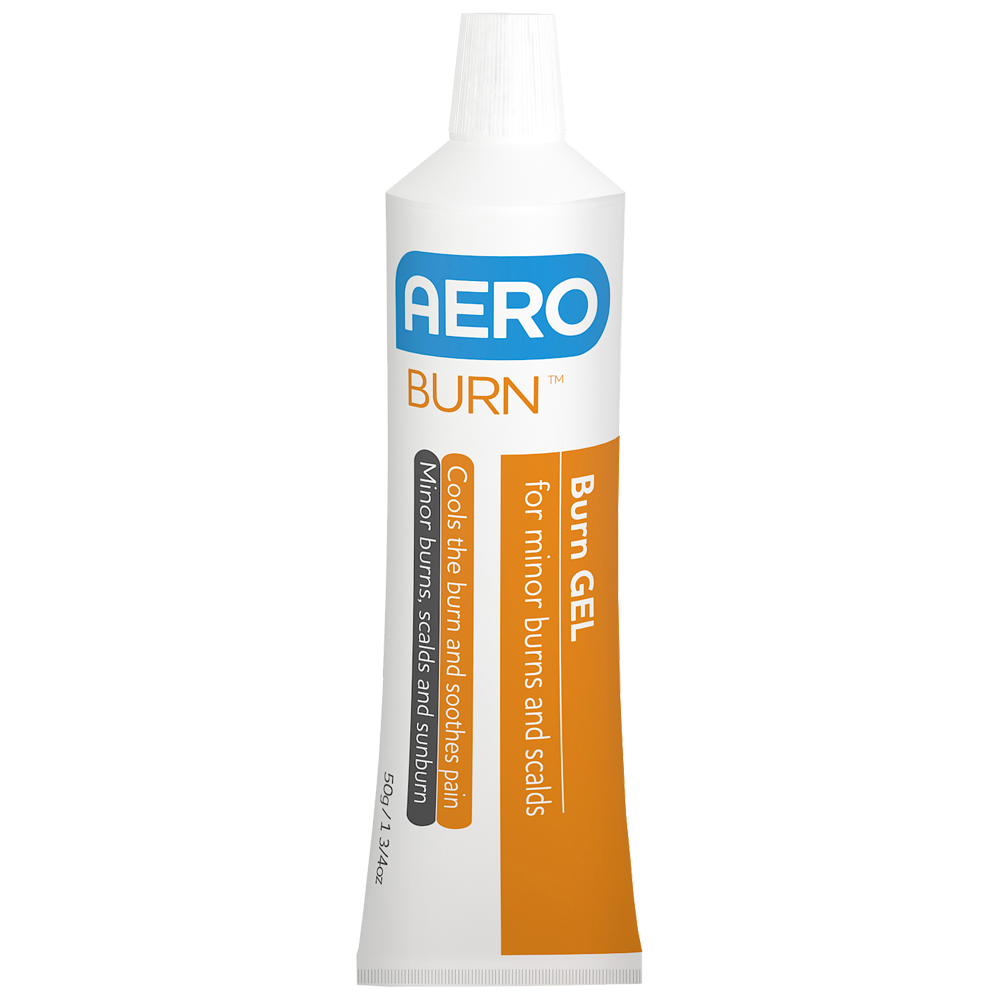
50ml gel spray bottle — no-touch application
Spray-bottle hydrogel for situations where touching the burn is painful or where the burn is on a difficult-to-reach area (back, shoulder, scalp). The spray covers a 10x10cm area in one or two pumps. Useful in workplaces where first aiders may not be confident about touching open wounds.
20x20cm hydrogel dressing — hand, foot, face
Hydrogel-impregnated wound-contact dressing that lifts off without sticking. Sized for whole-hand burns, single-foot burns, or facial cheek/jaw coverage. Place hydrogel-side directly on the burn after cooling. Bandage loosely with crepe or self-adhesive to hold in place.
30x40cm face mask — facial burn coverage
Pre-cut hydrogel mask with eye holes, nose hole, and mouth hole. Designed for facial burns where multiple areas need coverage at once and where a flat dressing cannot conform around facial contours. Particularly useful for kitchen oil splashes and welding flash injuries.
75x220cm low-adherent burn dressing — major burns
Large flat non-adherent dressing for partial-thickness burns covering significant body surface area — arm-and-shoulder, leg, torso. Not hydrogel-impregnated (use cool wet gauze underneath if needed). Designed as the cover layer applied during the transport phase to a hospital. Stock in any kit serving a high-risk workplace.
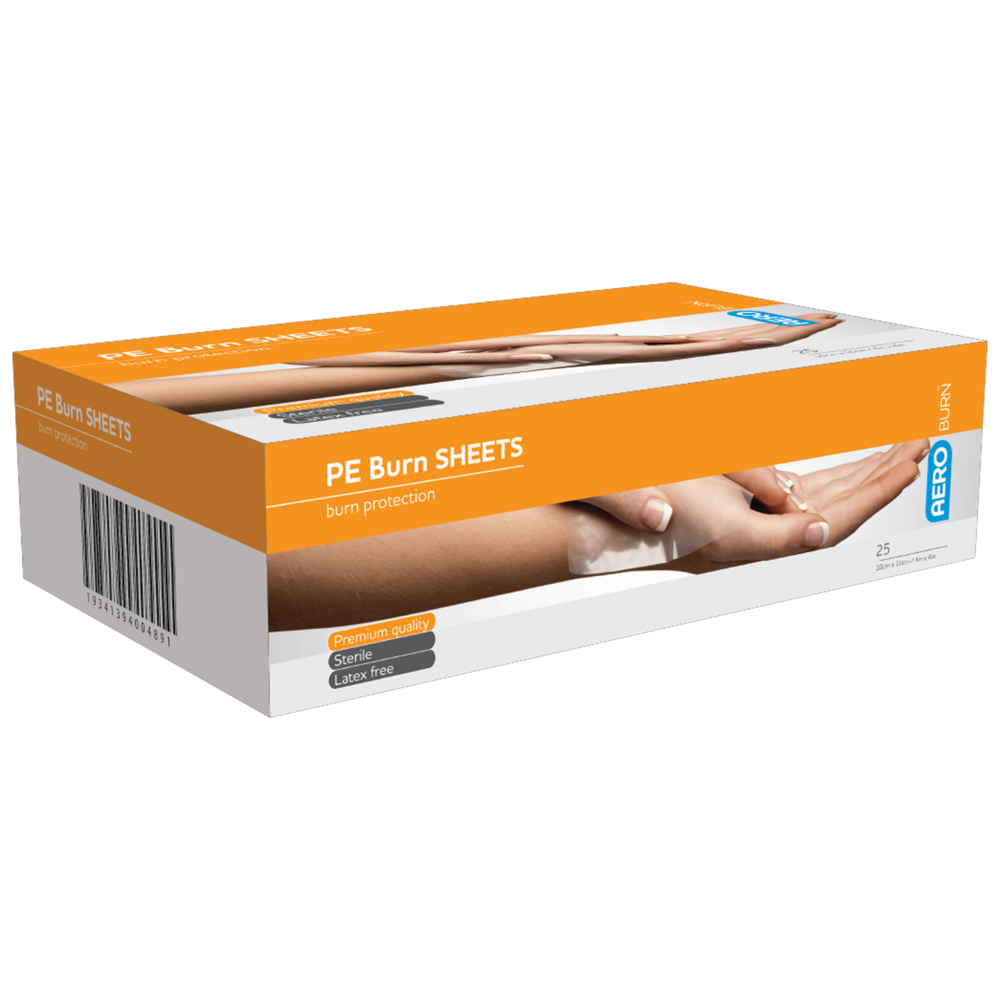
10x10cm polyethylene burn sheet — emergency transport cover
Cling-film-style transparent polyethylene sheet (box of 25). Used as an emergency burn cover when proper dressings are not available, or as the FIRST LAYER between burn and any other dressing to prevent sticking. Allows visual assessment of the burn through the transparent sheet during transport.
How burn depth determines first-aid response
The first-aid response varies by burn depth. Recognising depth on scene helps you decide between home care and emergency transport.
Superficial burns (first degree)
Red, painful, dry, NO blistering. Sunburn pattern. Heal in 3-7 days without scarring. Treatment: 20-minute cool water + hydrogel gel + over-the-counter pain relief. Home care.
Partial-thickness burns (second degree)
Red, very painful, WET, BLISTERED. Heal in 1-3 weeks; deeper variants may scar. Treatment: 20-minute cool water + AEROBURN hydrogel dressing + medical assessment if >palm-size. Do not pop blisters — they protect the wound.
Full-thickness burns (third degree)
White, brown, leathery, or charred. Often less painful at the burn site because nerve endings are destroyed (paradoxically). Heal only with skin grafting. Treatment: 20-minute cool water + polyethylene burn sheet for transport + EMERGENCY transport to hospital. Do not apply hydrogel as the primary dressing on full-thickness — leave that decision to the burns unit.
Chemical burns require a different protocol
Chemical burns are not thermal burns. The chemistry continues to damage tissue until the chemical is removed. The protocol is different.
Continuous water irrigation, longer duration
20-30 minutes minimum, often longer. The aim is to dilute and wash away the chemical, not cool. Use running tap water; for eye chemical burns, use saline irrigation if available (or running water if not).
Remove contaminated clothing carefully
Cut off clothing that contacts the chemical — don't pull over the head if it would drag chemical across the face. Dispose of contaminated material in a sealed bag.
Identify the chemical for medical staff
Bring the Safety Data Sheet or product label to hospital. Some chemicals (hydrofluoric acid, alkali drain cleaners) need specific antidotes that emergency staff need to identify before treatment.
Hydrogel after irrigation, not during
Apply AEROBURN hydrogel only AFTER the 20-30 minute irrigation. The hydrogel cannot displace chemical from tissue.
Electrical burns — invisible internal damage
Electrical burns look small on the surface but can cause extensive internal damage along the current path. Treat as emergency regardless of visible burn size.
Cardiac monitoring required
Any electrical exposure can cause arrhythmia. Hospital cardiac monitoring is mandatory for any electrical exposure even if the casualty appears well. Call 000.
Look for entry and exit wounds
Current enters at one point and exits at another. Look for both. The exit wound may be larger and more damaged than the entry. Both need dressing.
Don't move the casualty if spine involved
Electrical shocks can cause muscle spasms forceful enough to fracture vertebrae. If the casualty fell or was thrown by the shock, suspect spinal injury.
Burn first aid for workplace kits
The Safe Work Australia model Code of Practice (First Aid in the Workplace) requires burn-treatment supplies in any workplace with hot equipment, hot liquids, chemicals, electricity, or sun exposure. Realistic stock levels by risk class.
Low-risk workplaces (office, retail)
One 50g AEROBURN tube + one 20x20cm dressing + crepe bandage. Handles the kitchen kettle splash, the coffee burn, the sunburn from outdoor lunches. Total cost under $40 covers a multi-year supply for most offices.
Medium-risk workplaces (food service, light industrial)
Add the 50ml spray + 30x40cm face mask + box of polyethylene burn sheets. Covers oil splashes, oven burns, hot machinery contact. Stock multiple tubes — they get used.
High-risk workplaces (foundry, kitchens, welding, construction)
Full AEROBURN range plus the 75x220cm low-adherent dressing. Add emergency water cooling supply (cool-water hose, eyewash station, or burn-cooling shower). High-risk sites also need a designated burn first aider with WHS-compliant training.
Sun and heat burns — the everyday cases
Sunburn and heat-related burns are the most-treated burns in Australian first-aid kits. Same protocol with adjustments.
Sunburn treatment
Cool water (shower or cool compress) for 20 minutes. AEROBURN hydrogel applied to the worst areas. Hydration. Avoid further sun exposure for 24-48 hours. Children under 1 with sunburn — see a doctor; their thinner skin is more vulnerable to ongoing damage.
Heat exhaustion vs heat stroke vs sunburn
Sunburn = skin damage only. Heat exhaustion = pale clammy sweaty + nausea/dizzy. Heat stroke = hot dry skin + confusion (medical emergency). The cooling protocols differ — sunburn needs local cool water; heat stroke needs whole-body cooling AND emergency transport.
Hot liquid burns
Coffee, tea, soup, boiling water — common kitchen burns. Same 20-minute cool water protocol. Remove any clothing or jewelry from the burn area unless it has stuck to the skin (then leave for hospital removal). Apply AEROBURN hydrogel after cooling.
Common burn first-aid mistakes
Five mistakes show up in workplace incident reviews.
1. Under-cooling — less than 20 minutes
The single most common mistake. People stop cooling at 1-5 minutes because the casualty feels better. The damage continues at depth even after the surface cools. Set a timer. Cool for the full 20.
2. Ice or frozen substances
Ice causes additional cold injury on top of the heat injury. The combined damage is worse than the burn alone. Cool water only.
3. Butter, toothpaste, or home remedies
These "remedies" trap heat in the tissue and provide an infection medium. They make burns worse. Cool water + hydrogel only.
4. Popping blisters
Intact blisters are sterile. Popping them introduces infection and exposes raw tissue. Leave blisters alone unless they break naturally; the burns unit will manage them in hospital if needed.
5. Removing stuck clothing
If fabric is stuck to the burn, leave it. Cut around the stuck portion. The hospital will manage removal under controlled conditions. Pulling stuck fabric off causes additional damage.
Storage and replacement of burn supplies
Shelf life
AEROBURN hydrogel products typically carry a 3-5 year shelf life from manufacture. The hydrogel can dry out if packaging seal is broken or if stored in heat. Check seals at every inspection.
Storage temperature
Below 25°C, out of direct sunlight. A workplace kit stored above a heat-emitting machine or in a sun-exposed vehicle loses shelf life rapidly. Move kits to climate-controlled storage in summer.
Replacement after use
Replace any opened tube/spray after a single use even if material remains — contamination risk and unknown remaining shelf life. Replace dressings after each use without question.
Inspection schedule
Quarterly inspection of dressings, monthly of tubes and sprays. Note expiry dates. Reorder before stock runs out — a burn incident with an empty kit is a WHS audit finding.
Frequently Asked Questions
How long should I cool a burn with running water?
Australian Resuscitation Council and healthdirect both specify cool running tap water for 20 minutes. Not ice. Not cold blocks. The 20-minute window applies whether you start cooling immediately or up to 3 hours after the burn. Any thermal burn benefits from the full 20 minutes; under-cooling is the single biggest first-aid mistake on burns.
Should I use hydrogel burn gel instead of cool water?
No — cool running water is the first-line treatment for 20 minutes. Hydrogel burn gel is the second-line covering applied AFTER cooling, while you transport to medical care or for ongoing comfort. Applying gel before cooling reduces the cooling effect because the gel insulates the heat in the tissue.
What does GST FREE mean on these AEROBURN products?
Under Australian tax law, certain wound and burn dressings are GST-exempt because they are classified as essential medical aids. The AEROBURN burn gel range carries the GST-free classification, which makes them slightly cheaper than equivalent products and aligns with Therapeutic Goods Administration medical device categorisation.
When does a burn need hospital attention?
Call 000 or attend emergency for: burns larger than the casualty's palm; burns on face, hands, feet, genitals, or over a joint; deep burns (white, leathery, or charred skin); chemical or electrical burns; burns in children under 5 or adults over 70; or any burn with signs of infection within 48 hours. Even smaller burns warrant a GP check if pain persists past 48 hours.
Can I use AEROBURN products on chemical burns?
Chemical burns require continuous irrigation with running water (or saline for eye chemical burns) for at least 20-30 minutes, longer than thermal burns. AEROBURN hydrogel can be applied to chemical burns AFTER irrigation but the irrigation is the critical step. Do not use AEROBURN as the primary treatment for chemical exposure.
Sources and further reading
- healthdirect — Burns and Scalds (Australian government health portal)
- Australian Resuscitation Council — Guidelines (9.1.3 Burns)
- Safe Work Australia — First Aid in the Workplace Code of Practice
- TGA — Medical Devices (regulatory context for dressings)
Related guides on MediBC
- Hot and cold therapy packs guide
- Non-adherent dressings and gauze swabs sizing guide
- Workplace first aid cabinet guide
Build your burn-care kit — AEROBURN hydrogel range
From 50g first-response tubes to 75x220cm dressings, the AEROBURN range covers every realistic Australian workplace and home burn scenario.
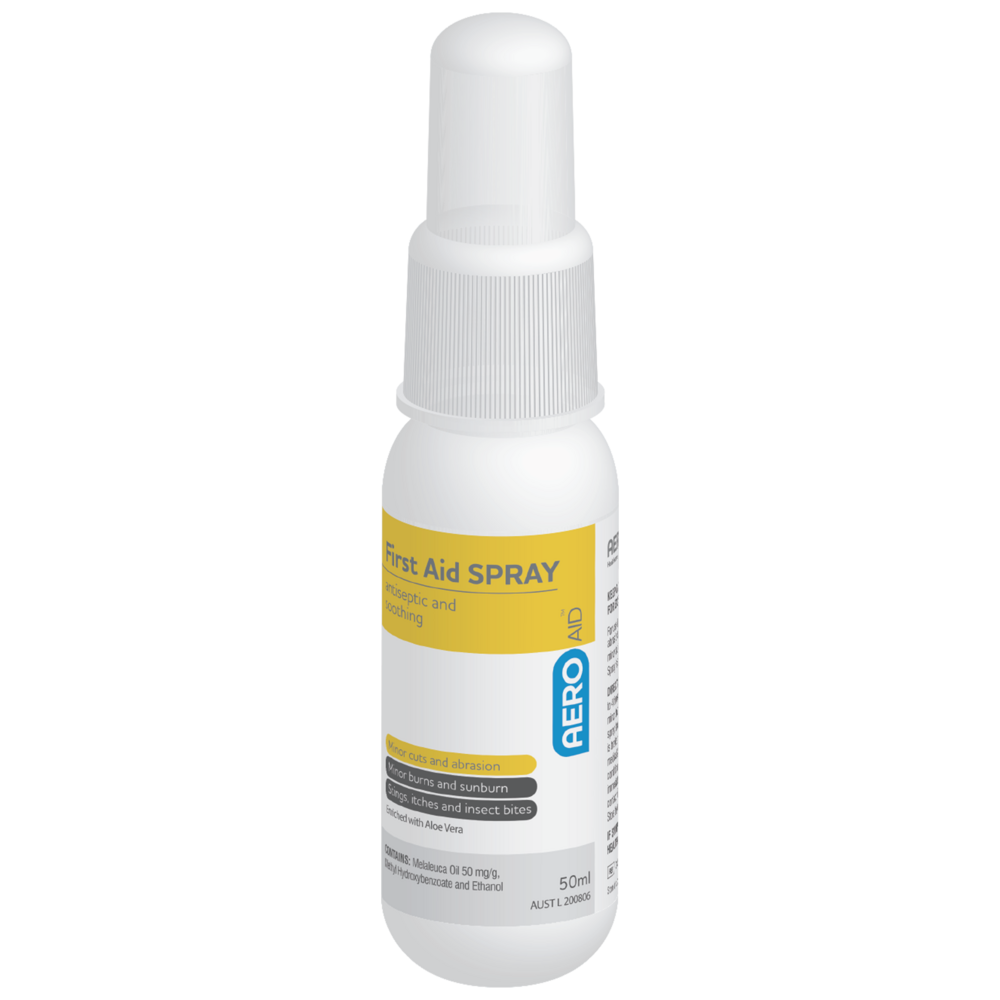
AEROBURN Burn Gel Dressing 20x20cm
Hydrogel-impregnated dressing for hand, foot, or face burns.
Shop Now
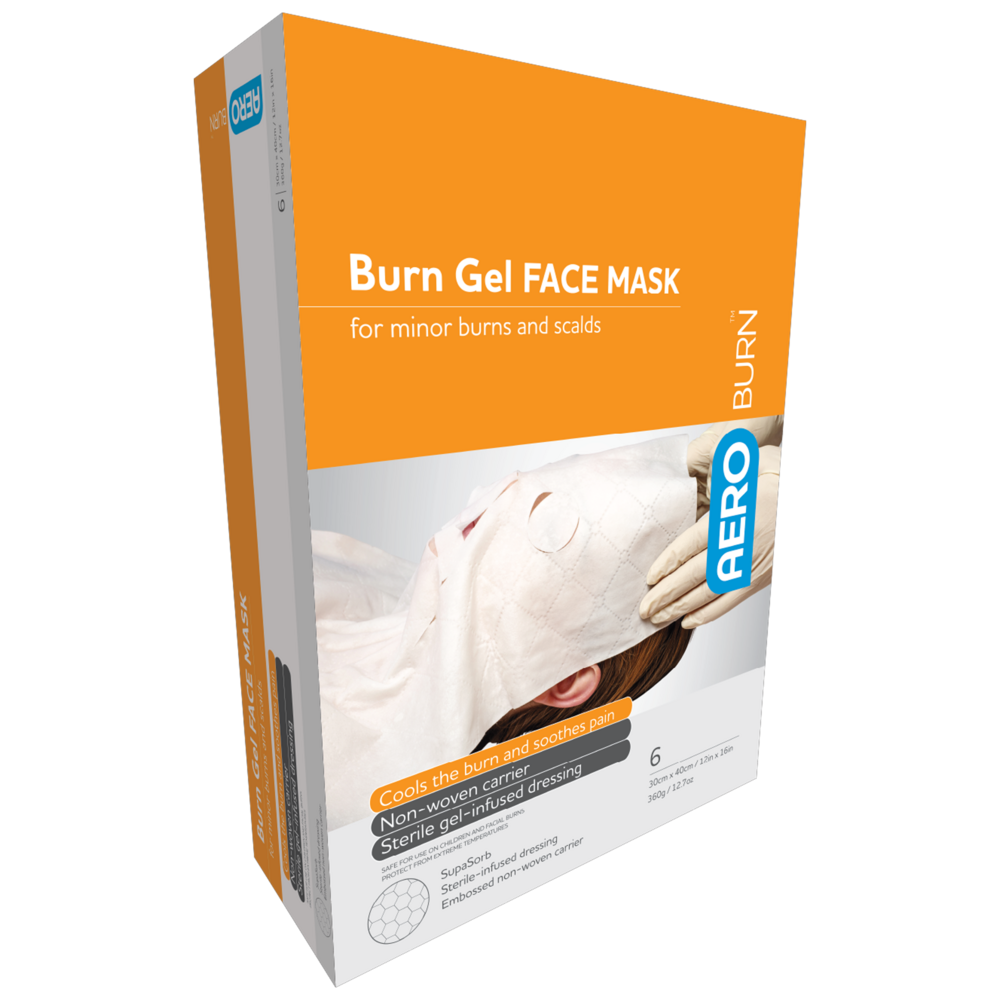
AEROBURN Burn Gel Face Mask 30x40cm
Pre-cut hydrogel mask for facial burn coverage with eye/mouth holes.
Shop Now