


Reviewed by the MediBC First Aid Team · July 2026 · General information, aligned with St John and Safe Work Australia guidance.
Quick answer: A basic first aid kit should contain adhesive dressings (assorted sizes), sterile non-adherent pads, a roller crepe bandage, a triangular bandage, a heavy crepe (compression) bandage for snake and spider bites, wound closure strips, sterile saline, antiseptic, adhesive tape, disposable gloves, scissors, tweezers, safety pins, an instant cold pack, a CPR face shield and a first aid guide. Add a thermal blanket and burn gel for car, travel and workplace kits.
What should be in a first aid kit?
Every kit — home, car, workplace or travel — is built around the same core items, then topped up for the setting. The list below is the general-purpose core recommended for Australian households. Check use-by dates and replace anything used or expired.
| Item | Why it is in the kit |
|---|---|
| Adhesive dressings (assorted) | Cover small cuts, grazes and blisters. |
| Sterile non-adherent pads | Dress larger wounds without sticking to the skin. |
| Roller crepe / conforming bandage | Hold dressings in place and support sprains. |
| Heavy crepe (compression) bandage | Pressure-immobilisation for snake and funnel-web spider bites. |
| Triangular bandage | Sling for an arm injury or a broad pad. |
| Wound closure strips | Pull the edges of a clean cut together. |
| Sterile saline | Flush wounds and rinse eyes. |
| Antiseptic | Clean skin around a wound. |
| Adhesive tape | Secure dressings and bandages. |
| Disposable gloves | Protect you and the casualty from infection. |
| Scissors and tweezers | Cut tape and dressings; remove splinters. |
| Instant cold pack | Ease sprains, bruising and stings. |
| CPR face shield | A barrier for rescue breaths. |
| Notepad, pen and first aid guide | Record what happened and follow the steps. |
First aid kit checklist (printable)
Use this checklist to build a kit from scratch or to audit an existing one. Print it, tick off what you have, and note the earliest use-by date so you know when to restock.
Store the kit somewhere cool, dry and easy to reach — not in a hot car boot for long periods, which shortens the life of dressings and gels. Everyone in the household should know where it is.
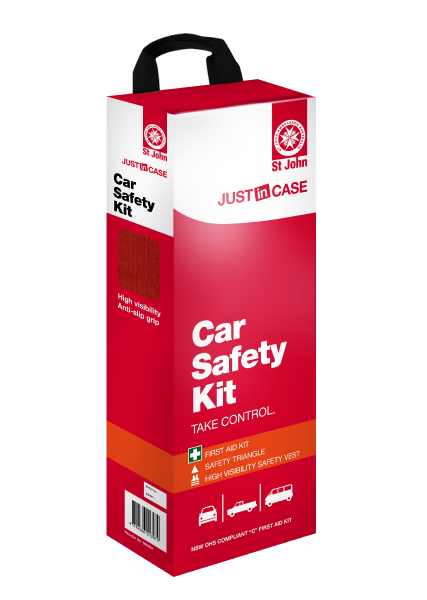
Car first aid kit contents
A car kit covers roadside cuts, burns and the longer wait for help on regional roads. Start with the core list, then add:
| Add for the car | Why |
|---|---|
| Thermal / space blanket | Warmth for shock or a breakdown in the cold. |
| Burn gel or burn dressing | Cool and cover a burn until you reach care. |
| Extra compression bandages | Snake and spider bites are more likely away from town. |
| Torch and hi-vis vest | Be seen and work at night at the roadside. |
| Bottled water | Flush wounds and eyes when saline runs out. |
Home first aid kit contents
A home kit handles everyday cuts, burns, sprains and fevers. Add to the core list:
| Add for the home | Why |
|---|---|
| Digital thermometer | Check for fever in children and adults. |
| Burn gel and hydrogel dressings | Kitchen burns and scalds are common at home. |
| Tweezers and a splinter probe | Splinters, ticks and bindi-eyes. |
| Antihistamine and any prescribed adrenaline autoinjector | Allergic reactions (store as directed; check expiry). |
| Sterile eye pads | Cover an injured eye. |
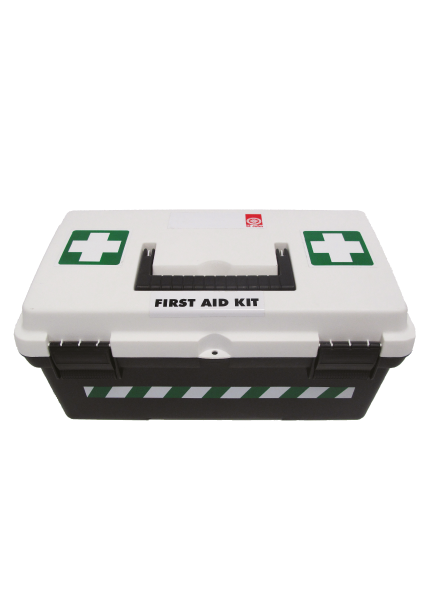
Workplace first aid kit — what is required
Workplace kits are sized and stocked to the risks of the site. Safe Work Australia’s model Code of Practice, First aid in the workplace, sets out how to assess your workplace and what a kit should hold; your state or territory WHS regulator may add requirements.
Are first aid kits mandatory in the workplace? Under Australian WHS laws every workplace must provide access to first aid equipment, trained first aiders and facilities suited to its size and hazards. What that means in practice depends on your risk assessment. This is general guidance, not legal advice — check your state or territory WHS regulator and Safe Work Australia.
Shop workplace first aid kits
Travel and camping first aid kit
Pack the core list in a soft, water-resistant case and add cover for distance from help: extra compression bandages, blister care, rehydration sachets, personal medications, insect repellent, sunscreen, and an emergency contact card. Match the kit to the trip — a day hike needs less than a week off-grid.
How often should you restock a first aid kit?
Check your kit every three months and after any use. Replace items as soon as they are used, and check use-by dates on dressings, saline, antiseptic, burn gel and any medications — sterile items lose their seal and gels dry out over time. Keep a small restock list on the inside lid.
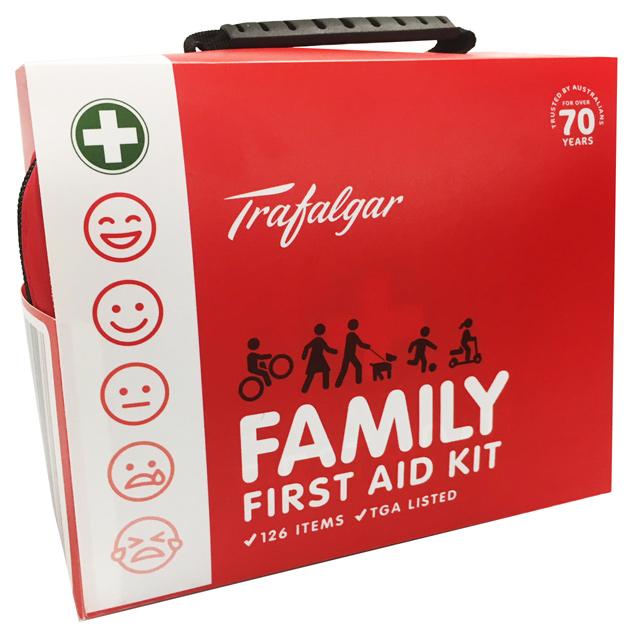
First aid kits from MediBC
Ready-made kits take the guesswork out of the checklist. These are stocked, compliant options for the home, car, workplace and the outdoors.

When a first aid kit is not enough
A kit buys time; it does not replace treatment or training. Call 000 for any emergency — severe bleeding, difficulty breathing, chest pain, a serious burn, a snake bite or an allergic reaction that affects breathing. For non-urgent health advice in Australia call healthdirect on 1800 022 222, or see your GP. A first aid course from a recognised provider is the best companion to a well-stocked kit.
This article is general information and is not a substitute for professional medical advice, diagnosis or treatment. In an emergency call 000. For health advice call healthdirect on 1800 022 222 or speak with your doctor.
First aid kit contents — common questions
What should be in a basic first aid kit?
A basic kit should hold adhesive dressings, sterile non-adherent pads, crepe and triangular bandages, a compression bandage, wound closure strips, sterile saline, antiseptic, tape, disposable gloves, scissors, tweezers, an instant cold pack, a CPR face shield and a first aid guide.
What should be in a car first aid kit?
Start with the basic kit, then add a thermal blanket, burn gel, extra compression bandages, a torch, a hi-vis vest and bottled water. Car kits cover roadside injuries and the longer wait for help on regional roads.
Are first aid kits mandatory in the workplace in Australia?
Yes. Under WHS laws every workplace must provide first aid equipment, trained first aiders and suitable facilities, sized to the workplace and its hazards. The detail comes from your risk assessment. This is general guidance — check Safe Work Australia and your state or territory WHS regulator.
How often should I restock my first aid kit?
Check it every three months and after each use. Replace used items straight away and check use-by dates on dressings, saline, antiseptic, burn gel and medications, as sterile seals and gels degrade over time.
Where should I keep my first aid kit?
Keep it somewhere cool, dry and easy to reach, and make sure everyone in the household or workplace knows where it is. Avoid leaving it in a hot car boot for long periods, which shortens the life of dressings and gels.
Sources: Safe Work Australia — First aid in the workplace (model Code of Practice); St John Ambulance Australia; healthdirect Australia; ANZCOR guidelines.