


Written by the MediBC First Aid Team · Checked against healthdirect Australia guidance on bumps, knocks and bruises and ANZCOR Guideline 9.1.1 · Updated September 2026.
This is general first aid information, not medical advice. Call 000 if someone has trouble breathing, or has knocked their head and is confused. For advice any time, call healthdirect on 1800 022 222.
A bruise forms when a knock damages small blood vessels under the skin. The skin usually stays intact, but blood leaks into the surrounding tissue and shows up as a red, purple or blue mark that is tender and sometimes swollen. Most bruises are minor and heal on their own in 1 to 2 weeks. If you are searching for how to get rid of bruises, the realistic goal is to limit how big and dark the bruise becomes in the first day or two, and to keep it comfortable while your body clears it.
Quick answer: how to get rid of bruises
As soon as possible after the knock, rest the area and apply a cold pack wrapped in a cloth for 10 minutes every 2 to 4 hours, for the first 24 to 48 hours. Add a firm but not tight compression bandage during the day and raise the area above the level of the heart where you can. After that, time does the rest: most bruises fade within 1 to 2 weeks.
How to get rid of bruises: the first 48 hours
healthdirect recommends the RICE method for minor bumps, knocks and bruises. ANZCOR, the Australian first aid guideline body, similarly suggests pressure and a cold pack for bruising to a limb.
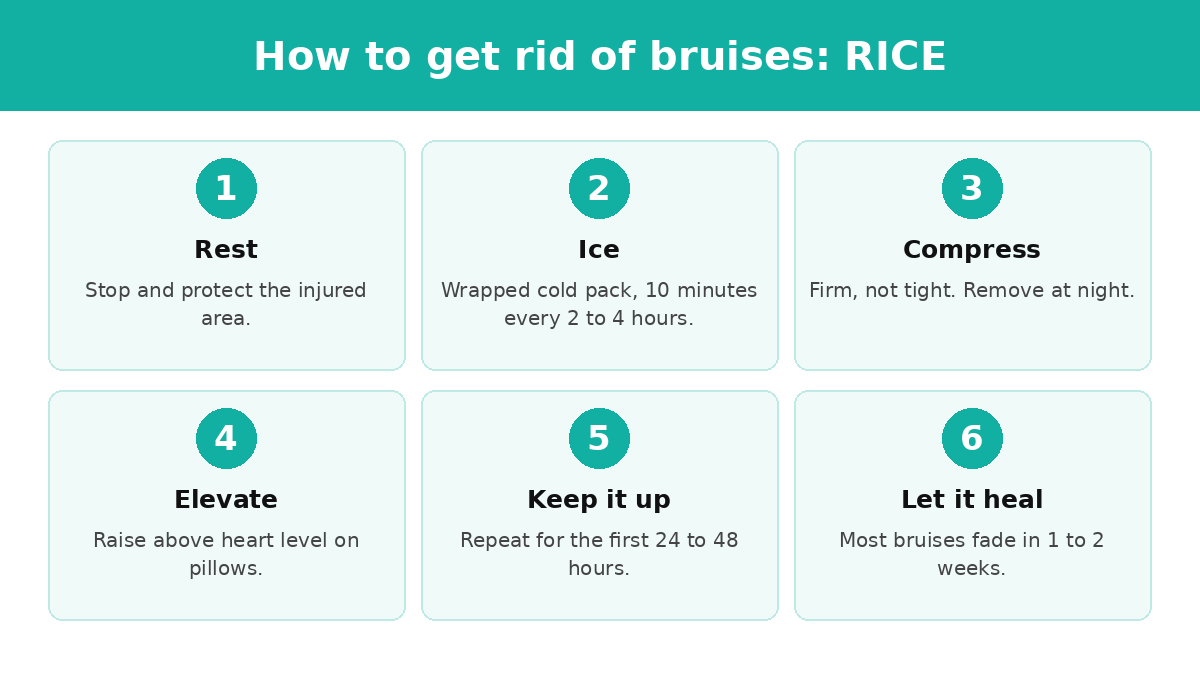
- Rest the injured area so you are not knocking or straining it further.
- Ice it with a cold pack, or ice wrapped in a cloth, for 10 minutes every 2 to 4 hours, and continue for 24 to 48 hours. Always keep a cloth or cover between the pack and the skin.
- Compress the area with a bandage that is firm but not tight. Take it off at night, and loosen it straight away if the area beyond it becomes numb, tingly, pale, cold or more painful.
- Elevate the injured part above the level of the heart where possible, for example an arm or leg on a few pillows.
The earlier you start, the better: healthdirect notes that RICE reduces both the swelling and the bruising after a minor knock. It works best in the first day or two, while the bruise is still forming.
Bruise colours and how long bruises take to fade
It usually takes 1 to 2 weeks for a bruise to heal completely. The colour changes as your body breaks down and clears the trapped blood. The pattern below is typical, but timing varies a lot from person to person:
| Stage | What it looks like | What it means |
|---|---|---|
| Fresh | Red or purple, tender, sometimes swollen | Blood has recently leaked under the skin: this is when RICE helps most |
| Healing | Turning yellow or light green | Your body is breaking the blood down; the injury is healing |
| Fading | Pale yellow or brown, no longer sore | Nearly healed |
If a bruise is getting bigger or more painful, has not faded after 2 weeks, or you are worried about it, see a doctor.
Can you get rid of bruises overnight?
No. There is no proven way to make a bruise disappear overnight, however many quick fixes are shared online. What actually works for how to get rid of bruises is keeping them small with early cold and compression, and avoid knocking the same spot again while it heals. Honest expectations save money on products that promise more than they deliver.
Creams and gels for bruises: what the evidence says
Pharmacies stock a range of creams for bruising. Arnica cream, made from the Arnica montana plant, has a long history of traditional use for bruising, but the clinical evidence is limited and mixed: some studies report a modest benefit and others find no difference from placebo. If you want to try it, use it only on unbroken skin, stop if your skin reacts, and treat it as an optional extra rather than a replacement for cold, compression and rest. If you are unsure whether a cream is suitable, for example during pregnancy, ask your pharmacist.
For pain, paracetamol used as directed on the pack may help. Ask your pharmacist before using aspirin or anti-inflammatory medicines after a fresh knock, as some pain relievers can affect bleeding.
Why do I bruise so easily?
"Why do I bruise so easily" is one of the most searched bruising questions in Australia. Some people naturally bruise more easily than others, and older adults and young children get bumps and bruises more often. But easy bruising can sometimes be a sign of a medical problem that needs checking. healthdirect advises seeing your doctor if:
- you seem to bruise more easily than other people
- you have bruises on many parts of your body, or bruises you cannot explain
- you have frequent bleeding, such as nosebleeds
- you have a family history of bleeding disorders
A common version of this question is why women get random bruises on their legs. The same healthdirect advice applies: see your GP if random bruises keep appearing, if you have bruises on many parts of your body, or if they come with heavy periods, bleeding gums or frequent nosebleeds. Mention any medicines you take, as your doctor will want to know. For more on this, read first aid for bleeding disorders.
When a bruise needs a doctor or 000
Sometimes it is hard to tell whether a knock is serious. See a doctor if:
- you have a lot of pain, or you cannot move the injured joint
- the injury is swelling or bruising very quickly
- you have knocked your head, or you are worried about the injury
Go to an emergency department or call 000 if the limb is twisted or bent, bone is coming through the skin, the skin feels cold or sweaty, the person is having difficulty breathing, has a fever of 38°C or higher, or has knocked their head and is confused or disoriented. Severe swelling or pain in a limb after an injury, or signs of shock, also need an ambulance. After a heavy blow to the chest, abdomen or back, watch for signs of internal bleeding such as pale, clammy skin, nausea, extreme thirst, breathlessness or drowsiness, and call 000 if they appear. After any head knock, call 000 for loss of consciousness, repeated vomiting, a seizure, increasing drowsiness or a worsening headache. People who take blood-thinning medicines should get medical advice after any significant knock or head injury. A suspected fracture should be kept still: our splints and fracture first aid guide shows how.
Preventing bumps and bruises
- Wear protective gear, such as shin pads and helmets, for contact sports.
- Keep floors, stairs and living areas clear of clutter.
- Read our guide to falls prevention and treatment for older adults.
What to keep in your first aid kit for bruises
An instant ice pack in the car or sports bag lets you start cold therapy straight away, and early cold is a big part of how to get rid of bruises quickly. Pair it with a reusable gel pack in the freezer at home and a compression bandage. Browse our range of hot and cold packs, and see our guide to hot and cold therapy packs for when to use heat instead of cold.
Bruise first aid essentials
Everything you need for RICE, from instant cold to firm compression.
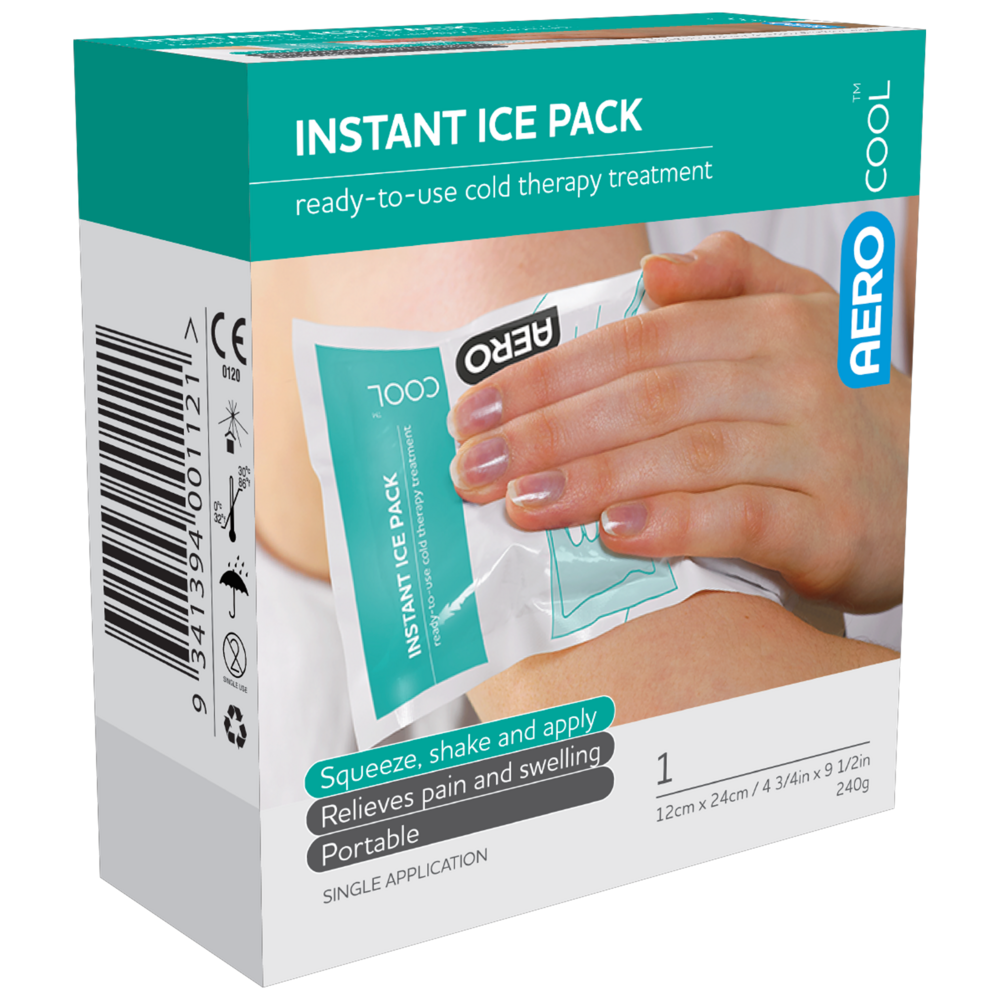
AEROCOOL Instant Ice Pack 240g
Squeeze to activate: instant cold with no freezer, for the car or sports bag.
Shop Now
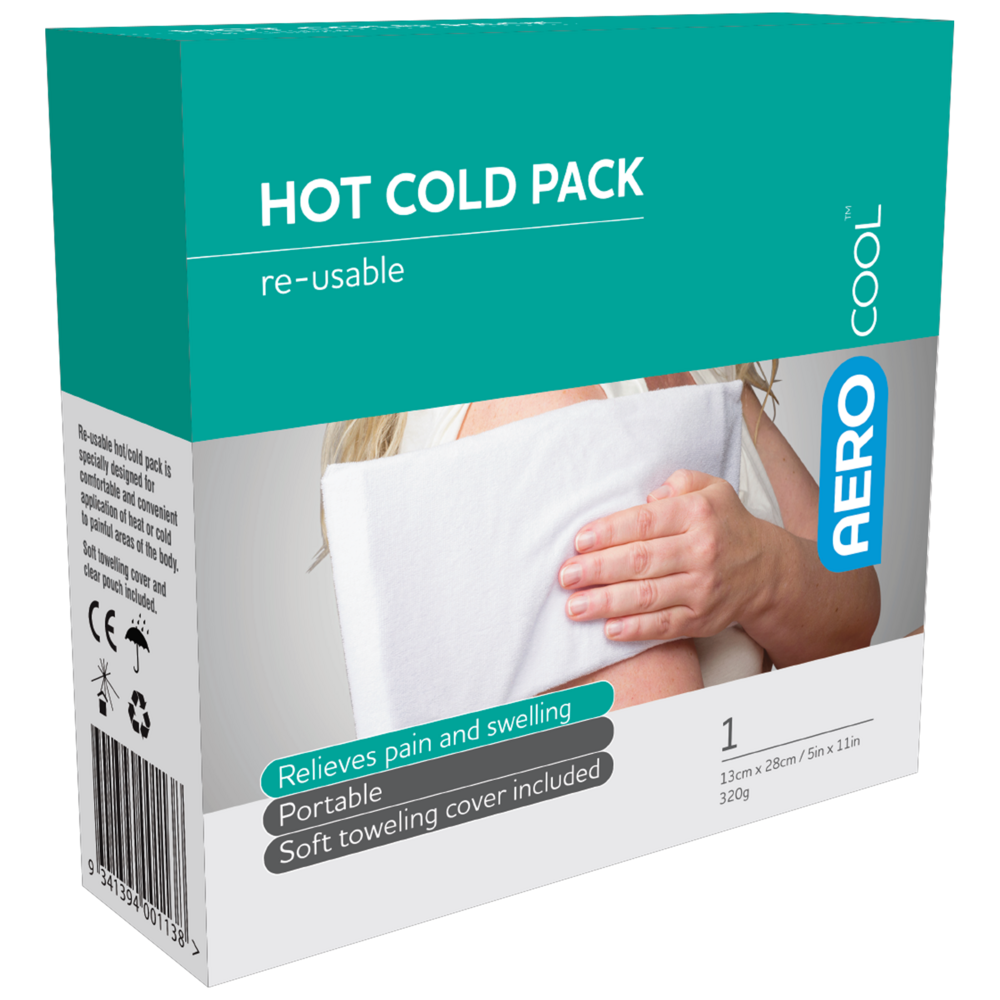
AEROCOOL Reusable Hot and Cold Gel Pack 320g
Keep one in the freezer so cold therapy is ready when you need it.
Shop Now
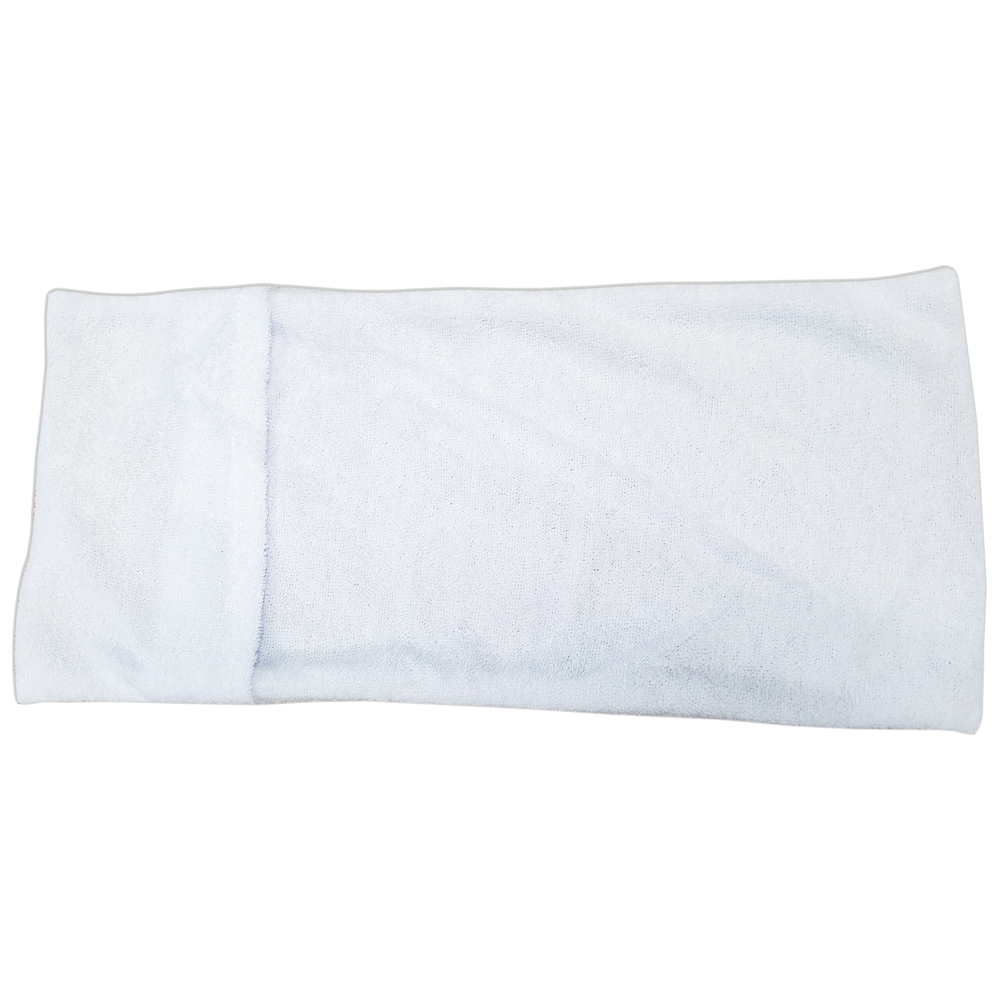
AEROCOOL Cotton Sock for Hot and Cold Pack
Soft cover so the pack never sits directly on the skin.
Shop Now


Bruise FAQs
How do you get rid of bruises fast?
Start cold therapy as soon as possible: a wrapped cold pack for 10 minutes every 2 to 4 hours for the first 24 to 48 hours, plus rest, a firm (not tight) compression bandage and elevation. This limits how big the bruise gets; after that it fades on its own.
How long does a bruise take to heal?
Most bruises heal completely in 1 to 2 weeks, changing from red or purple to yellow or green as they heal. See a doctor if a bruise is getting bigger, very painful or has not faded after 2 weeks.
Should you put ice or heat on a bruise?
Use cold for a fresh bruise: a wrapped cold pack for 10 minutes every 2 to 4 hours for the first 24 to 48 hours reduces swelling and bruising. Always keep a cloth between the pack and the skin. Our hot and cold therapy guide explains when heat is used.
Why do I bruise so easily?
Some people naturally bruise more easily, but see your doctor if you bruise more than other people, have many or unexplained bruises, frequent nosebleeds, or a family history of bleeding disorders.
Does arnica cream work on bruises?
The evidence is limited and mixed: some studies show a modest benefit and others none. It can be used for comfort on unbroken skin, but cold, compression and rest are the core treatment.
When is a bruise serious?
Get urgent care if the limb looks twisted or bent, the person cannot move it, has knocked their head and is confused, has a fever, or the area swells very quickly. Call 000 for difficulty breathing or signs of shock.
Related first aid guides
Keep reading: hot and cold therapy packs, how to tape an ankle sprain, falls prevention and treatment and how to stop bleeding quickly.