

Reviewed by the Medibc First Aid Team — last updated May 2026.
Around 36,000 Australians a year end up in hospital from a sport injury, and ankle sprains alone account for one of the most common emergency-department presentations. The right strapping technique — with the right tape — can keep weekend athletes on the field, prevent re-injury, and shorten recovery.
This guide walks Australian families, weekend athletes, and sports trainers through when to tape, which tape to use, how to apply the most useful techniques, and the warning signs that mean it’s time to put the tape away and see a physio.
When to tape: common sports injuries that benefit from strapping
Sports tape isn’t a substitute for proper diagnosis or rehab, but it earns its place in the kit for two scenarios: preventing re-injury in a previously injured joint, and supporting a minor strain so the athlete can finish the game or session safely.
Ankle sprains and instability
Ankle sprains are the most-taped injury in Australian sport. A previous sprain doubles the chance of a second sprain in the same season unless the joint is supported. Rigid taping or a stirrup pattern restricts inversion (the rolling motion) without locking out forward and backward motion needed to run and pivot.
Knee and patellar tracking
For runners and netballers with patellofemoral pain (PFP), kinesiology tape can reduce pain by offloading the patellar tendon. It’s not magic — the effect is partly mechanical, partly neurological — but enough riders, runners, and netballers swear by it that it’s a staple of every clubroom kit.
Wrist and finger sprains
Goalkeepers, basketballers, and rock climbers regularly jam fingers and sprain wrists. Buddy taping (taping the injured finger to the next one) is a five-second field treatment that stabilises the joint enough to keep playing without making things worse.
Plantar fasciitis and arch support
The morning-heel-stab of plantar fasciitis responds to low-dye taping under the arch. It’s a short-term fix while you sort out the cause (footwear, calf tightness, training load), not a cure.
Choosing the right sports tape for the job
Different tapes do different jobs. The wrong tape won’t hurt — but it won’t help either. Three categories cover 90% of what you’ll need.
Rigid sports tape (zinc oxide)
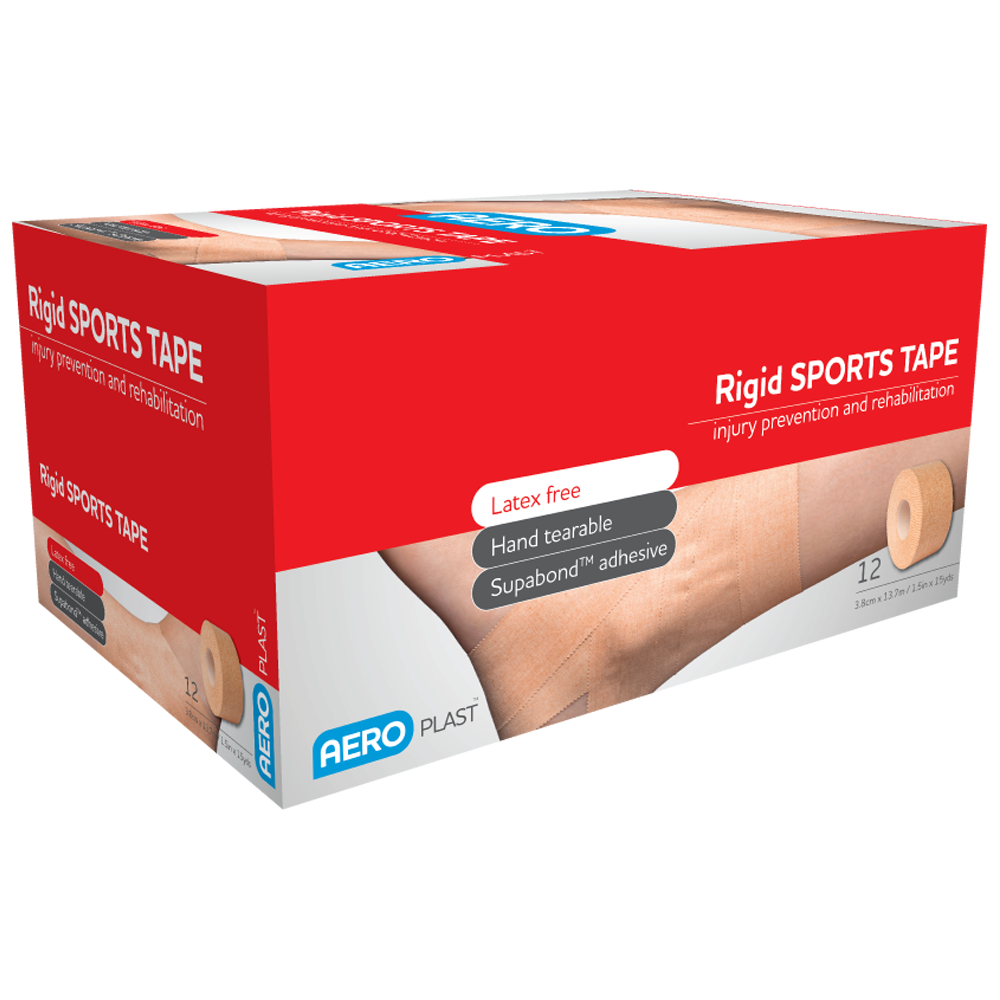
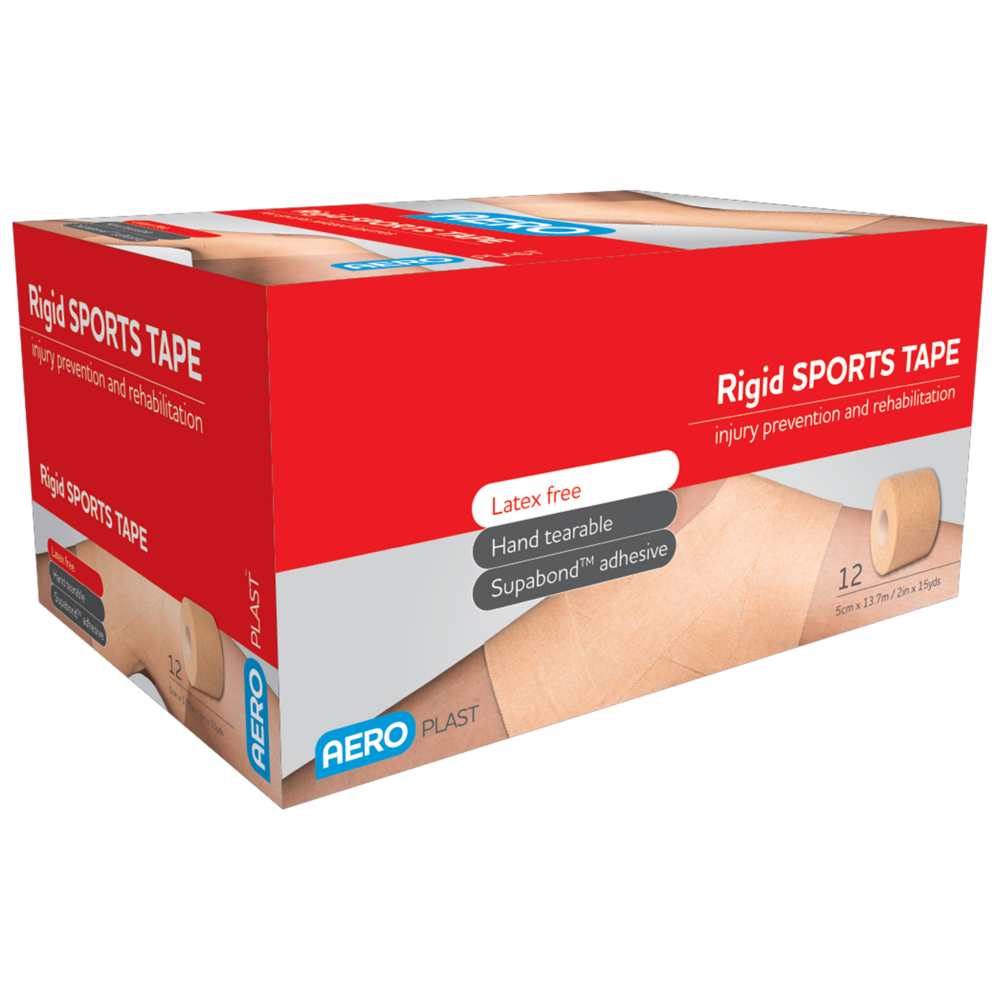
Rigid, non-stretchy, strong adhesive. The workhorse for joint restriction — ankle stirrups, thumb spica, wrist anchors. Comes in 2.5cm, 3.8cm, and 5cm widths. Wider tape for ankles/knees, narrower for fingers and wrists. 3.8cm rigid sports tape is the all-rounder — box of 12 rolls usually lasts a club a season.
For larger joints (knee, shoulder), step up to 5cm rigid tape. The wider strip gives more restriction with fewer overlaps.
Kinesiology tape
Elastic, breathable, water-resistant. Mimics skin and stretches with movement. Designed for proprioceptive feedback and gentle decompression of swollen tissue, not joint restriction. Good for chronic niggles, swelling management, and post-exercise recovery.
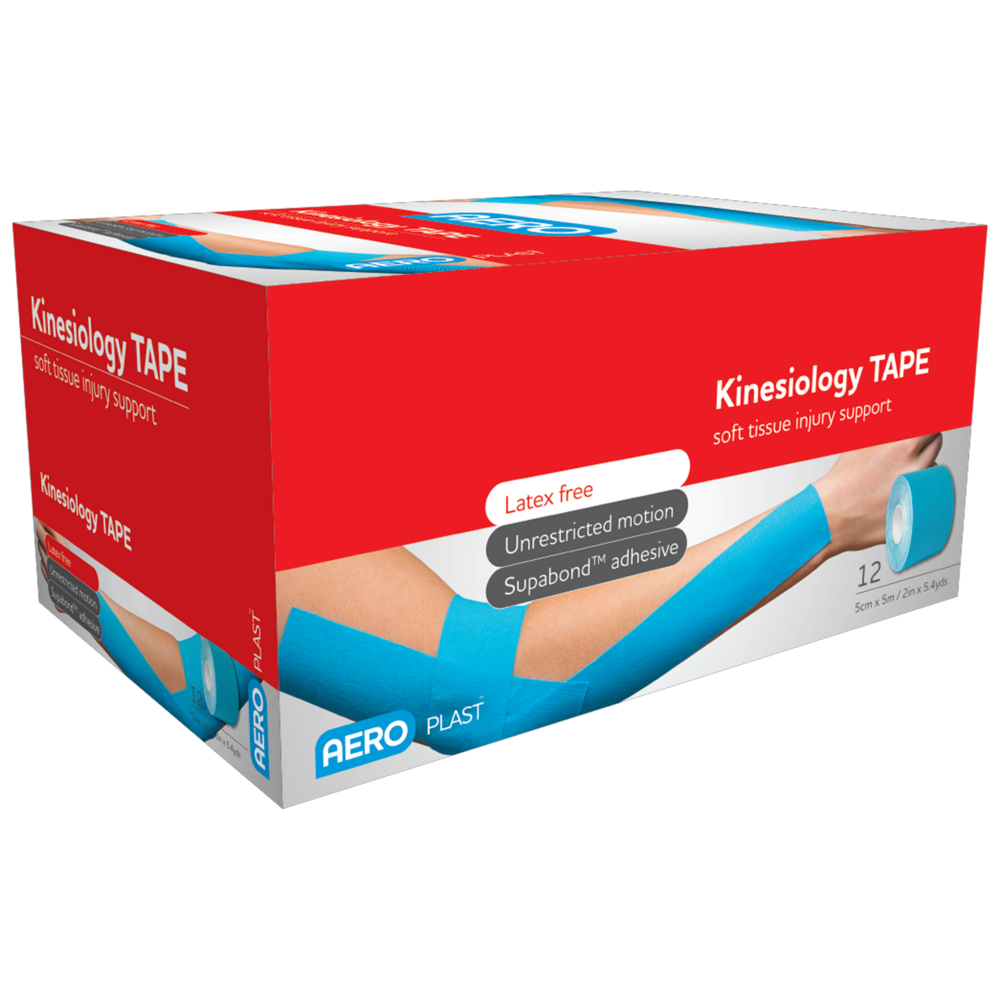
5cm kinesiology tape rolls in a box of 12 stocks a clinic or club room for months — one roll covers 4-6 typical applications.
Visual strapping tape
Lightweight, semi-rigid — the middle ground between rigid and kinesiology. Useful when you want some give but still need direction restriction. Visual strapping tape is also handy for marking taping patterns when teaching a new technique.
Underwrap and base layers
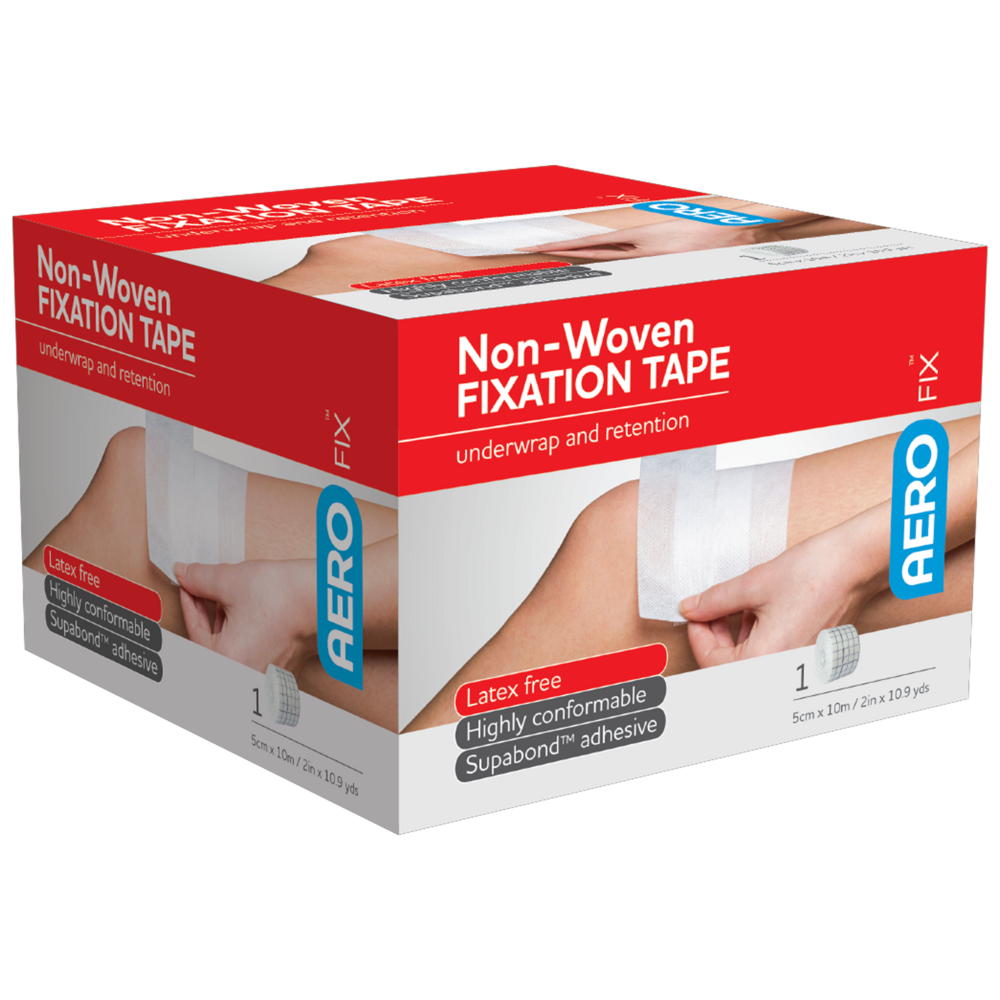
Pre-tape underwrap (foam wrap) protects the skin from rigid-tape pull, especially on hairy or sensitive skin. AEROFIX underwrap over a thin layer of zinc oxide anchor tape is the standard club-room base layer before the rigid strapping goes on.
Basic sports tape techniques every household should know
These aren’t replacements for hands-on training — St John runs short courses if you want certified competence — but they cover the common field-side fixes.
Ankle stirrup taping
- Prep: foot at 90° to the leg, skin dry and shaved if very hairy.
- Anchor: one wrap of zinc oxide tape around the lower calf (snug, not tight) and one around the mid-foot.
- Stirrups: three strips of rigid tape running from the inner anchor, under the heel, up to the outer anchor — pulling gently outward to restrict inversion.
- Heel locks: two figure-of-eights around the heel for rotational stability.
- Finish: a closing anchor over the stirrups and another over the foot.
Buddy taping fingers
- Place a small piece of cotton or gauze between the injured finger and the supporting finger to prevent skin breakdown.
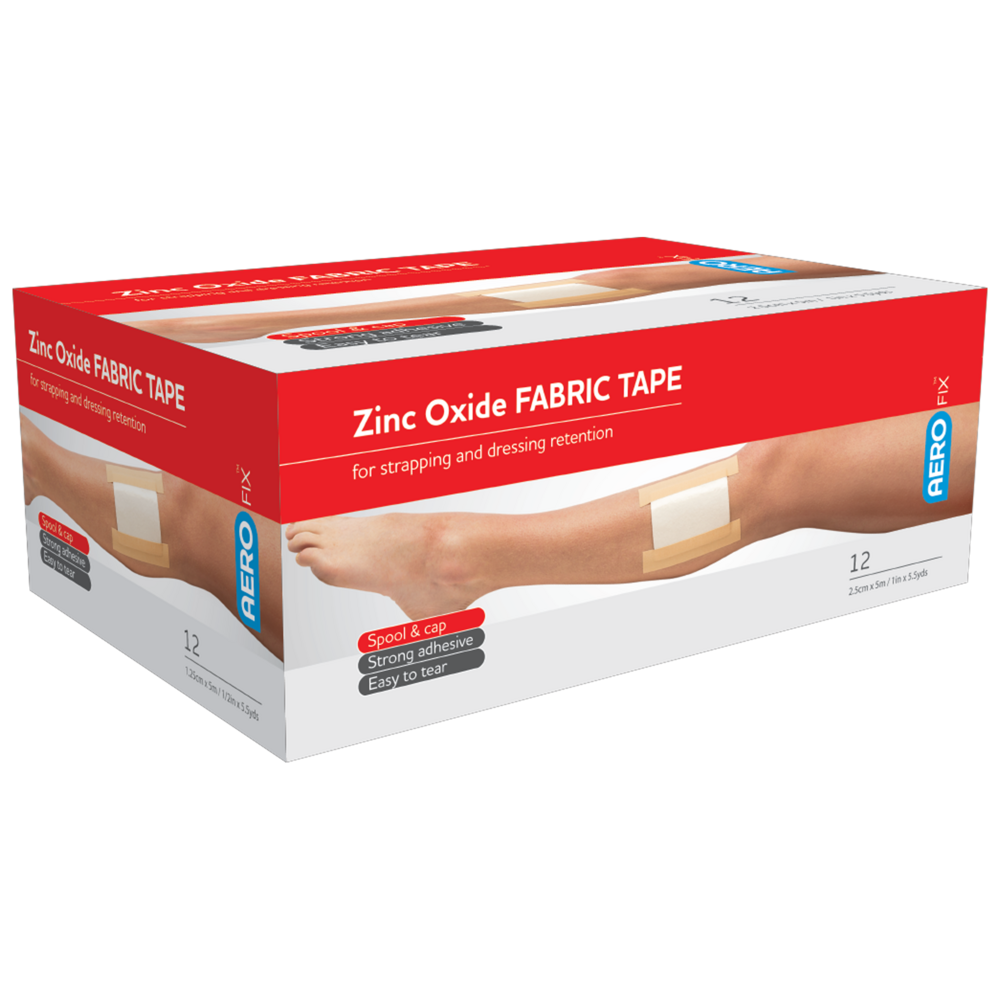
- Tape the two fingers together with two narrow strips — one above and one below the joint — using 1.25cm or 2.5cm zinc oxide tape.
- The supporting finger acts as a natural splint while still allowing partial movement.
Low-dye plantar fascia taping
- Anchor: a circle of rigid tape around the forefoot, just behind the toes.
- Stirrup: a strip from the outer side of the heel, under the foot, up the inner side of the foot to the same anchor — pulling the arch up slightly.
- Cover: 2-3 transverse strips under the arch, anchored on both sides of the foot, to support the longitudinal arch.
How to remove sports tape safely
Ripping tape off pulls hair, tears skin, and stings. A few tricks make removal painless:
- Wet first: soak the area in a warm shower or with a damp towel for 2-3 minutes. The adhesive softens.
- Peel along the skin: pull the tape back along the skin surface, not straight up. Hair stays put.
- Oil if needed: a few drops of baby oil or eucalyptus oil rubbed in dissolves stubborn adhesive residue.
- Check the skin: any blisters, redness, or broken skin needs cleaning and a sterile dressing before the next application. See our guide on how to treat blisters.
When NOT to tape: warning signs that need a physio or GP
Tape supports minor injuries. It doesn’t fix:
- Visible deformity — a joint at the wrong angle, a bone bump where there shouldn’t be one.
- Unable to bear weight at all on a leg or arm after 24 hours.
- Severe swelling or bruising that doesn’t reduce with RICE (rest, ice, compression, elevation) over 48-72 hours.
- Numbness or tingling below the injured area — suggests nerve involvement.
- Pain that worsens with rest rather than improves.
For these, see a GP or physio. The Australian Government’s healthdirect sprains and strains guide walks through when to seek medical care.
Building a sports first aid taping kit
A practical club-level taping kit holds 4-6 rolls of rigid tape (mixed widths), 2-3 rolls of kinesiology tape, a box of underwrap, scissors, skin prep wipes, and a few buddy-tape lengths pre-cut. For households, one roll of each major tape type, plus an ice pack and a compression bandage, covers most weekend injuries.
Browse the full sports tape and strapping range on Medibc to match the tape mix to your sport.
Frequently asked questions
Can I tape over a fresh injury?
For minor sprains and strains under 24 hours old, light supportive taping plus ice (RICE protocol) is fine. For anything more severe — suspected fracture, severe swelling, visible deformity — don’t tape. Immobilise with a splint or sling and seek medical care. Taping a serious injury can mask warning signs and delay proper treatment.
How tight should sports tape be?
Tight enough to feel snug and supportive, loose enough that you can slide a finger between the tape and skin at the anchor points. If toes or fingers go white, blue, or numb, the tape is too tight — remove and re-apply with less tension. Better to under-tape than cut off circulation.
How long can I keep sports tape on?
Rigid sports tape: a single training session or game (2-4 hours), then remove. Wearing it longer risks skin breakdown and gives no extra benefit. Kinesiology tape: up to 3-5 days if it stays adhered — it’s designed for prolonged wear. Remove sooner if skin gets red, itchy, or blistered.
Tape smart, recover faster
Sports tape works when it matches the injury and the technique is right. Rigid tape restricts; kinesiology tape supports; underwrap protects. Stock a few rolls of each before the next sports weekend, learn the basic stirrup and buddy patterns, and know the signs that mean it’s time to see a physio instead of reaching for the tape.
Sources: Australian Institute of Health and Welfare — Sports injury in Australia, healthdirect — Sprains and strains, NCBI — The effectiveness of taping for ankle injuries.
Sports Tape & Strapping Essentials
Rigid sports tape, kinesiology tape, and underwrap for the most common ankle, knee, and finger strapping techniques.