

Air Splint - Full Arm
Other First Aid Supplies
£43.81
Secure checkout
VISA
Mastercard
Apple Pay
Google Pay
Also accepted
AMEX
Afterpay
Zip
Klarna
PayPal
In stock
Only 1000 left
SKU
453
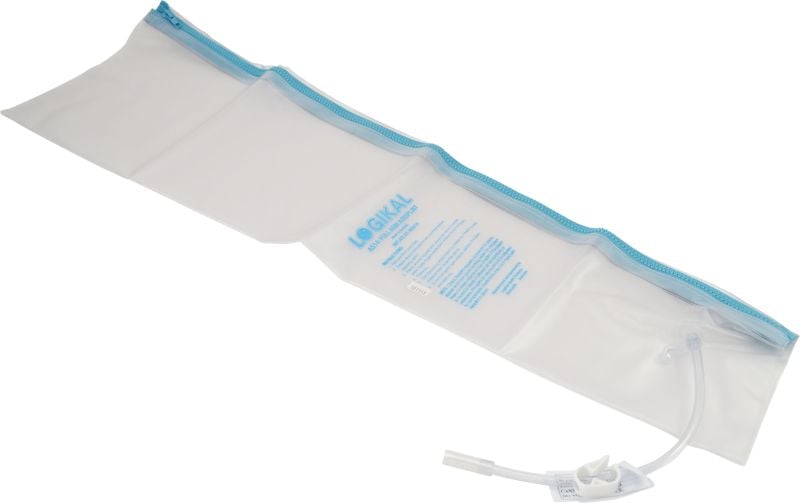
This full arm air splint is an inflatable splint measuring 770mm long by 480mm wide at the top, sized to support and immobilise a suspected upper limb injury along the whole arm rather than a single joint.
Why choose a full arm air splint
The arm is the limb where a rigid splint is hardest to apply well, because the patient is usually sitting up, frightened, and holding the arm in whatever position hurts least. A full arm air splint immobilises by surrounding the limb with even, low pressure, so it can be applied without forcing the arm into a shape that fits a board.
At 770mm it spans the full arm, which matters because the rule of immobilisation is to include the joint above and below the injury. A forearm splint on a suspected humerus fracture leaves the elbow free, and a limb that can still move at a joint near the fracture is not immobilised in any useful sense.
Inflate it by mouth, never with a pump - lung pressure is self-limiting where a pump is not, and over-inflation compresses the very circulation you are trying to protect. Then check colour, warmth, sensation and the radial pulse after application and at intervals, since swelling continues and can tighten a correctly applied splint.
Key features
- 770mm long x 480mm wide at the top
- Spans the full arm - includes the joints above and below
- Inflatable splint - immobilises a suspected limb injury
- Inflate by mouth to avoid over-inflation
- Allows the limb to be supported without rigid padding
- Reusable
- For use by trained personnel
Specifications
| Product | Air Splint - Full Arm |
| Length | 770mm |
| Width at top | 480mm |
| Type | Inflatable limb splint |
| Region | Full arm - upper limb |
| Inflation | By mouth - do not use a pump |
| Monitoring | Check colour, warmth, sensation and radial pulse regularly |
| Use by | Trained personnel, within scope of practice |
Common uses
Ambulance and first response, sporting clubs, industrial and mine site medics, and school and event first aid teams. Kits are normally built with all three sizes, since you cannot know which limb arrives: the foot and ankle air splint and the full leg air splint cover the lower limb, and the complete set with bag keeps them together and transportable. See our softpack and trauma kits.
full arm air splint FAQs
Why immobilise the whole arm?
Because immobilisation should include the joint above and the joint below the injury. A splint covering only the forearm leaves the elbow mobile, and movement at a joint next to a fracture defeats the purpose. At 770mm this covers the full arm.
How is it inflated?
By mouth only. A pump can over-inflate it and compress the circulation, while lung pressure is naturally self-limiting. Inflate until the splint firmly supports the arm and stop there.
How do I know it is not too tight?
Check the fingers for colour, warmth and sensation and check the radial pulse, immediately after application and then regularly. Injuries keep swelling, so a splint that was right on application can become too tight - release some air if circulation is affected.
Can it be used over a wound?
Dress and control any bleeding first, then apply the splint over the dressing according to your protocols. Do not inflate a splint directly over an uncovered wound or an open fracture, and never push protruding bone back beneath the skin.
Is it reusable?
Yes. Check it before every use for punctures, perished material and valve function, clean it per the manufacturer instructions and your infection control policy, and confirm it holds pressure before returning it to the kit.
Does temperature or altitude affect it?
Yes - the air expands and contracts, so a splint applied on the ground may tighten in an aircraft or in the sun. Monitor and adjust during any transfer, particularly aeromedical.
For use by appropriately trained personnel working within their scope of practice and local clinical guidelines. Inflate by mouth only. Check distal circulation, colour, warmth and sensation after application and at regular intervals, and adjust if circulation is compromised. Control bleeding and dress wounds before applying. Air volume changes with temperature and altitude. This information does not replace first aid training. In an emergency, call 000.
Frequently bought together