


By the MediBC team · Updated June 2026 · 8 min read · Information checked against the Heart Foundation and healthdirect
A defibrillator, or AED, is the single piece of equipment that most changes the odds in a sudden cardiac arrest. This guide explains what an AED does, what it costs in Australia, how to choose between the main Zoll models, and where the law now requires one.
Quick answer
An AED (automated external defibrillator) analyses the heart and delivers a shock only if one is needed. No training is required, and it is used alongside CPR. What you pay depends on the model and configuration, and current pricing is shown on each product page. South Australia now requires AEDs in many publicly accessible buildings; elsewhere they are strongly recommended under work health and safety duties.
In a cardiac arrest, call 000 first, start CPR, and use an AED as soon as one is available.
What is a defibrillator (AED)?
A defibrillator is a device that treats a sudden cardiac arrest by delivering a controlled electric shock to the heart. The type found in workplaces, schools and public places is an automated external defibrillator (AED): a portable, battery-powered unit designed to be used by anyone, not just clinicians.
A cardiac arrest is not the same as a heart attack. It is an electrical fault that stops the heart pumping, and without treatment it is fatal within minutes. An AED is the only way to correct the underlying rhythm.
How does an AED work?
You place two adhesive pads on the bare chest as shown on the pads. The AED reads the heart rhythm through those pads and decides whether a shock is needed. It will only allow a shock if the rhythm calls for one, so it cannot shock someone who does not need it. Throughout, the unit gives clear voice prompts that walk you through each step.
You do not need training or a medical background to use an AED. It is designed to talk a bystander through the rescue, and it will not deliver a shock unless the heart needs one.
An AED does not replace CPR. The two work together: chest compressions keep blood moving while the AED prepares to analyse and, if needed, shock.
How much does a defibrillator cost in Australia?
What you pay depends on the model, whether the unit is semi-automatic or fully automatic, and what is bundled with it. Current pricing is always shown on each product page. Ongoing costs are modest: replacement pads and a battery every few years. A wall cabinet, signage and a first responder kit are usually added on top.
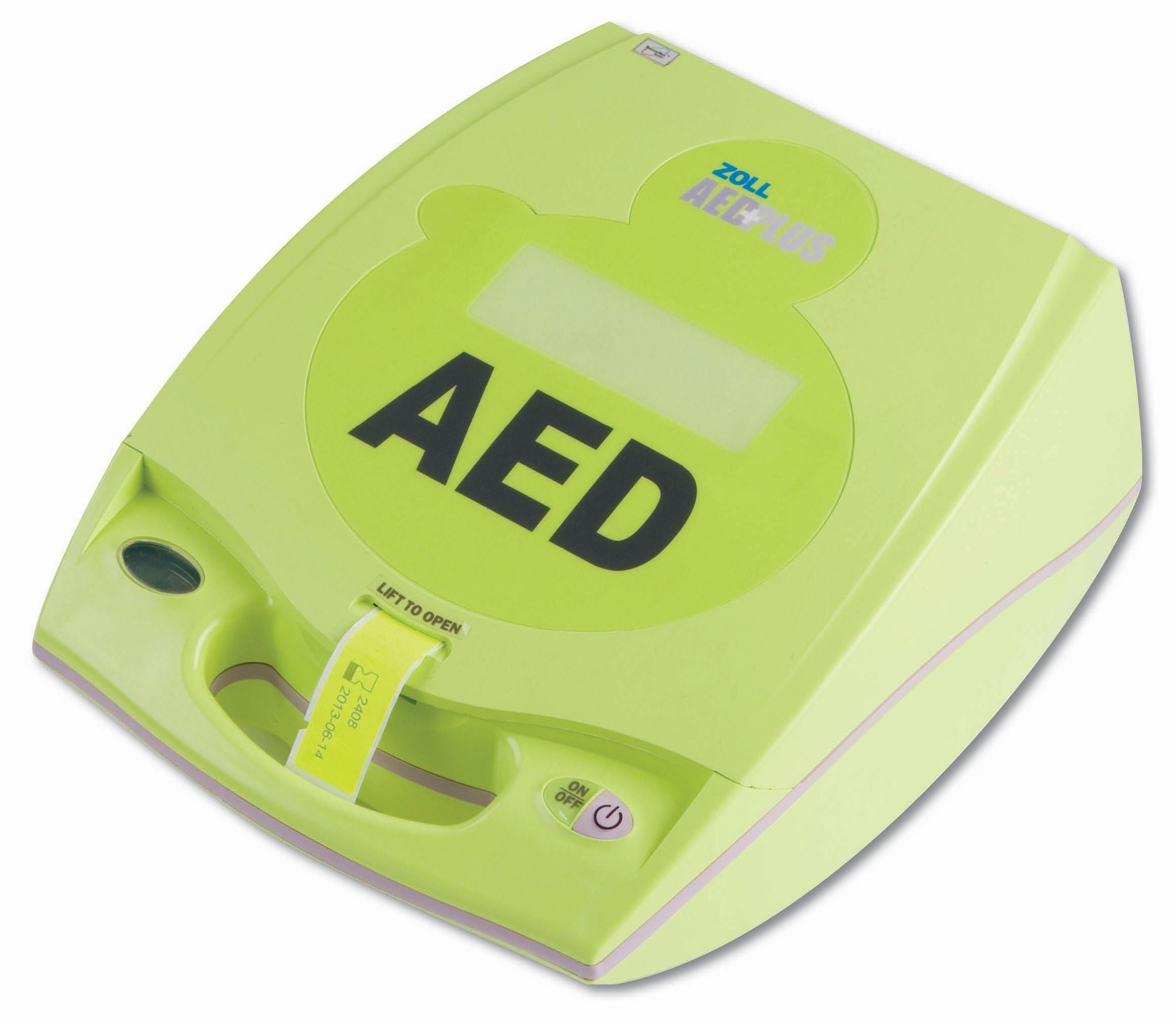
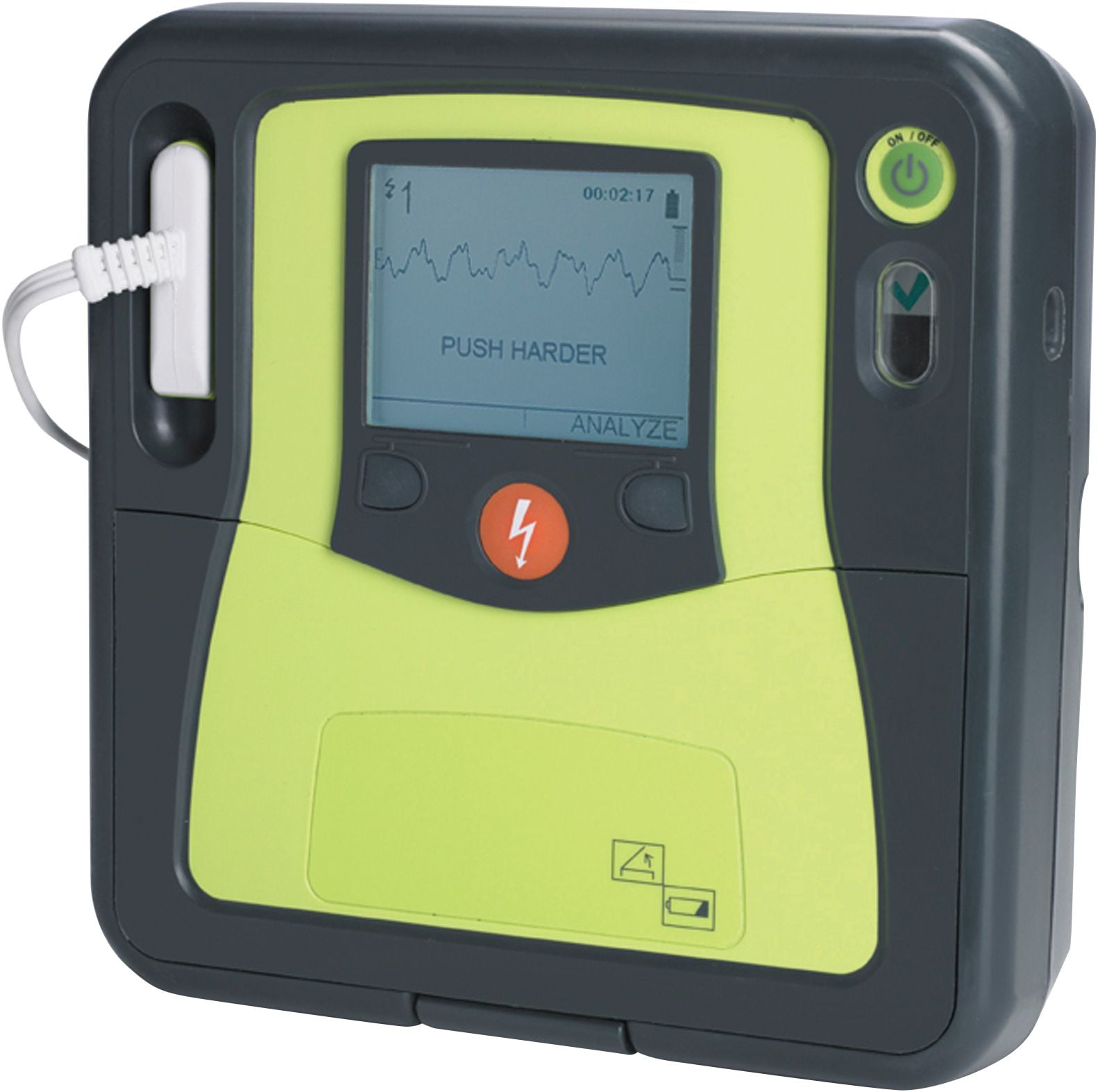
Because pricing and stock change, the figures on each product page are the current ones. As an authorised Zoll supplier, the two units below are the ones we are asked about most often.
See the full Zoll AED range
As an authorised Zoll supplier, we stock the TGA-regulated Zoll AED range and the pads, batteries and cabinets to match. We can help you match a unit to your site, headcount and budget, and keep your AED ready for use.
Semi-automatic vs fully automatic AEDs
A semi-automatic AED analyses the rhythm and then tells you to press a flashing shock button. A fully automatic AED does the same analysis but delivers the shock itself after a spoken warning, with no button press. Both are safe for untrained users. Fully automatic units suit places where a bystander might hesitate to press the button; semi-automatic units give the operator the final say. The Zoll AED Plus is available in either configuration.
Are defibrillators mandatory in Australian workplaces?
In most of Australia an AED is not legally required, but work health and safety law requires employers to manage health and safety risks, and providing an AED is widely treated as best practice, especially on larger or higher-risk sites.
South Australia is the exception. Under the Automated External Defibrillators (Public Access) Act 2022, AEDs are now mandatory in many buildings. Crown-owned buildings and emergency-service vehicles have applied since 1 January 2025, and non-Crown publicly accessible buildings with a floor area of 600m² or more, along with prescribed public transport, from 1 January 2026. The Act sets out roughly one AED for every 1,200m² of applicable floor area, requires registration on the South Australian AED Register within two weeks of installation, and carries penalties for non-compliance. If you operate in South Australia, check the current requirements for your building. See our full guide to defibrillator requirements in Australia by state.
Even where an AED is not mandated, a sudden cardiac arrest can happen to anyone, anywhere. The decision usually comes down to how quickly an ambulance could reach your site, and how many people pass through it.
AED cabinets, signage and storage
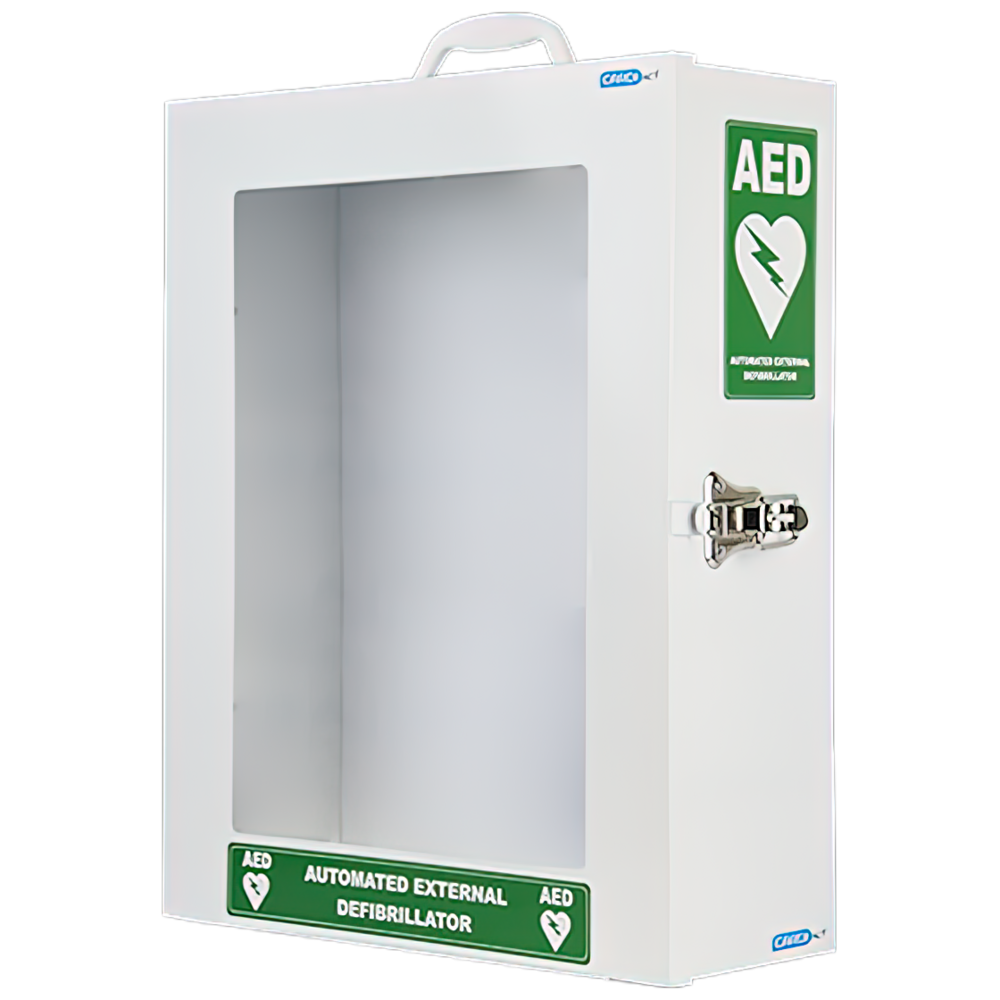
An AED needs to be findable in seconds by someone who has never used it. A wall cabinet keeps the unit visible, protected and at a known location, and alarmed or heated cabinets suit outdoor and public-access sites. Clear AED signage and a marked location on your site plan matter as much as the unit itself. We supply Zoll cabinets and signage to match the AED you choose.
AED pads, batteries and maintenance
AED pads and batteries have expiry dates and need replacing on a cycle, typically every few years, and pads must be replaced after every use. Adult pads suit anyone over roughly eight years or 25kg; paediatric pads or a paediatric setting are used for younger children. A monthly visual check that the unit shows a ready status, plus a diary note of pad and battery expiry, keeps an AED rescue-ready. We carry Zoll replacement pads and batteries.
Keep your Zoll AED rescue-ready
Genuine Zoll replacement pads, batteries, cabinets and signage, so the unit you own is ready the moment it is needed.
How to get a defibrillator, including grant options
Most Australian buyers simply purchase a unit outright; for a community group, club or small organisation, grant and subsidy programs can help. The Heart Foundation's Heart of the Nation program and various state and local government grants periodically support public-access AEDs. Availability changes, so check the current programs in your state. If you are weighing up which unit a grant should fund, we can help you scope it.
Defibrillators and AEDs: frequently asked questions
How much does a defibrillator cost in Australia?
What you pay depends on the model and whether the unit is semi-automatic or fully automatic. Replacement pads and batteries are the main ongoing cost, and current prices are shown on each product page.
Are defibrillators mandatory in the workplace?
In most of Australia they are not legally required, though work health and safety duties make them best practice. South Australia is the exception: under the Automated External Defibrillators (Public Access) Act 2022, AEDs are mandatory in many publicly accessible buildings, with non-Crown buildings of 600m² or more covered from 1 January 2026.
Can anyone use an AED, or do you need training?
Anyone can use an AED. No training or medical background is required. The unit gives spoken prompts and will only allow a shock if the heart rhythm needs one. Training builds confidence, but it is not a condition of use.
What is the difference between a semi-automatic and fully automatic AED?
A semi-automatic AED tells you to press a shock button; a fully automatic AED delivers the shock itself after a spoken warning. Both are safe for untrained users. The Zoll AED Plus is available in either configuration.
How often do AED pads and batteries need replacing?
Pads and batteries carry expiry dates and are typically replaced every few years, and pads are replaced after every use. A monthly check of the unit's ready status, plus a note of expiry dates, keeps it rescue-ready. We stock genuine Zoll replacement consumables.
Sources
- Heart Foundation — Heart of the Nation: AEDs and the chain of survival
- healthdirect — Defibrillators and AEDs
- Victor Chang Cardiac Research Institute — How to use an AED
- Government of South Australia — Automated External Defibrillators (Public Access) Act 2022
Disclaimer. This article is general information, not medical or legal advice. In an emergency call 000. For your obligations under work health and safety or South Australian law, check the current requirements for your site. Defibrillators are regulated medical devices; use the unit according to its instructions.
Planning site-wide emergency response? See triage categories, colours and how triage tags work.