

Written by the MediBC medical-supply team · Reviewed against Australian Resuscitation Council Guideline 9.1.1 (soft tissue injuries) and Safe Work Australia heat-stress guidance · Updated May 2026.
Hot and cold therapy is one of the most-used and most-misunderstood interventions in workplace and home first aid. Apply cold where heat is needed and you tighten an already-tight muscle. Apply heat where cold is needed and you accelerate swelling on an acute injury. Apply either too long and you cause a thermal injury that needs its own first aid.
This guide covers the two distinct decisions: which therapy for which injury or condition, and which product format for which workplace. It maps to the six standard hot/cold and cooling products stocked in Australian first aid catalogues, from the workhorse 320g reusable gel pack through to phase-change cooling vests for hot-work environments.
Cold therapy: when and why
Cold (cryotherapy) reduces tissue temperature locally. The therapeutic effects come in cascade: vasoconstriction reduces bleeding into damaged tissue, swelling decreases, pain receptors fire less, and the inflammatory cascade is partially suppressed.
Acute soft tissue injury (sprains, strains, contusions)
The first 48-72 hours after a sprain or strain is the cold-therapy window. Cold limits the haematoma that would otherwise form, reduces secondary tissue damage from the swelling itself, and provides analgesia that lets the casualty continue with the rest of the RICE protocol (Rest, Ice, Compression, Elevation).
Bruising and contusions
A direct blow that breaks small blood vessels under intact skin causes a bruise. Cold applied in the first hour limits bruise extent — capillary vasoconstriction reduces the blood that leaks into surrounding tissue. After 24 hours the bruise is set and cold no longer helps with the colouring; it can still reduce ongoing pain. Our guide on how to get rid of bruises covers the full RICE routine and when a bruise needs a doctor.
Insect stings and bites
Cold packs reduce local swelling from bee, wasp and ant stings. The effect is mostly comfort and limiting the inflammatory response — they do not affect any systemic venom reaction. Anaphylaxis still needs adrenaline.
Tension headaches and migraines
Cold on the forehead, behind the neck or wrapped around the temples eases tension headache and reduces migraine duration in some people. Anecdotal but well-supported by clinical practice — the cost is low so it is worth trying.
Hot therapy: when and why
Heat (thermotherapy) increases tissue temperature, causing vasodilation, increased blood flow, and muscle relaxation. The wrong therapy in the first 72 hours of acute injury — but the right one for chronic stiffness, muscle spasm and stale soreness.
Chronic muscle tension and back pain
A heat pack on a tight lower back relaxes the paraspinal muscles and increases local circulation. Best applied for 15-20 minutes at a time. Most useful for chronic mechanical low back pain rather than acute injury.
Menstrual cramps
Lower abdominal heat is one of the most effective non-pharmacological treatments for dysmenorrhoea. A 320g reusable gel pack in a cotton sock placed on the lower abdomen for 20-minute cycles provides comparable relief to ibuprofen in some clinical comparisons.
Pre-exercise muscle preparation
Athletes use heat on chronically tight muscle groups (calves, hamstrings) before stretching and exercise to increase tissue extensibility. This is preventive rather than therapeutic — applied to muscle that is normal but historically tight.
Joint stiffness from chronic conditions
Osteoarthritis and old joint injuries feel better with applied heat because the surrounding muscle and connective tissue relax. Particularly useful in cold weather for arthritic hands and knees.
The 320g reusable gel pack: the everyday workhorse
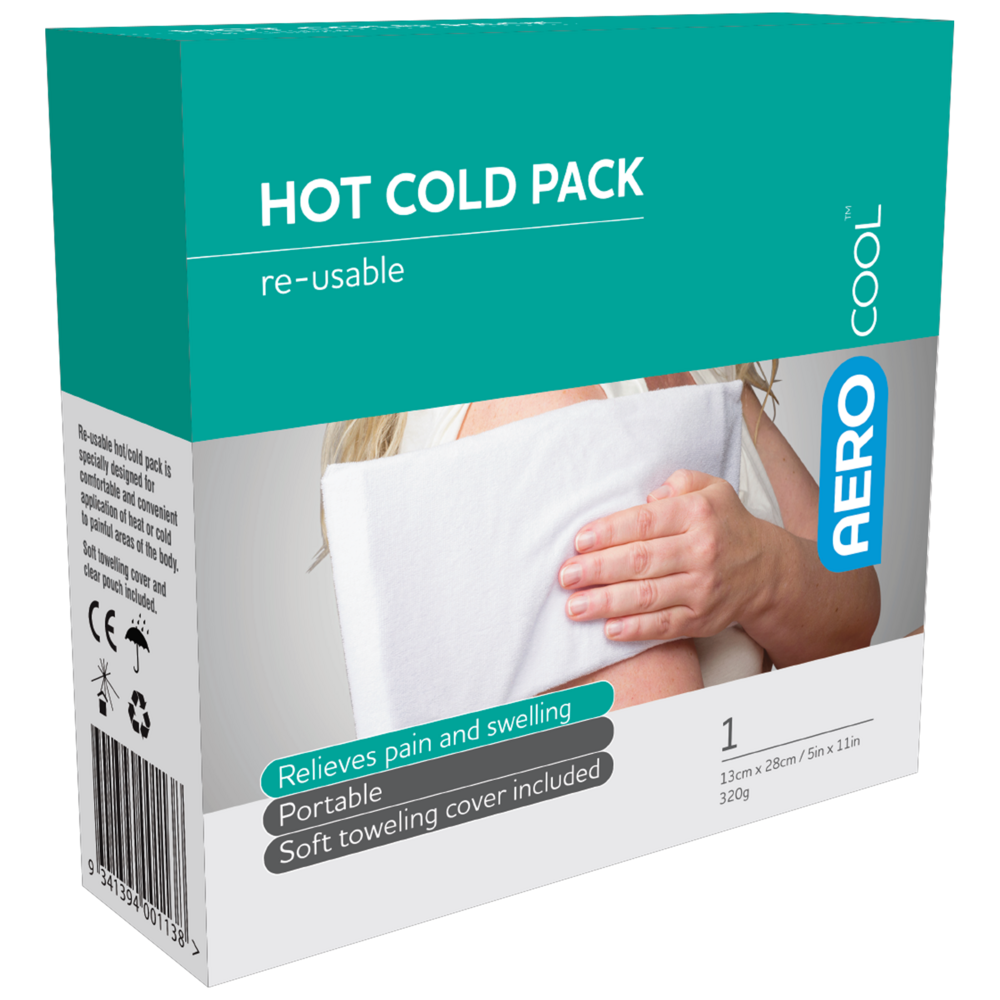
The standard 320g reusable gel pack is the most-purchased single item in any well-stocked first aid kit. It does cold therapy, hot therapy, and replaces single-use instant ice packs for most workplace cold-therapy applications.
Cold application
Stored in a freezer until needed. The gel maintains around -4 to -8C surface temperature for roughly 15-20 minutes after removal — enough for one full 20-minute cold cycle. Cools faster and maintains temperature longer than a wet towel on ice. Re-freezable indefinitely.
Heat application
Microwave for 30 seconds at a time, checking and re-warming as needed to reach 45-55C surface temperature. Surface should feel hot to the inner wrist but not painful. Test before applying to the casualty.
The cotton sock — non-negotiable
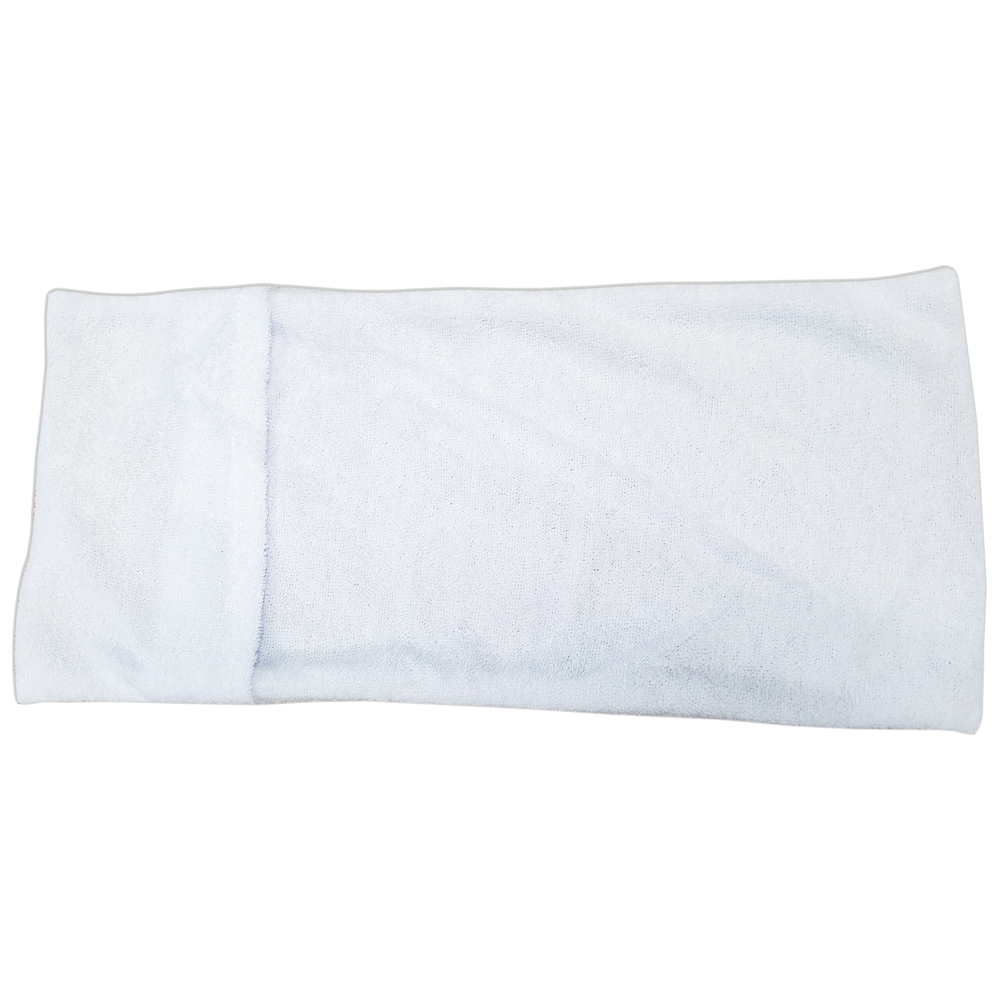
A cotton sock or cover converts the gel pack from a thermal injury risk into a comfortable thermal therapy. Direct skin contact with a frozen gel pack causes cold injury (frostbite-equivalent) within 4-8 minutes; with a hot pack at the upper range, burns within 2-3 minutes. The cotton layer dampens conductive transfer to a therapeutic level. Buy the sock — do not improvise with a tea towel.
Larger format hot/cold packs for bigger areas
The 15 x 20cm format covers larger anatomical areas — knees, shoulders, lower back, lateral hip — that the 320g standard pack only partially addresses.
Knee injuries
A 15 x 20cm pack covers the entire patella plus the medial and lateral joint lines. Critical for sports knee injuries (meniscus tears, MCL strain) where the swelling is wider than a single pack can address.
Lower back pain
Spans both lumbar paraspinal muscle groups. The 15 x 20cm format on the lower back delivers heat across the muscle bands that go into spasm together.
Built-in cover
The included reusable cover removes the need for a separate sock. Buys time for first aiders who would otherwise improvise with a tea towel or face washer (and risk thermal injury through too-thin material).
Long-format 19 x 12cm
The narrower 19cm-long format wraps around limbs (ankle, calf, wrist, forearm) better than a square pack. Single-pack solution for ankle sprain RICE protocol.
Phase-change cooling vests for workplace heat illness prevention
Australian workplaces in mining, construction, agriculture, foundry and outdoor maintenance face heat illness risk on most summer days. The model Safe Work Australia heat stress guidance requires PCBU control measures; cooling vests are one such measure.
What "phase change" actually means
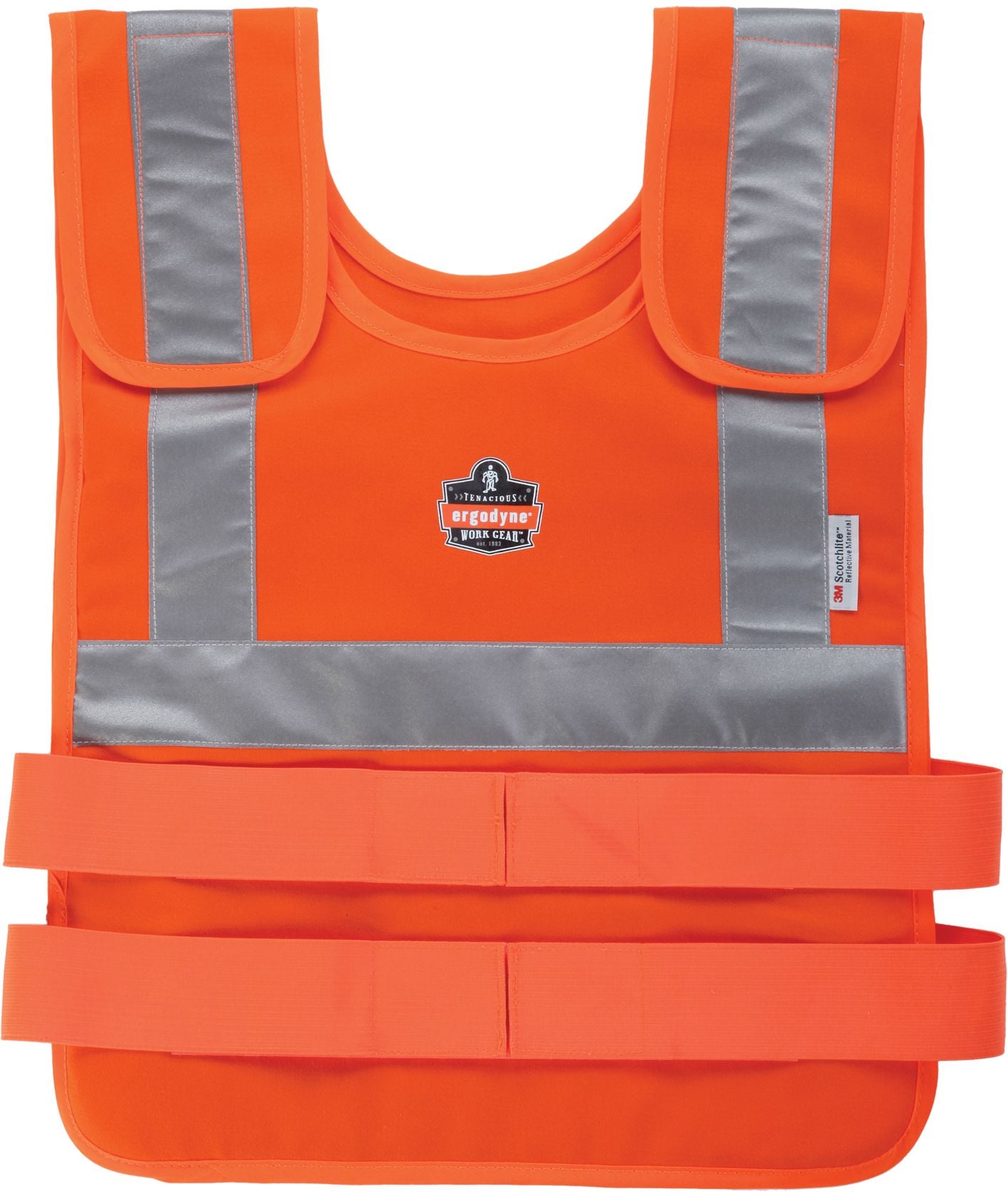
Phase-change material (PCM) is a chemical that melts at a designed temperature (typically 18C for cooling vests). While melting, it absorbs heat at constant temperature. This means the vest stays at 18C for 2-3 hours regardless of ambient temperature or humidity — far more useful than a simple frozen pack that warms continuously.
Where phase-change wins over evaporative
High humidity (above 70%) — evaporative cooling stops working because sweat does not evaporate. Confined indoor environments (foundries, kitchens, laundries) where moisture saturates the air. Cleanroom and food-handling environments where wet vests are not allowed.
How to use a phase-change vest
Pre-freeze the packs (typical pack cycle is 4-6 hours in a freezer). Insert into the vest pockets at start of shift. Wear over a base layer or thin shirt — direct skin contact will be uncomfortably cold for the first 5-10 minutes until the surface temperature stabilises. Swap packs at half-shift for continuous protection in high-heat work.
Evaporative cooling for outdoor dry-heat work
Evaporative cooling uses the latent heat absorbed when water evaporates. Cheaper, lighter, and effective in dry conditions — but ineffective in humid conditions.
Cooling bandanas and towels
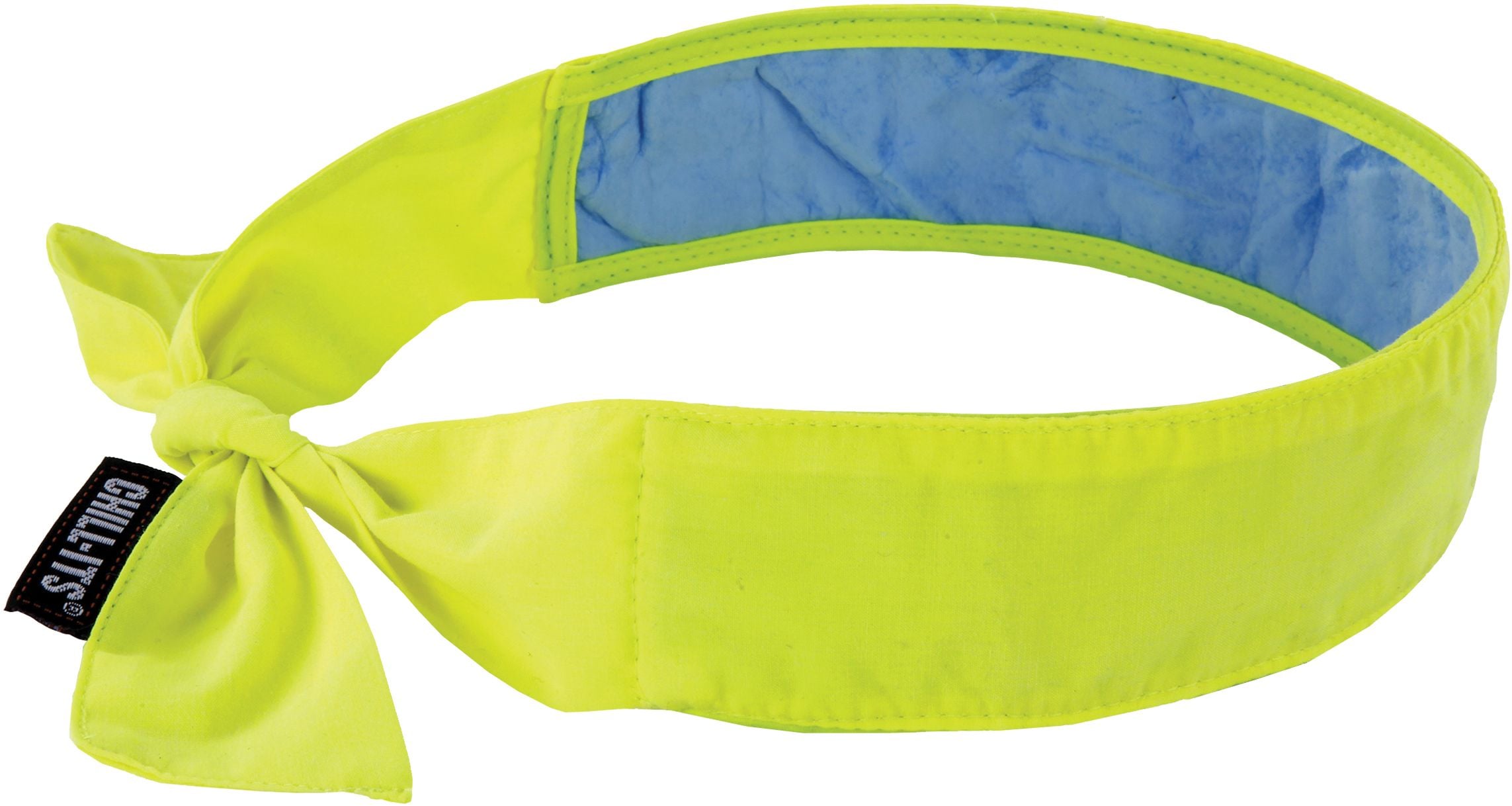
Soak in cold water, wring out lightly, place around the neck or forehead. The water evaporates at body temperature and cools the skin by 5-8C below ambient for 2-4 hours depending on humidity. Re-wet as needed. Hi-vis colour options for workplace visibility compliance.
When evaporative cooling fails
Tropical and humid environments. Indoor work where the air is already saturated. Continuous heavy work where sweat alone provides more evaporative cooling than the additional fabric. In humid Darwin or Cairns conditions, an evaporative product is less effective than the wearer's natural sweating.
Where evaporative cooling shines
Dry inland Australia — Mount Isa, Kalgoorlie, Broken Hill, dry-heat construction in NSW and Victoria summer. Outdoor field work where the wearer can re-wet the product every 60-90 minutes. Light-to-medium activity where the supplemental cooling is appreciated but not critical.
Heat stress and heat illness: when to use what
Heat illness in the workplace progresses through stages, and the cooling response should match the stage.
Heat rash (mild)
Red prickly rash where sweat ducts are blocked. Move the worker to shade or air-conditioning. Cool with a damp evaporative bandana or face washer. No medical attention needed unless the rash persists.
Heat cramps (mild to moderate)
Muscle cramps in the legs or abdomen from electrolyte loss and dehydration. Move to cool environment, rehydrate with electrolyte solution. Cold pack on cramping muscles can help. No urgent medical attention if the worker recovers within 30 minutes.
Heat exhaustion (moderate)
Heavy sweating, pale clammy skin, weakness, nausea, headache, dizziness, fast weak pulse. Move to shade, lay flat with legs raised, remove excess clothing, apply cooling vest or wet towels to neck and groin, sips of cool water. If symptoms do not improve within 30 minutes, call 000.
Heat stroke (severe — call 000 immediately)
Body temperature above 40C, hot dry red skin (sweating stopped), confusion or collapse. Call 000. Apply cooling vest, wet towels and any available ice packs to neck, groin, armpits while waiting. Heat stroke is a life-threatening emergency.
RICE protocol — using cold therapy correctly
The Australian Resuscitation Council protocol for soft tissue injury is RICE: Rest, Ice, Compression, Elevation. Cold is one of four — and useless without the others.
Rest
Stop activity. Do not "walk it off." Continued use of an injured joint or muscle accelerates the secondary damage that cold is meant to limit.
Ice (cold therapy)
Cold pack with cotton cover. 20 minutes on, 20 minutes off, repeated for 1-2 hours after injury. Repeat every 2-3 hours through the first 24-48 hours.
Compression
An elastic crepe or self-adhesive bandage at moderate tension (snug, not tourniquet-tight) over the cold pack and around the injured area. Compression limits the swelling that cold alone cannot fully prevent.
Elevation
Injured limb above the level of the heart whenever possible. Gravity helps drain inflammatory fluid out of the injured tissue. Particularly important for ankle and wrist injuries.
Burn cooling — a special case
Burn cooling is a different protocol from injury cold therapy.
Cool running water, not ice
For thermal burns, the Australian Resuscitation Council and healthdirect both specify cool running tap water for 20 minutes. Not ice. Not a frozen gel pack. Direct ice contact on a burn worsens the tissue injury through additional cold trauma layered on top of the heat trauma.
When a gel pack can help
After the 20-minute water cooling, a wrapped (cotton-covered) gel pack at refrigerator temperature (not frozen) can provide ongoing comfort while transporting to medical care. Frozen gel packs only after 24 hours and only on intact skin.
Burns over 10% body surface area
Call 000. Do not over-cool — large surface area cold therapy can cause hypothermia, particularly in children. Apply cool wet cloths to small areas of the burn, keep the rest of the body warm with blankets.
Common hot/cold therapy mistakes
1. Skipping the cotton sock or towel layer
Direct gel-pack-on-skin causes thermal injury. Always use a fabric barrier.
2. Leaving cold packs on too long
Past 20 minutes the therapeutic effect plateaus and the cold-injury risk climbs. Stick to the 20-on/20-off rule.
3. Heat on fresh injury
Heat in the first 72 hours increases bleeding and swelling. Cold first; heat after the acute phase resolves.
4. Microwaving a metal-trimmed pack
Reads as obvious but happens. Check the pack for any metallic trim before microwaving.
5. Refreezing a leaking gel pack
Once the outer shell is punctured the gel is contaminated and the shell will rupture further on re-freeze. Discard.
Building your therapy-pack inventory
Home and office (low risk)
One 320g gel pack with cotton sock. Covers headache, minor sprain, menstrual cramp, child contusion. Cost-effective coverage of the everyday range.
Workplace (medium risk)
Add the 15 x 20cm with cover for back/knee/shoulder coverage and the 19 x 12cm for limb wrapping. Two-pack kit handles workplace sprains and chronic muscle tension issues.
Hot-work environments (high risk)
Full therapy-pack range plus phase-change cooling vest (for indoor humid heat or shift-long outdoor work in tropical Australia) or evaporative bandana (for dry-heat outdoor work). Multiple cooling vests per worker for shift-rotation freezing.
Storage, replacement and maintenance
Cold-pack storage
Freezer at -18C or below. Workplace freezer should be separate from food storage (not strictly required but cleaner). Pack should freeze fully within 2-4 hours.
Hot-pack storage
Room temperature. Microwave-heat just before use. Do not pre-heat and hold — heat dissipates and the pack feels warm but is no longer therapeutic.
Replace if
The outer shell shows any sign of cracking, weeping or weakness. Gel feels different (more or less viscous than new). After 2-3 years of regular freeze-thaw cycles regardless of visible condition — gel chemistry degrades with repeated cycling.
Cooling vest maintenance
Wash fabric shell after every shift. Inspect phase-change packs for any leakage. Refreeze packs only if intact. Replace packs (not the whole vest) every 2-3 years.
Frequently Asked Questions
When should I use a cold pack versus a hot pack on an injury?
Cold packs for the first 48 to 72 hours after acute injury (sprain, strain, contusion) — they reduce swelling, slow bleeding into tissues and numb pain. Hot packs from 72 hours onward, and for chronic muscle stiffness or back tension — they increase blood flow and relax tight muscle. The simple rule: cold for fresh injury, heat for stale stiffness.
Why do I need a cotton sock on a hot/cold pack?
Direct application of a gel pack to skin causes thermal injury within minutes — frostbite from cold packs (around 4-8 minutes on exposed skin) or burns from hot packs at the upper temperature range. The cotton sock provides a thermal buffer so the user gets the benefit without skin damage. Always use a sock, a towel or a fabric layer.
How long should I leave a cold pack on an injury?
20 minutes on, 20 minutes off, repeated for 1-2 hours after acute injury. Longer than 20 minutes risks tissue cold injury without additional therapeutic benefit. The 20-on/20-off rule is from Australian Resuscitation Council and standard sports medicine practice. Never sleep with a cold pack applied.
Is a phase-change cooling vest better than an evaporative one?
Phase-change vests use frozen packs that maintain a steady 18-22C for 2-3 hours regardless of humidity — best for indoor heat or humid environments where evaporation does not work. Evaporative vests soak in water and cool by evaporation — lighter, cheaper, ideal for dry-heat outdoor work but less effective above 70% humidity. Match the technology to your workplace climate.
Can I microwave a hot/cold pack to heat it?
Most reusable gel packs are microwave-safe — typically 30 seconds at a time, checking temperature between intervals. Never microwave a pack with metal eyelets or trim. Heat to no more than 50-55C surface temperature (a few degrees warmer than a comfortable hot bath). Test against your inner wrist before applying to a casualty.
Sources and further reading
- healthdirect — Sprains and strains (RICE protocol guidance)
- healthdirect — Burns and scalds (cool running water protocol)
- healthdirect — Heat rash (heat illness symptoms)
- Australian Resuscitation Council — Guidelines (soft tissue injuries 9.1.1)
- Safe Work Australia (workplace heat stress guidance)
Related guides on MediBC
- Splint sizing guide for workplace first aid kits
- Non-adherent dressings and gauze swabs guide
- Workplace first aid cabinet guide
Stock cooling and warming packs for your workplace
Reusable gel packs for the RICE protocol, hot therapy for chronic stiffness, and phase-change cooling vests for hot-work environments.
AEROCOOL Reusable Gel Pack 320g
The workhorse 320g reusable hot/cold pack for everyday RICE use.
Shop Now
AEROCOOL Cotton Sock for Hot/Cold Pack
Mandatory thermal barrier — prevents skin injury under cold/heat.
Shop Now
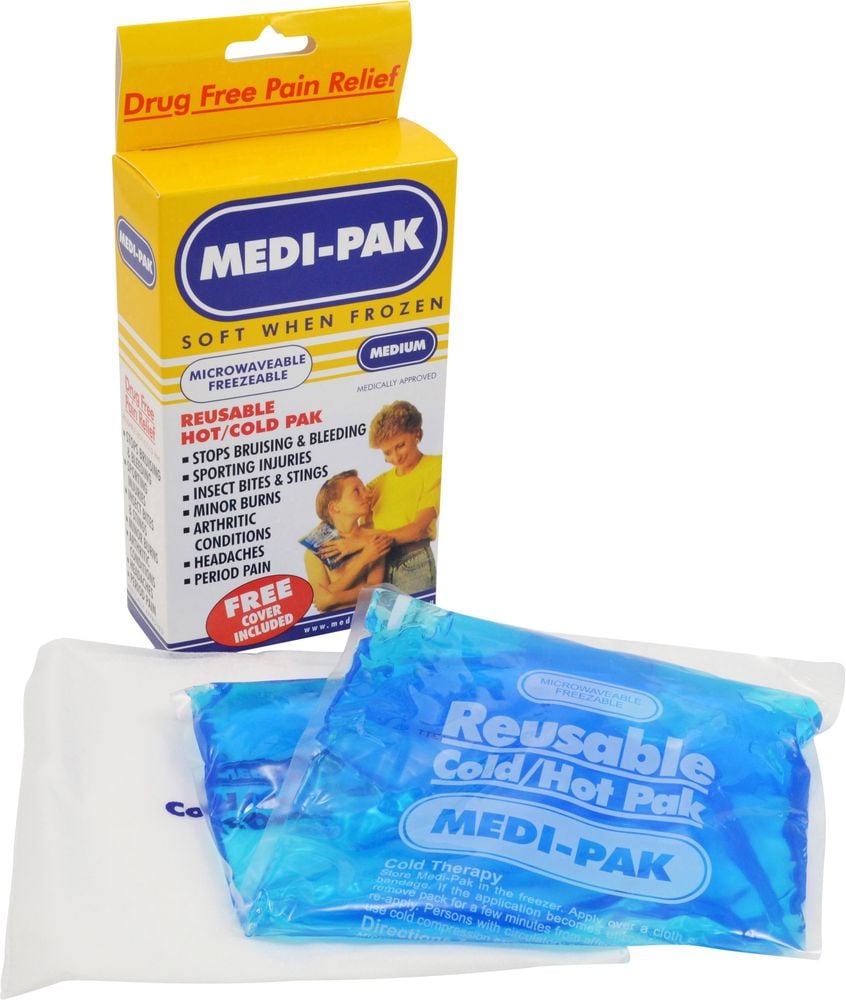
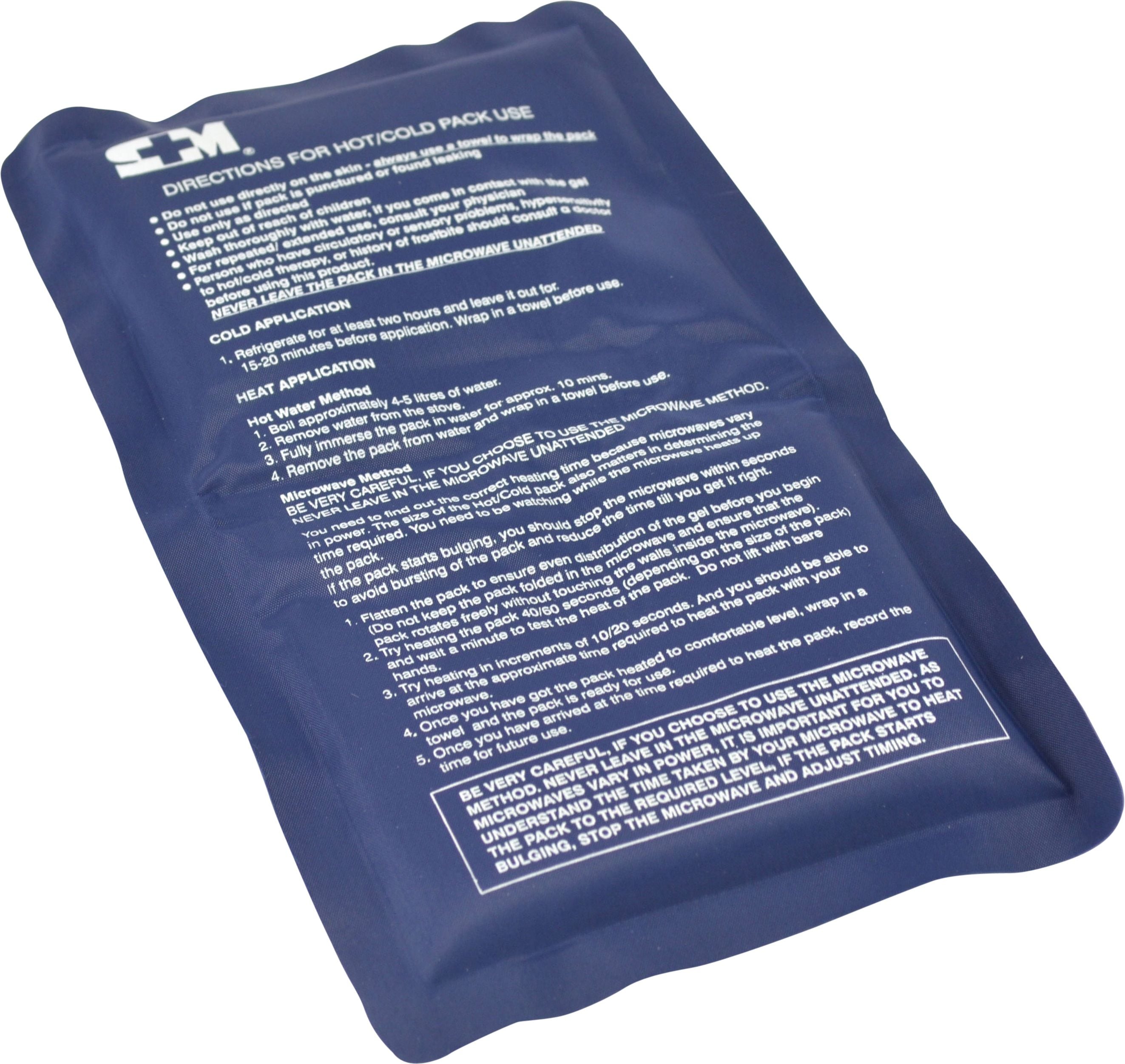
Hot/Cold Pack 19 x 12cm Reusable
Long-format pack ideal for wrapping ankles, calves and wrists.
Shop Now