


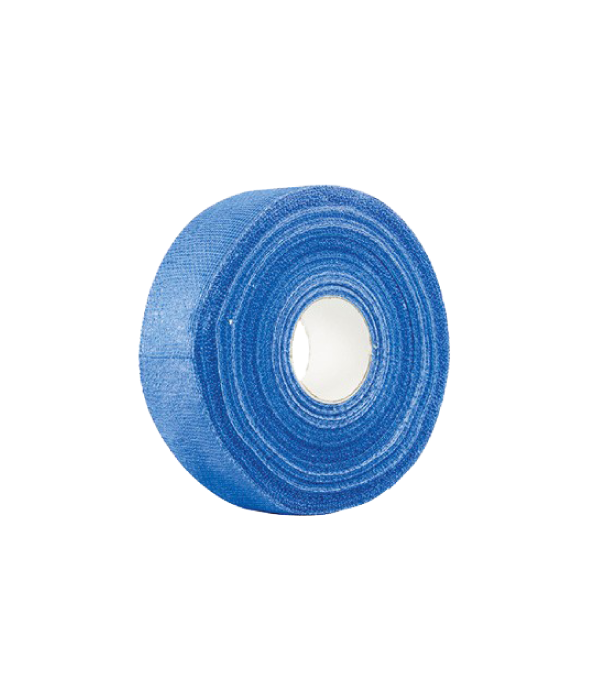
Cohesive Bandages Blue
Bandages | Conforming | Crepe
£8.41
- Great for the kitchen
- Use as a strapping tape for sport
- Reusable
Secure checkout
VISA
Mastercard
Apple Pay
Google Pay
Also accepted
AMEX
Afterpay
Zip
Klarna
PayPal
In stock
Only 993 left
SKU
45105
Cohesive bandage in high-visibility blue. It sticks to itself and to nothing else, so it holds compression without clips, pins or adhesive, and comes away without pulling skin or hair. Hand-tearable, so no scissors. The blue is deliberate: in a kitchen or food plant, a bandage you can see if it comes off is the whole point.
How a cohesive bandage differs from anything else in the kit
A conforming bandage needs a clip or tape to stay put. An adhesive bandage sticks to skin and hurts coming off. A cohesive bandage bonds only to itself, which means it grips through movement and sweat, keeps its compression as the limb moves, and unwraps painlessly at the end.
That self-adhesion also makes it reusable within a single treatment. You can unwrap, adjust the tension and re-apply without wasting the length, which matters when you are getting compression right rather than just covering something.
Why blue, and why that matters in food handling
Blue is used for wound coverings in food environments because almost nothing edible is that colour. If a dressing is shed into production, a bright blue fragment is far more likely to be spotted than a skin-toned one. If you work in catering, food manufacturing or a commercial kitchen, this is the colour your own procedures most likely specify.
Where a cohesive bandage is used
- Securing a dressing in place as a secondary bandage
- Light compression for sprains and strains
- Strapping and support in sport
- Kitchens, catering and food production, where visibility is required
- Over a finger or knuckle, where adhesive tape lifts as soon as the joint bends
Keep it with your other first aid supplies, or see the elastic compression bandage if you need sustained compression for a sprain rather than a secondary dressing.
Applying it without cutting off circulation
Start below the injury and wrap upward toward the body, overlapping each turn by about half the bandage width. Keep the tension even and firm, never tight. Cohesive bandage is elastic, and elastic is easy to over-tighten because it keeps giving.
Check the fingers or toes after wrapping, and again a few minutes later. They should stay warm, with normal colour and sensation. Cold, pale, blue, numb or tingling means it is too tight, so unwrap and reapply with less tension. Increasing pain under a bandage is a reason to take it off and look, not to leave it.
Specifications
| Type | Cohesive bandage, self-adhering |
| Colour | Bright blue, high visibility |
| Adheres to | Itself only, not skin or hair |
| Fixings needed | None, no clips, pins or tape |
| Opening | Hand-tearable, no scissors required |
| Sterility | Non-sterile, for use as a secondary bandage |
| Reusable | Within a single application, for adjusting tension |
Cohesive bandage FAQs
What is a cohesive bandage?
A bandage that sticks to itself but not to skin or hair. It holds compression and stays in place without clips, pins or adhesive tape, and comes off without pulling. It is sometimes called a self-adhesive or self-adhering bandage.
Will it stick to my skin or hair?
No. That is the defining property. The material bonds only to itself, so removal is painless even over hairy skin, which is exactly where adhesive tape causes trouble.
Why is it blue?
For visibility in food handling. Blue is used because virtually no food is that colour, so a shed fragment is easy to spot. Many catering and food production procedures specify blue wound coverings for that reason.
Do I need scissors to open it?
No. It is hand-tearable, which is why it suits a kit that may be used by someone without scissors to hand, or with one hand occupied holding a dressing in place.
Is it sterile?
No, it is non-sterile and is intended as a secondary bandage, meaning it goes over a sterile dressing rather than directly onto a wound. Use a sterile dressing against the wound itself.
Can I use it for a sprain?
It gives light compression and is fine for support and for holding a cold pack in place. For sustained compression on a significant sprain, an elastic compression bandage is the better tool. Either way, check circulation after applying.
How tight should it be?
Firm and even, never tight. Because the material is elastic it will keep stretching if you pull, which is the usual cause of over-tightening. Overlap each turn by about half the bandage width and check the fingers or toes afterwards.
This information is a general guide and is not medical advice. Seek medical attention for wounds that are deep, dirty, will not stop bleeding, or show signs of infection.