

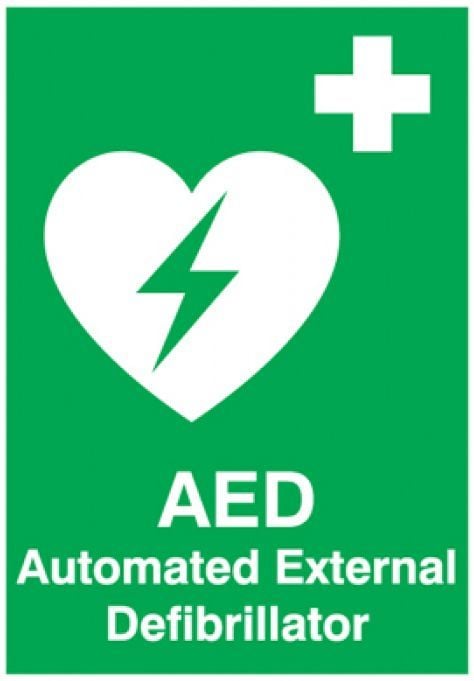
AED Sign 300 x 400mm - Rigid Plastic Defibrillator Sign
First Aid Books & CDs
$34.29
Secure checkout
VISA
Mastercard
Apple Pay
Google Pay
Also accepted
AMEX
Afterpay
Zip
Klarna
PayPal
In stock
Only 1000 left
SKU
480008
An AED sign in rigid plastic, 300 x 400mm, marking the location of a defibrillator. In a cardiac arrest the single biggest variable anyone can control is how long it takes to get the AED to the patient - and that starts with whether a bystander can see where it is without asking.
Features
- 300 x 400mm, readable from a distance
- Rigid plastic, suited to indoor walls and sheltered outdoor mounting
- Green and white emergency information styling with the standard AED symbol
- Identifies the defibrillator location at a glance
Specifications
- Size: 300 x 400mm
- Material: Rigid plastic
- Type: Emergency information sign, AED
Where to mount an AED sign
Directly above or beside the cabinet, and then again wherever someone has to make a decision about which way to go - a corridor junction, a lift lobby, the entrance to a large floor. Mount it high enough to be seen over a crowd, because the moment it matters there will be one. Survival in an out-of-hospital cardiac arrest falls sharply for every minute without defibrillation, so the sign is not decoration; it is the difference between a bystander finding the unit in thirty seconds and not finding it at all. Use the green and white emergency information convention set out in AS 1319 rather than red, which is reserved for fire equipment. And check the view periodically - signs get blocked by stacked stock, propped doors and new partitions far more often than anyone expects.
Common uses
Workplaces, gyms and sports clubs, shopping centres, schools, community halls, aircraft and transport hubs, and anywhere an AED is installed. Signpost the route out with an exit sign as well. Pair it with your first aid supplies, or see the resuscitation equipment range at MediBC.
AED Sign FAQs
What does an AED sign mean?
It marks the location of an automated external defibrillator. The green and white styling is the emergency information convention, telling people this is equipment to use rather than a hazard to avoid.
Where should an AED sign be placed?
At the cabinet itself, and at the decision points on the route to it - corridor junctions, lift lobbies and entrances. High enough to be seen over people, and never behind a door that is usually open.
Why does AED signage matter so much?
Because survival from cardiac arrest drops for every minute that passes without defibrillation. A bystander who cannot find the unit quickly may as well not have one in the building.
Should the sign be green or red?
Green. Under AS 1319, green marks safe condition and emergency facilities. Red is reserved for fire equipment and prohibition signs, so a red AED sign sends the wrong signal.
How many signs do we need?
At minimum one at the unit. In a large or multi-level site, add directional signage at each point where someone has to choose a route, so the path to the AED is continuous.
Frequently bought together