

Reviewed by the MediBC First Aid Team — last updated August 2026.
Quick answer: For most insect bites and stings in Australia, wash the area, apply a cold pack for 10 minutes, then a bite-relief gel (such as Stingose or SOOV Bite) and an oral antihistamine for itch. Scrape a bee sting out sideways — never squeeze it. Call 000 for any breathing difficulty, facial or throat swelling, or collapse.
Australia's outdoor lifestyle puts most of us in regular contact with biting and stinging creatures. The Australian Government healthdirect service notes that most bites and stings can be managed at home, but a small proportion become life-threatening within minutes — especially bee and wasp stings in allergy sufferers, and paralysis-tick bites that can trigger mammalian-meat allergy. Knowing the right first aid steps can prevent a routine bite from becoming an emergency.
Common biting and stinging pests in Australia
Mosquitoes
Mosquitoes are the most common cause of insect bites in Australia. Most bites produce only itchy red welts, but some species transmit Ross River virus, Barmah Forest virus and dengue fever in tropical regions. Children, the elderly and pregnant women should be particularly protected with effective repellents.
Sandflies and midges
Coastal sandflies (also called biting midges) deliver tiny but intense bites that itch for days. They are most active at dawn and dusk along Australian beaches and mangroves. Sandfly bites often appear in clusters around ankles and wrists.
Bees, European wasps and ants
Honey bees leave the sting embedded; European wasps and most ants can sting repeatedly. Jack-jumper ants found in Tasmania and southern Australia are a particularly common trigger for anaphylaxis — they cause more anaphylactic reactions than bees in some regions.
Paralysis ticks
The Australian paralysis tick (Ixodes holocyclus) occurs along the eastern seaboard and is responsible for tick-bite anaphylaxis and mammalian-meat allergy. Removing a paralysis tick incorrectly can release more saliva and worsen the reaction — never squeeze or pull a paralysis tick.
For full tick-removal steps and allergy guidance, see our tick bite first aid guide.
Spiders and snakes (overview)
Funnel-web and redback spider bites, and Australian snake bites, are emergencies requiring 000 and pressure-immobilisation bandaging (see our spider-bite first aid guide and snake bite kits).
When to call 000 for any insect bite or sting
Call 000 immediately for any of the following:
- Difficulty breathing or noisy breathing (stridor or wheeze)
- Swelling of the lips, tongue, throat or face
- Widespread rash or hives
- Persistent vomiting or abdominal pain
- Dizziness, collapse or loss of consciousness
- Multiple bee or wasp stings in one incident
- Any sting in someone with a known severe allergy
- Suspected paralysis tick in a known tick-allergy patient
While waiting for the ambulance, follow your DRSABCD action plan, give any prescribed adrenaline auto-injector (EpiPen) at the first sign of anaphylaxis, and lay the casualty flat with legs raised.
First aid for mosquito, sandfly and midge bites
Step-by-step treatment
- Wash the bite with soap and cool water.
- Cool the area with an ice pack or cold compress for 10 minutes.
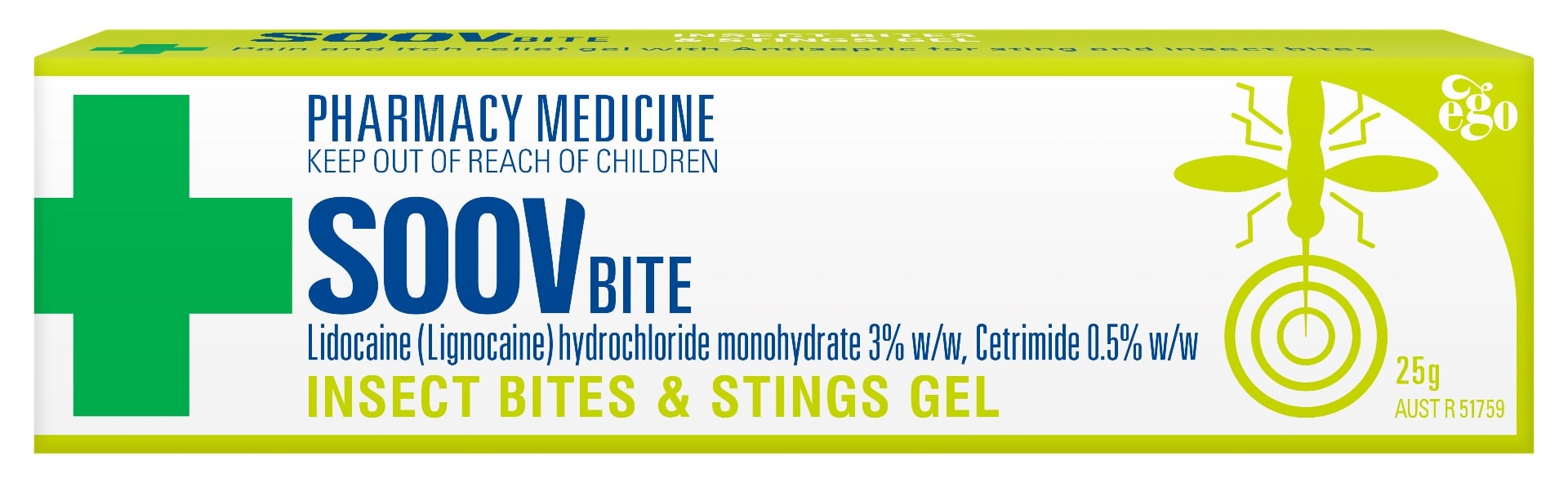
- Apply a topical bite-relief gel (Stingose, SOOV Bite or QV Sting-Free) to reduce itch and pain.
- Do not scratch — scratching introduces bacteria and can cause cellulitis.
- Cover with a light dressing if the bite is on a high-friction area (ankles, fingers).
- Take an oral antihistamine (loratadine, cetirizine) if the reaction is large or widespread.
When to see a doctor
See your GP if a bite becomes hot, red, swollen and tender beyond the first 24 hours — this can indicate cellulitis and may need oral antibiotics. Persistent intense itching for over a week, or any blistering, should also be reviewed.
First aid for bee and wasp stings
Remove the sting safely
Honey bees leave the sting embedded with the venom sac still attached. Scrape the sting out sideways with the edge of a credit card or a fingernail — never squeeze or pinch it as that injects more venom. European wasps and most ants do not leave a sting behind.
Treat the local reaction
- Wash the area and apply a cold compress for 15 minutes.
- Apply Stingose Gel or SOOV Bite for fast itch and pain relief.
- Take an oral antihistamine for widespread reaction.
- Elevate the limb if a hand or foot is stung.
Recognising anaphylaxis
Anaphylaxis can develop within 2 to 30 minutes of a sting in allergic individuals. Watch for: difficulty breathing, lip and tongue swelling, hoarse voice, widespread hives, abdominal pain or vomiting, and collapse. Use the adrenaline auto-injector (EpiPen) immediately and call 000.
First aid for tick bites and paralysis ticks
Identifying a paralysis tick
Australian paralysis ticks are usually grey-brown, with a small head and large body when engorged. They are most common from August to December along the east coast. Larvae are tiny and easily missed.
Correct removal technique
The Australasian Society of Clinical Immunology and Allergy (ASCIA) recommends:
- For adult ticks (legs visible, large body): freeze with an ether-based spray (Lyclear, Wart-Off Freeze) until the tick dies, then remove with fine-pointed forceps held flat against the skin.
- For nymphs and larvae (small ticks): apply permethrin cream (5%) to kill the tick in place — do not try to pick out a tiny tick.
- Do NOT use methylated spirits, petroleum jelly, matches or hot pins — these stress the tick and inject more allergen.
When to seek medical advice
See your GP urgently after a tick bite if you have a known tick allergy, mammalian-meat allergy, or develop fever, expanding rash, joint pain or fatigue in the weeks after a bite.
First aid for venomous spider and snake bites
Use pressure-immobilisation bandaging for all snake bites, funnel-web spider bites and blue-ringed octopus stings. Apply a broad firm crepe bandage starting at the bite site and working up the entire limb, then immobilise with a splint. Keep the casualty still. Call 000 immediately.
For redback spider bites, an ice pack to relieve pain is usually sufficient — pressure bandaging is not recommended for redback bites.
Carry a dedicated snake bite kit in bushwalking, camping and remote-work scenarios.
How to prevent insect bites and stings
Personal repellent choice
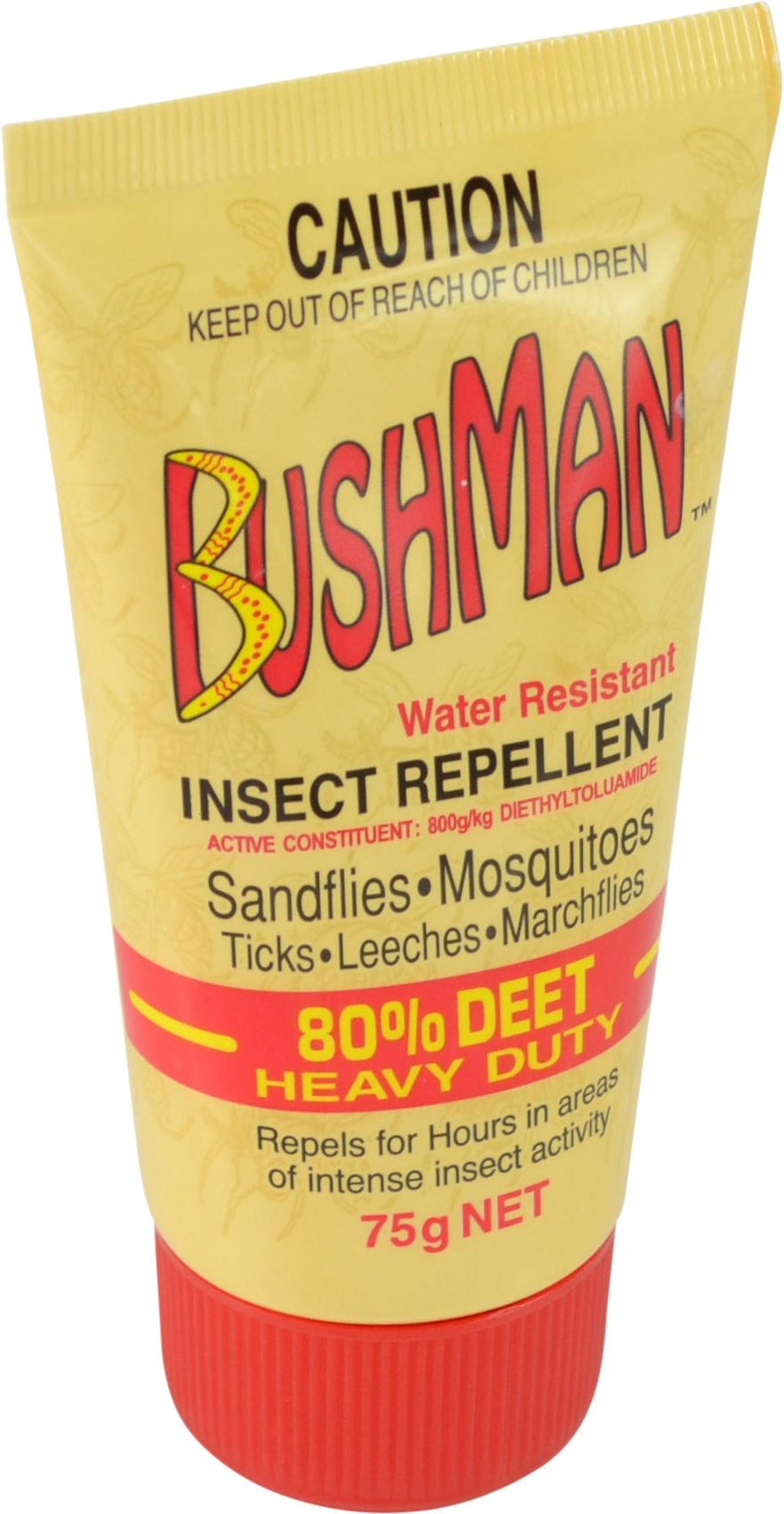
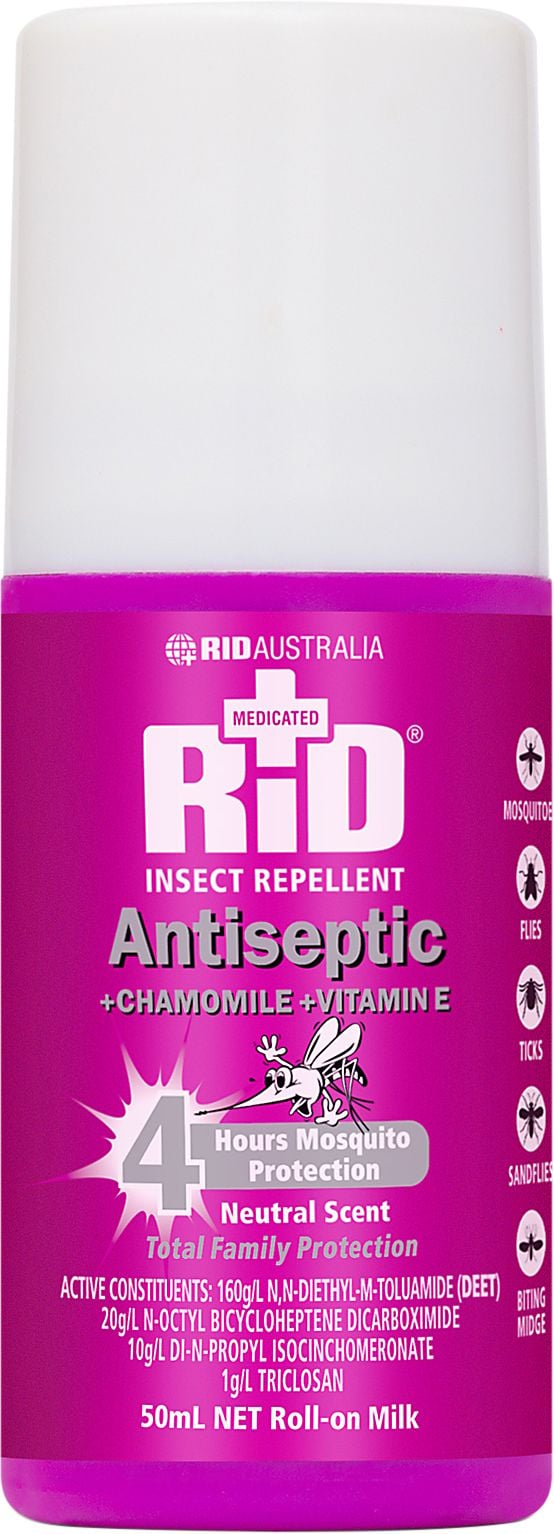
For tropical and high-risk Australian conditions, choose a DEET-based repellent at 20% or higher (Bushman Ultra Dry Gel 40%, Aerogard Tropical 19%). For everyday low-risk use, a lower-strength roll-on (Rid Roll-On, Aerogard Odourless) or a natural picaridin or PMD repellent (Moov) is sufficient. Apply to all exposed skin, avoiding the eyes and mouth.
Clothing and environment
Cover up at dawn and dusk when mosquitoes and sandflies are most active. Light-coloured clothing is less attractive to mosquitoes than dark. Empty stagnant water containers around the home to prevent mosquito breeding.
Travel and bushwalking precautions
Pack a comprehensive bites-and-stings kit including repellent, sting gel, antihistamine tablets, fine forceps for tick removal, and a heat or cold pack. For high-risk tropical destinations, consider permethrin-treated clothing.
Anaphylaxis-prone individuals
Anyone with a previous severe sting reaction should consult an immunologist about an EpiPen prescription, allergen immunotherapy and a clearly-labelled medical alert bracelet.
Frequently asked questions
How do you treat a mosquito bite at home?
Wash the bite with soap and water, apply a cold compress for 10 minutes to reduce swelling, then apply an antihistamine cream or a topical anaesthetic gel such as Stingose or SOOV Bite. Try not to scratch the bite as broken skin can become infected. Most mosquito bites resolve within 3 to 5 days.
When should you call 000 for an insect sting?
Call 000 immediately if the casualty develops signs of anaphylaxis — difficulty breathing, swelling of the lips, tongue or throat, widespread rash, vomiting, dizziness or loss of consciousness. Anaphylaxis can develop within minutes of a bee, wasp or jack-jumper-ant sting and is a life-threatening emergency.
What is the correct first aid for a paralysis tick?
Do not pull or squeeze a paralysis tick — this can release more allergen. For nymphs and small ticks, apply ether-based tick spray such as Lyclear and let the tick drop off. For adult ticks, freeze them with a small spray of ether and remove with fine-pointed tweezers held flat against the skin. See a doctor if you have a tick-bite allergy or develop a rash.
How long does insect repellent protection last?
Tropical-strength repellents with 19-40% DEET (Bushman Ultra, Aerogard Tropical) provide up to 6 hours of protection. Lower-strength formulas (7-10% DEET) provide 2-3 hours. Heat, humidity, swimming and heavy perspiration all shorten protection — reapply more often in those conditions.
Are natural insect repellents as effective as DEET?
Natural repellents based on oil of lemon eucalyptus (PMD) and picaridin can be effective at lower DEET-equivalent concentrations, but for tropical Australian conditions with sandflies, midges and disease-carrying mosquitoes, DEET-based repellents remain the gold standard. Australian Government Health advises 20%+ DEET for high-risk areas.
What should you put on an insect bite?
Apply a cold pack first, then a topical bite-relief gel such as Stingose (aluminium sulphate) or SOOV Bite (lignocaine) to ease itch and pain. An oral antihistamine helps a large or widespread reaction. Avoid scratching, which can introduce infection.
How do you stop an insect bite from itching?
Cool the bite with an ice pack for 10 minutes, apply an anti-itch gel, and take a non-drowsy antihistamine such as loratadine or cetirizine. Keep the skin unscratched, and see a GP if the itch lasts beyond a week or the area blisters.
When should you worry about an insect bite?
See a doctor if a bite stays hot, red, swollen and tender beyond 24 hours (possible cellulitis), or if it spreads, blisters or brings a fever. Call 000 for breathing difficulty, facial or throat swelling, widespread hives or collapse, which are signs of a severe allergic reaction.
How long do insect bites last?
Most mosquito, sandfly and midge bites settle within 3 to 7 days, though sandfly bites can itch for a week or more. A bite that worsens after 24 hours, spreads or blisters should be reviewed by your GP.
Sources: healthdirect.gov.au — Insect bites and stings, ASCIA — Insect allergy, bites and stings, Australian Government Health — Mosquito-borne diseases, St John Ambulance — Bites and stings.