


Reviewed by the Medibc First Aid Team — last updated May 2026.
Every year, Australian healthcare workers report ~18,000 needlestick injuries, and millions more sharps are improperly disposed of in workplaces, schools and homes — ending up in regular waste, putting cleaners, garbage collectors and the public at risk of bloodborne disease exposure. Safe sharps and clinical waste disposal isn't optional — it's regulated under Safe Work Australia WHS law and each state's EPA waste rules.
This guide explains the Australian Standard AS 4031, the difference between sharps and clinical waste, which container/bag size fits which workplace, how to handle a needlestick injury, and the licensed-disposal supply chain that takes it all away.
What counts as sharps and clinical waste?
Sharps
Any item that can puncture skin:
- Needles (hypodermic, butterfly, suture, acupuncture)
- Syringes with attached needles
- Lancets (diabetic finger-prick devices)
- Scalpel blades
- Glass ampoules (broken or intact)
- Broken glass that has contacted body fluids
- Cannulas and IV catheters
- Razor blades used in medical procedures
Clinical waste
Items contaminated with body fluids but NOT sharp:
- Blood-soiled dressings and gauze
- Used disposable gloves, aprons and gowns
- Used face masks (clinical environments)
- Used catheters, drains and tubing
- Microbiological cultures
- Items contacted with C2-C5 infectious patient body fluids
NOT clinical waste
General office waste, dry paper waste, food waste, and PPE used outside healthcare (e.g., a worker's face mask from the cafe) go into general waste — even if disposed during a "pandemic context". Save the clinical-waste stream for actually-contaminated items only. A lidded pedal bin keeps general waste covered in a clinic or first aid room.
AS 4031 sharps containers
What AS 4031 specifies
Australian Standard AS 4031-1992 covers single-use sharps containers. Compliance requirements include:
- Puncture-resistant — rigid plastic walls that can't be punctured by enclosed needles
- Leak-proof — sealed bottom, no gaps at joints
- Tamper-evident closure — once sealed, cannot be reopened without visible damage
- Fluorescent yellow body — immediate visual identification
- Universal biohazard symbol on the outside
- Visible fill-line — usually at 3/4 capacity
- Stable base — won't tip in normal handling
Container sizing by workplace
| Container size | Best for |
|---|---|
| 250ml — 1.4L | Home (diabetics, allergy auto-injectors), vehicles, mobile workers, small first aid kits |
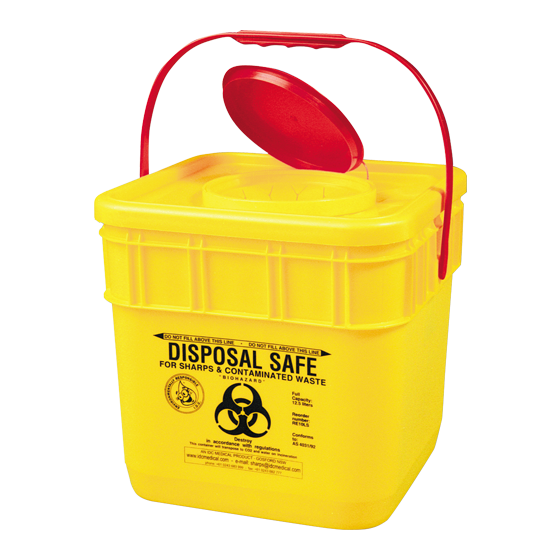
| 5L — 12.5L | GP clinics, dental practices, small workplaces with monthly to weekly sharps use |
| 17.5L — 23L | Hospitals, busy clinics, high-volume aged care, multi-room facilities |
Where to place containers
Within 1 metre of the point of sharps use. Wall-mounted or bench-mounted, fluorescent yellow visible from across the room. NOT on the floor (trip hazard, cleaner injury). NOT above shoulder height (closing force when dropping a sharp). Each clinical room or workstation needs its own — don't make a worker walk with an exposed needle.
Biohazard clinical waste bags
Standards and colours
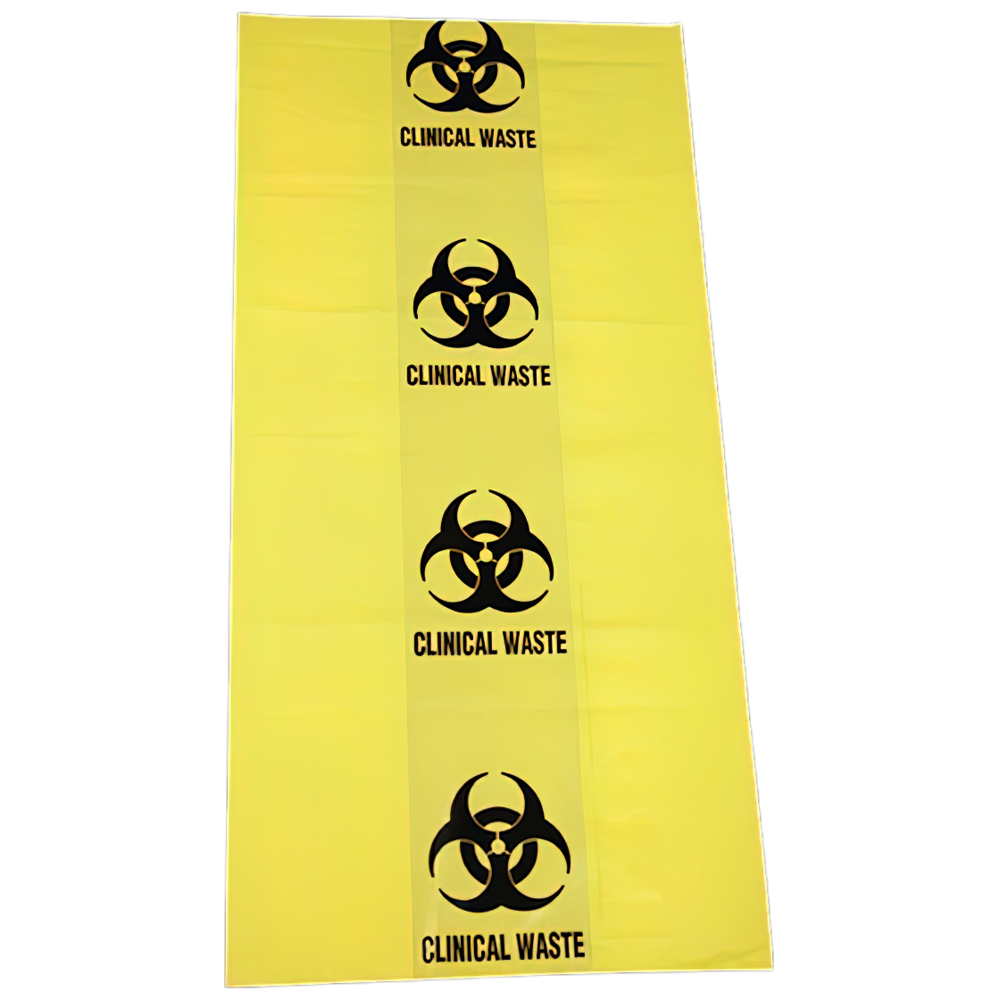
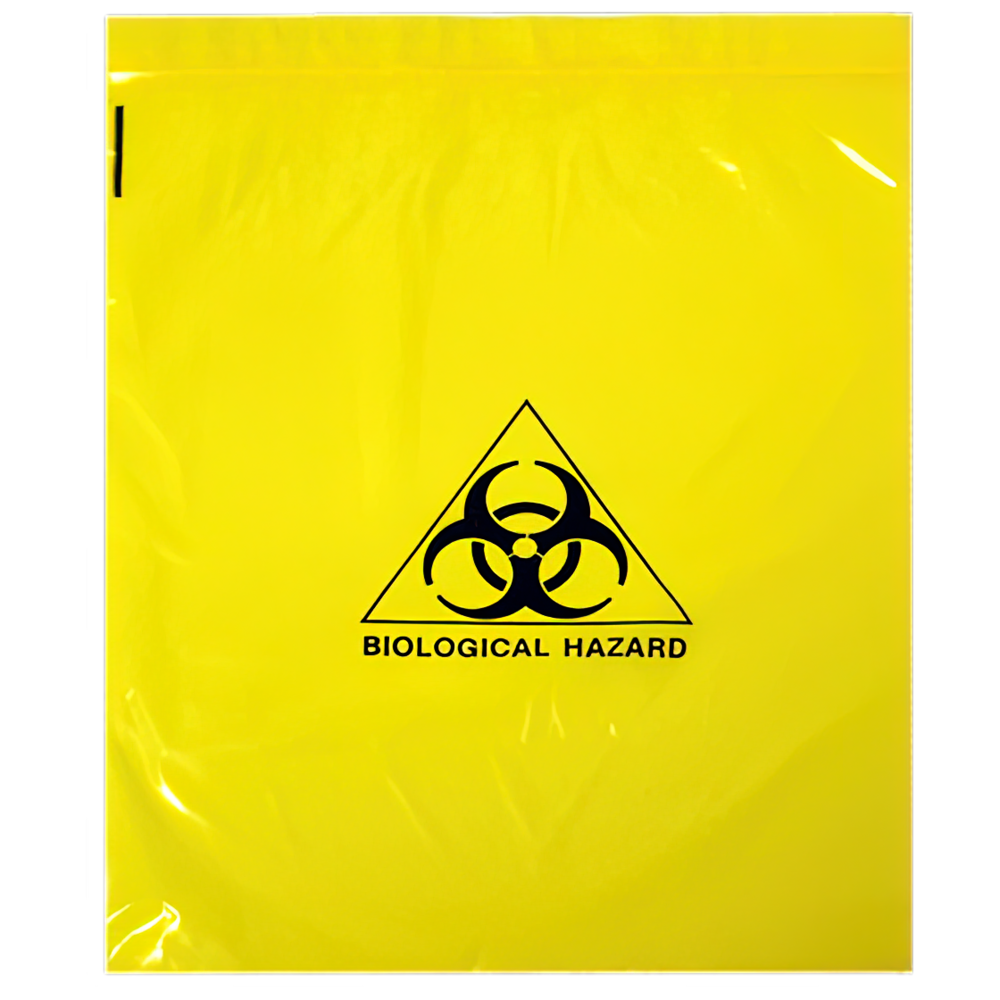
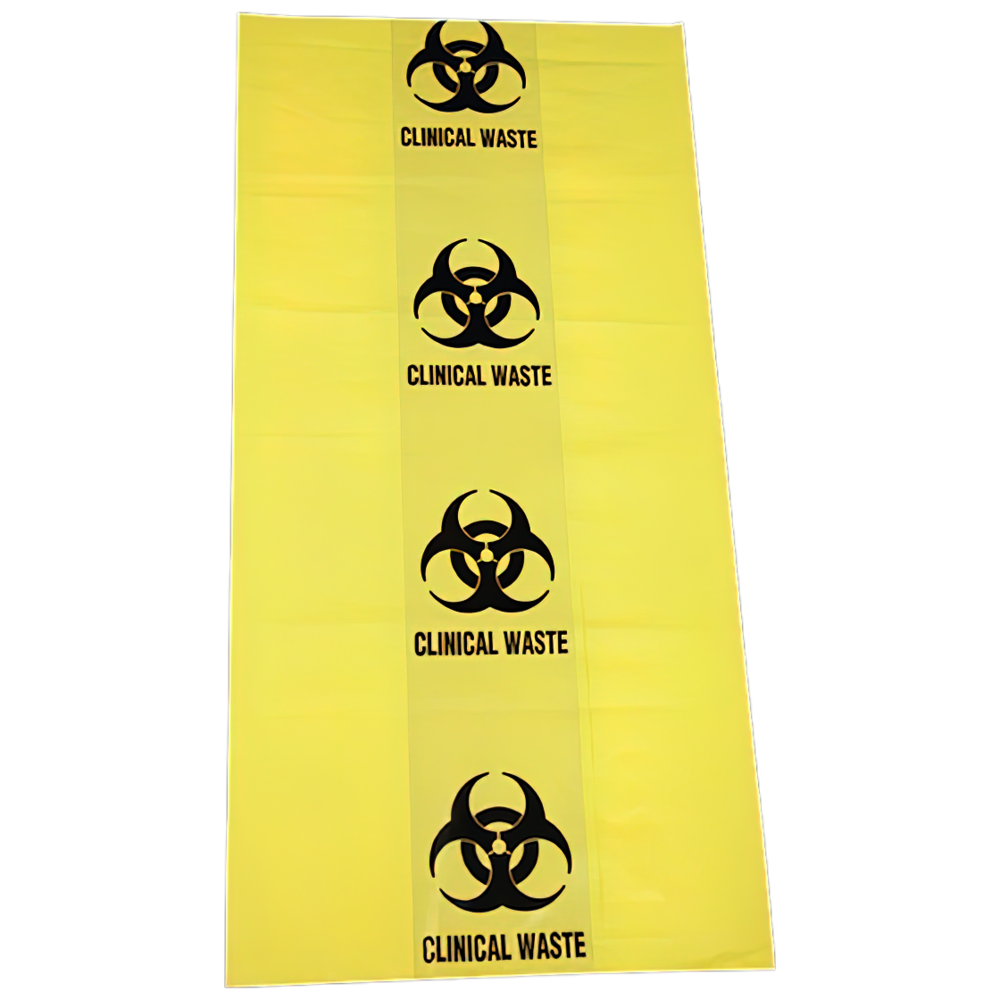
Australian clinical waste bags are yellow with the universal biohazard symbol. Thickness measured in microns (um): 30um = standard, 40-55um = heavy-duty. Different states have slightly different requirements — check the NSW EPA Clinical and Related Waste Guideline, Vic EPA IWRG611, Qld DES Clinical waste, WA Clinical Waste Information Sheet for your jurisdiction.
Bag sizing by use case
- 4L (250 x 300mm, 30um, press-seal) — first aid kits, mobile workers, single-incident clean-up
- 10L (350 x 470mm, 40um) — workplace first aid room, GP rooms, dental chair-side
- 50L (630 x 800mm, 55um) — hospital wards, large clinics, aged care, bulk daily output
- 120L (490 x 1200mm, 55um) — high-volume hospital wards, OT (operating theatre), labs
Bag closure
Tie with the bag's own neck (don't add foreign tape), label with date and source room, and place in a dedicated rigid waste bin or trolley for collection. Press-seal bags (with zip closure) suit smaller contained spills. Don't overfill — the closure must work. Oil, fuel and coolant spills in a workshop are a different job again, handled with a general purpose spill kit.
Workplace sharps disposal procedure
Step 1: At point of use
Drop the sharp into the AS 4031 container IMMEDIATELY after use, with no recapping — recapping is the #1 cause of needlestick injuries. Use one hand to hold the device, drop with the same hand if possible — never use two hands to put a sharp into a container.
Step 2: Monitor fill level
When sharps reach the fill line (usually 3/4 full), STOP adding. Close the container fully (the tamper-evident closure clicks once). Don't push sharps down to make room — that's how injuries happen.
Step 3: Seal and label
Activate the permanent closure. Label with: date sealed, ward/room/source, and any specific hazard (e.g., "cytotoxic"). Move to a dedicated locked storage area pending pickup.
Step 4: Licensed contractor pickup
Engage a licensed clinical waste contractor — Cleanaway HealthCare Solutions, SUEZ, Daniels Health, Stericycle, or your state's equivalent. They provide: collection schedule, transport in approved vehicles, manifests for tracking, and certificate of disposal. Keep these certificates for 5 years (WHS audit evidence).
Step 5: Treatment and final disposal
Sharps and clinical waste in Australia are either: incinerated at licensed facilities (most common), autoclaved + shredded + landfilled, or chemically treated + landfilled. Never landfilled untreated.
Needlestick injury first aid
Immediate response
Per ANZCOR and healthdirect:
- STOP work and excuse yourself from the area
- Encourage bleeding by GENTLE squeezing (do NOT scrub, do NOT cut deeper)
- Wash thoroughly with soap and running water for 1 minute
- For eye/mouth/mucous membrane splash: irrigate with saline or running water for 5+ minutes
- Cover with waterproof dressing
- Notify supervisor + WHS officer IMMEDIATELY
Medical assessment
See a GP, hospital ED, or occupational health clinic WITHIN 1 HOUR. They'll assess:
- Source patient identity and bloodborne pathogen status (HIV, Hep B, Hep C)
- Exposed worker's immunisation history (especially Hep B)
- Need for HIV post-exposure prophylaxis (PEP) — must start within 72 hours, sooner is better (within 1-2 hours is ideal)
- Need for Hep B immunoglobulin and accelerated vaccination
- Baseline blood tests + follow-up at 6 weeks, 3 months, 6 months
WHS documentation
Record in the workplace incident register: date, time, location, source device, source patient (if known), severity (superficial vs deep), exposed worker, supervisor notified, medical assessment outcome, follow-up plan. WorkCover claim may apply.
Special sharps situations
Diabetic home sharps
Type 1 and insulin-dependent type 2 diabetics generate the bulk of community sharps (lancets + insulin pen needles). Many councils run free public sharps disposal points — check council website. Pharmacies often accept household sharps containers. Never put insulin pen needles in regular waste even if "I always recap them."
Cytotoxic waste
Chemotherapy and cytotoxic medication waste needs PURPLE sharps containers with specific labelling — separate disposal stream. Required in oncology wards, day clinics handling cytotoxics, and veterinary chemotherapy.
Pharmaceutical waste
Expired medications go to RUM (Return Unwanted Medicines) bins at pharmacies — NOT clinical waste. Schedule 8 drugs require destruction logs. Lithium and asthma inhaler waste is regulated separately.
Body part waste (anatomical)
Surgical specimens, tissue samples, placentas, amputations — specific RED bag/container stream. Usually only relevant to hospitals, mortuaries, and pathology labs.
Stocking sharps + waste in workplace first aid kits
Office workplace (low-risk)
1.4L sharps container near the first aid cabinet (for accidental finger-stick or visitor lancet incident). 1 box (25) 4L press-seal biohazard bags for blood/body fluid clean-up. Hand sanitiser. Disposable gloves and aprons.
Medium workplace (factory, construction site office)
1.4L OR 5L sharps container. Box of 10L biohazard bags (25-50). Plus disposable aprons, face shields, eye protection.
Clinical and aged care
Per-room 12.5L sharps containers, 50L biohazard bags lined into wheeled bins, full PPE: nitrile gloves (multiple sizes), N95/P2 fit-tested respirators, eye protection, isolation gowns. Documented quarterly licensed-contractor pickup.
Schools and childcare
1.4L sharps container in the first aid room (for incoming students with diabetes/allergies, plus occasional vandalism finds). 4L biohazard bags for vomit / blood-spill kits. Staff trained in safe pickup of community-found sharps (don't bare-hand — use tongs).
Mistakes to never make
- Recapping needles — #1 cause of needlestick injuries; single-handed scoop technique is the only acceptable recap
- Overfilling sharps containers — protruding sharps cause downstream injuries
- Putting sharps in clinical waste bags — the soft bag doesn't contain a needle's puncture
- Putting sharps or clinical waste in general waste — illegal under state EPA law, exposes cleaners and garbage workers
- Bare-handing community-found sharps — always use tongs and a rigid container, notify council/police
- DIY disposal at home — council collection points are free and safe
- Not training staff — WHS-mandated training covers sharps handling, needlestick response, and PPE use
Frequently asked questions
What is AS 4031 and which sharps containers are compliant?
AS 4031-1992 'Non-reusable containers for the collection of sharp medical items used in healthcare' is the Australian Standard for sharps disposal containers. It specifies puncture resistance, leak-proof construction, tamper-evident closure, fluorescent yellow colour with the universal biohazard symbol, and clear fill-line markings. Look for the AS 4031 mark on the container - common sizes are 0.25L, 1.4L, 12.5L, 17.5L and 23L. All AEROHAZARD containers are AS 4031 compliant.
What's the difference between sharps waste and clinical waste?
Sharps waste = ANY object that can puncture skin: needles, syringes with attached needles, lancets, scalpel blades, glass ampoules, broken glass contaminated with body fluids, suture needles. Goes into AS 4031 sharps containers (yellow with biohazard symbol). Clinical waste = items contaminated with body fluids but NOT sharp: blood-soiled dressings, gloves, swabs, bandages, single-use medical items. Goes into biohazard bags (yellow with biohazard symbol). Both are regulated under state EPA waste rules - never put either into general/household waste.
What do I do if I get a needlestick injury at work?
ANZCOR + healthdirect first aid for needlestick: 1) STOP work immediately. 2) Squeeze the wound briefly to encourage bleeding (do NOT scrub). 3) Wash with soap and running water for 1 minute (use saline for mucous membrane exposure). 4) Cover with waterproof dressing. 5) Notify your supervisor and WHS officer IMMEDIATELY. 6) Identify the source patient if known. 7) Get medical assessment within 1 hour - blood tests for HIV, Hep B, Hep C baseline, then post-exposure prophylaxis if indicated (HIV PEP must start within 72 hours, sooner is better). Document in workplace incident register.
How often should sharps containers be emptied or replaced?
Replace when the fill-line indicator (usually 3/4 full) is reached. NEVER overfill - protruding sharps cause injuries during transport. For low-throughput workplaces (offices with diabetic workers, schools), small 1.4L containers may last months; in clinics, 12.5L+ containers fill weekly. Containers must be sealed and labelled before transport - locked closure is tamper-evident under AS 4031. Engage a licensed clinical waste contractor for collection (CleanAway, SUEZ, Daniels Health, Stericycle). Document each pickup.
Can I just throw a sharps container into my regular bin if it's full?
NO - never. Sharps and clinical waste are regulated under state EPA laws (e.g., NSW EPA Sharps Disposal Guide, Vic EPA Industrial Waste Resource Guidelines). Putting sharps in general waste exposes garbage workers to needlestick injuries and breaches WHS law. Sharps containers must be collected by a licensed clinical waste contractor and disposed via incineration or autoclave + landfill. Many local councils offer free public sharps disposal points for personal-use containers from diabetics - check your council website.
Sharps Containers & Biohazard Waste Bags
AS 4031 sharps disposal containers (1.4L to 23L) and biohazard clinical waste bags (4L to 50L) for Australian workplaces, clinics and home use.
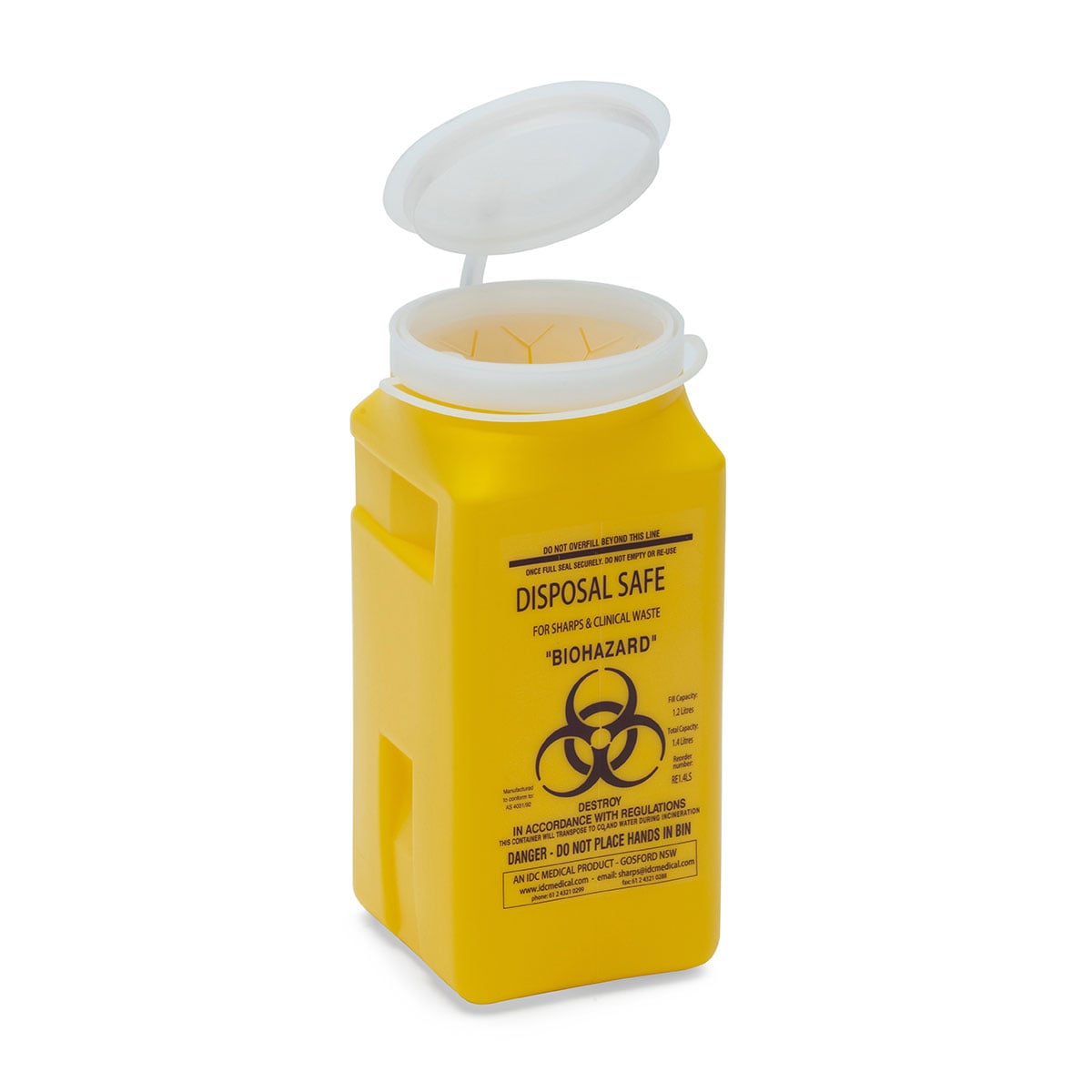
AEROHAZARD Sharps Container 1.4L
Small sharps bin for home, vehicles and low-throughput sites.
Shop Now
AEROHAZARD Sharps Disposal Container 12.5L
Mid-size AS 4031 container for clinics and busy workplaces.
Shop Now
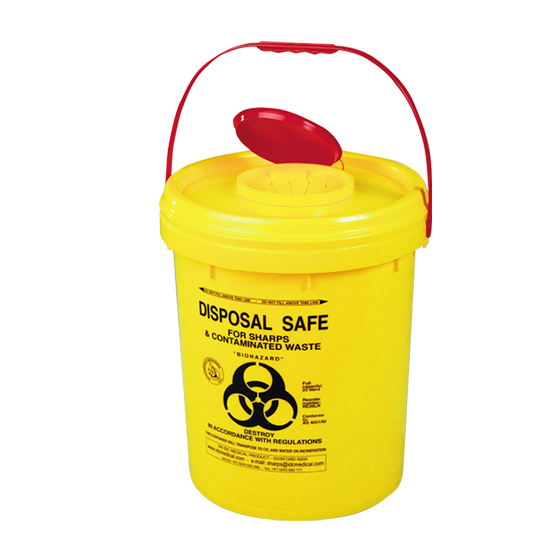
AEROHAZARD Sharps Disposal Container 23L
Large 23L container for hospitals & high-volume clinics.
Shop Now
Sources: Safe Work Australia — First aid in the workplace, healthdirect.gov.au — First aid, Australian and New Zealand Committee on Resuscitation (ANZCOR), Australian Red Cross.