


Reviewed by the Medibc First Aid Team — last updated May 2026.
Sprained ankles are Australia's most-treated sports injury — over 14,000 hospital ED visits per year, with grade 1 and 2 sprains making up around 85% of those. The single most important post-injury tool isn't fancy: it's the right size cohesive bandage, wrapped at the right tension. Get either wrong and you'll either restrict blood flow (too tight) or fail to control swelling (too loose).
This guide explains the four AEROBAN cohesive bandage sizes (2.5cm / 5cm / 7.5cm / 10cm), when to use rigid sports tape underneath, the right tension for compression, and how to build a sports-club or workplace strapping kit that covers fingers through shoulders.
Cohesive vs adhesive vs crepe — understanding the bandage family
Cohesive (self-adhering) bandages
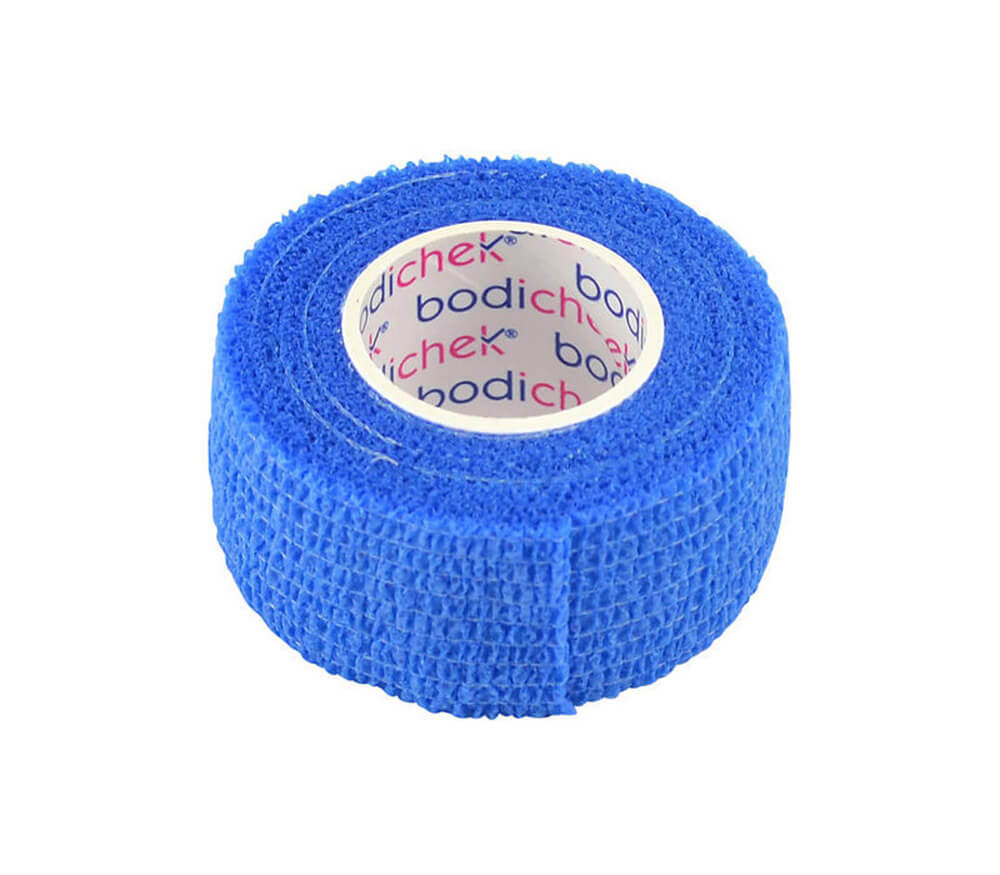
Cohesive bandages stick ONLY to themselves — not to skin, hair or clothes. The "cohesion" comes from a chemical adhesive on the fabric that bonds when stretched and overlapped. Result: a firm wrap that holds without tape, removes painlessly, and re-wraps cleanly. Latex-free versions (AEROBAN, Bodichek) suit anyone with latex sensitivity. The standard sports first aid bandage in 2026.
Adhesive (rigid) sports tape
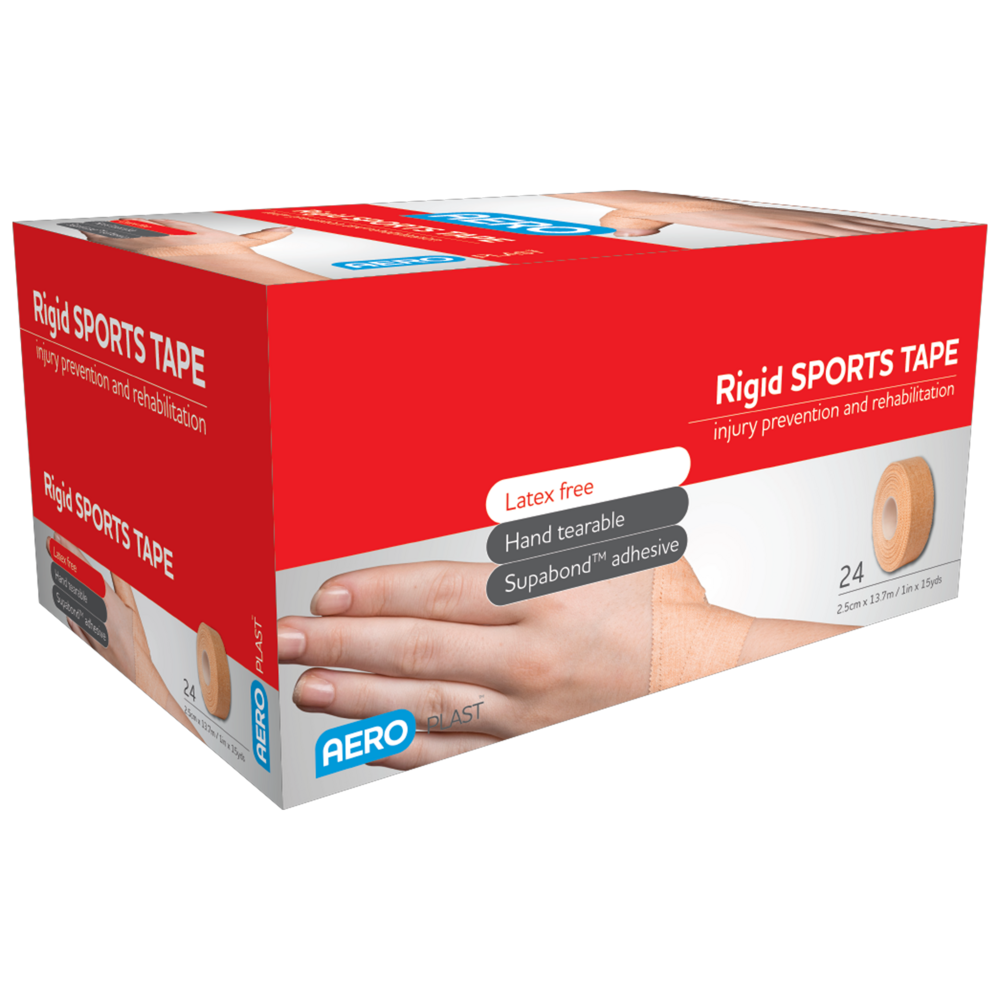
Sticky-back zinc-oxide or rayon tape that adheres directly to skin. Provides rigid joint immobilisation — the kind sports physios apply to a soccer player's ankle pre-game. Used as a SKIN-LEVEL anchor under cohesive wraps in advanced strapping. AEROPLAST 2.5cm box-of-24 is the workplace and sports club standard.
Conforming crepe bandages
Stretchy woven cotton-blend bandage held with safety pin, clip, or tape. The traditional first aid bandage — gentler than cohesive, no adhesion to itself, easy to undo and re-apply. Use for: light compression on bleeding wounds, holding non-adherent dressings in place, and general first aid where cohesive isn't needed.
Tubular bandages
Pre-formed elastic tubes that slide on like a sleeve — finger cots, knee tubes, ankle sleeves. Useful for chronic injuries, post-cast support, or where wrapping is impractical. Different sizing convention (A-K letters for limb circumference).
The four AEROBAN cohesive sizes — which goes where
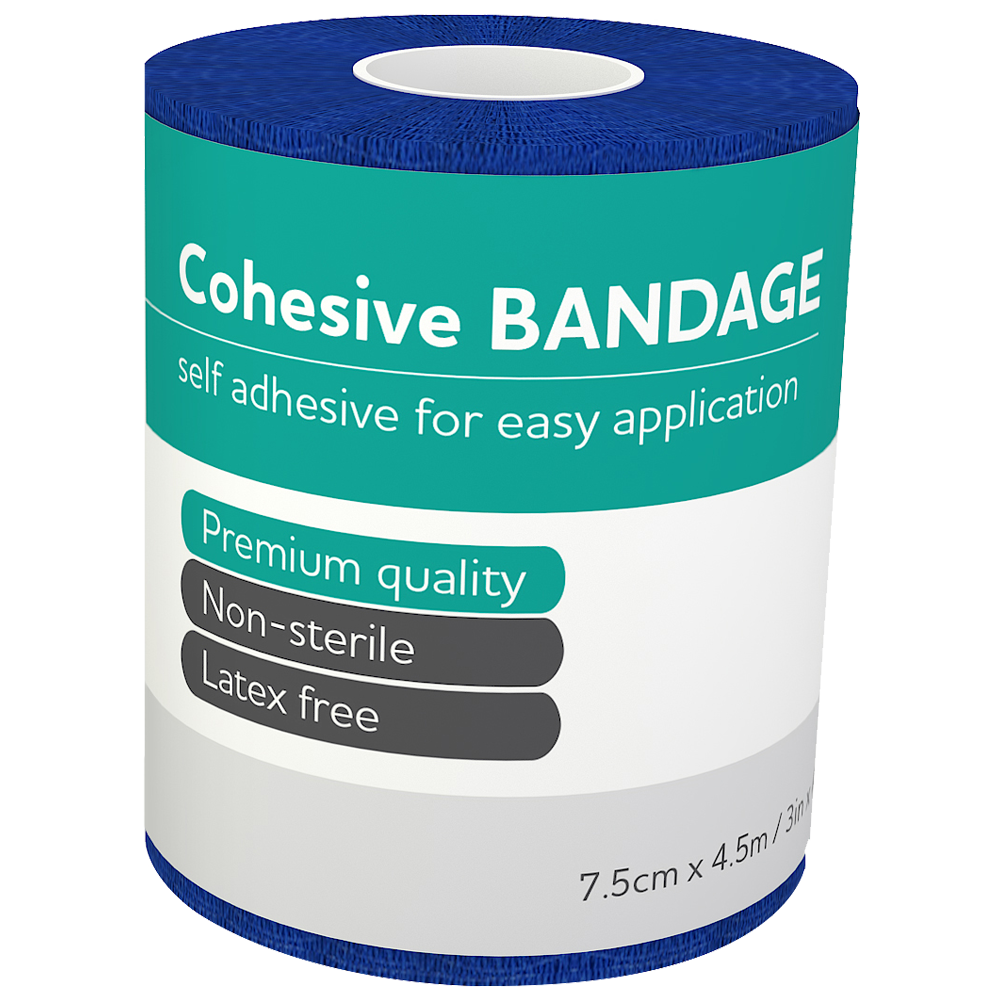
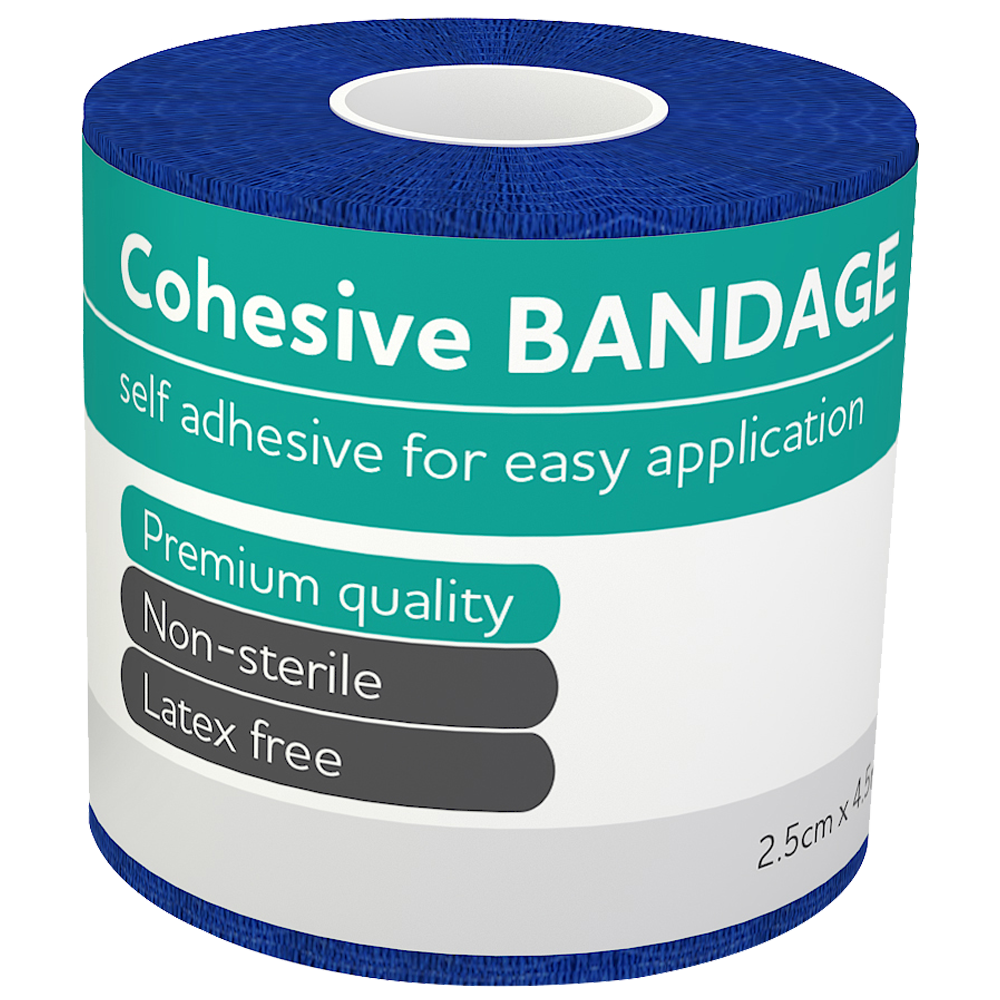
2.5cm (finger and thumb)
- Finger sprains, jammed knuckles, dislocations post-reduction
- Thumb taping after sprain
- Buddy-taping a fractured finger to an adjacent finger
- Post-blister support on small toes
Pack: 12 rolls per box. One roll covers 3-4 finger applications.
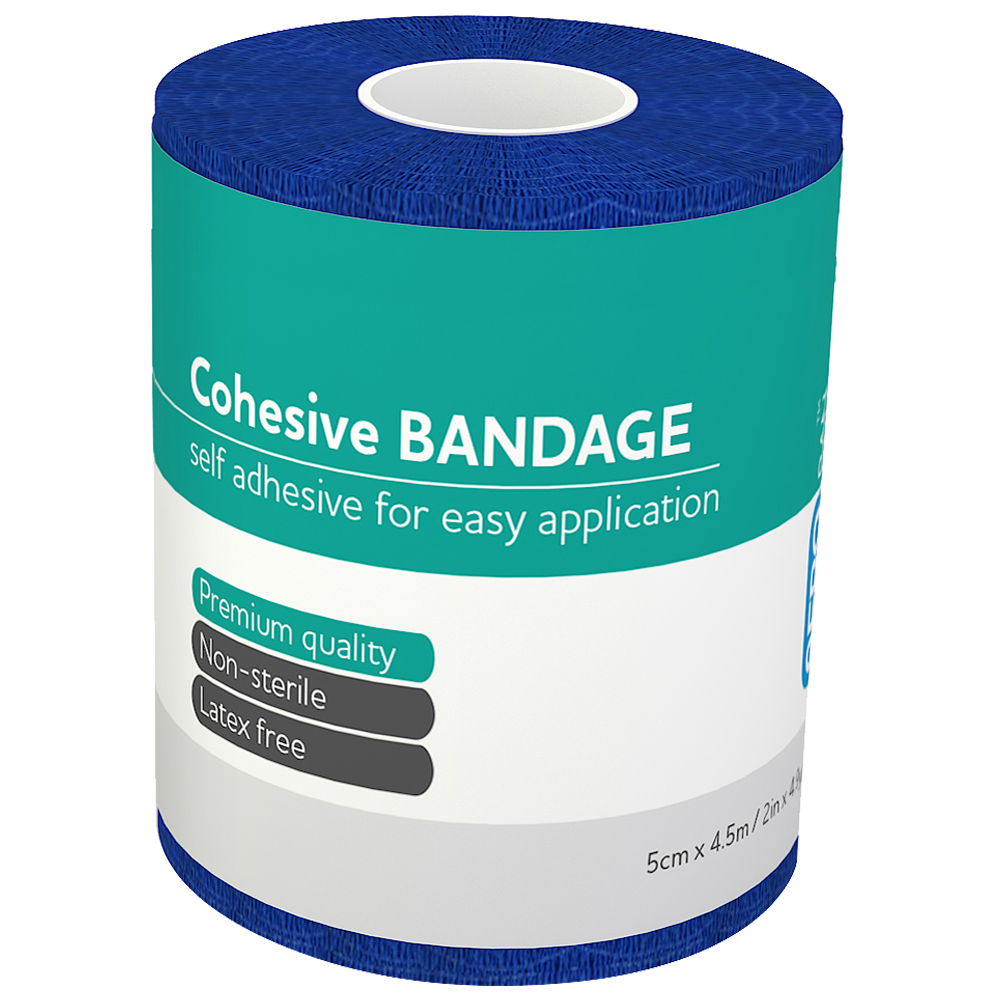
5cm (wrist and small ankle)
- Wrist sprains
- Children's ankles
- Forearm tendinitis
- Patella tendon support (cross-strapping)
The most versatile small size — covers most paediatric and small-build adult joints. Stock 4-6 rolls in any sports kit.
7.5cm (ankle, knee, forearm) — the workhorse
- Adult ankle strapping (the #1 use)
- Knee compression for grade 1 sprains
- Forearm and elbow wraps
- Compression for muscle strains
The most-used cohesive size in Australian sports first aid. Stock 6-8 rolls minimum in every sports club kit.
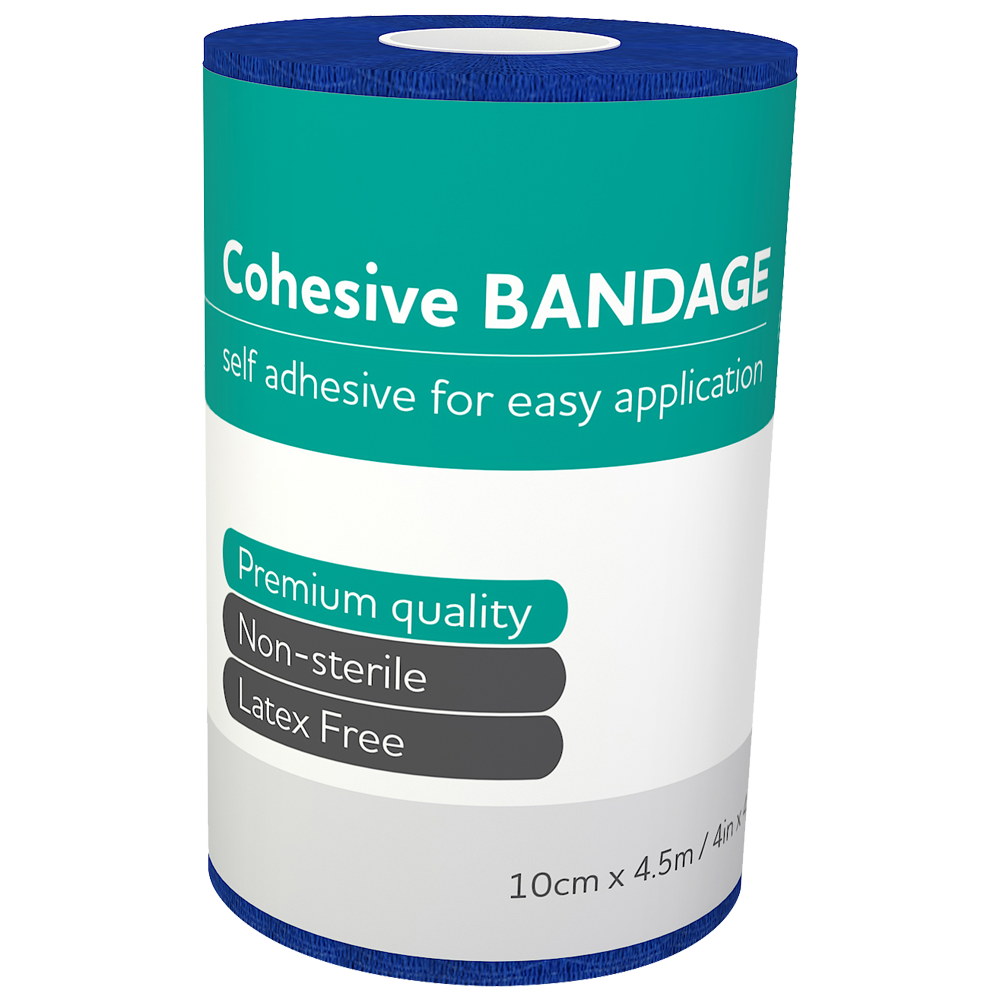
10cm (thigh, large knee, shoulder)
- Quadriceps and hamstring compression
- Large athlete knees (rugby, AFL)
- Shoulder figure-8 wraps
- Lower-back support strapping
Less frequent use — stock 2-3 rolls per kit.
How to wrap a cohesive bandage correctly
Step 1: Prepare the limb
Clean and dry the skin. For ankle wraps, position the foot at a NEUTRAL 90-degree angle to the leg (don't wrap with a pointed toe). For wrist wraps, hand in slight extension. For knees, slight flexion (10-15 degrees).
Step 2: Anchor turn
Start with 2-3 circular turns at the smaller end of the limb to anchor. For ankle: start above the malleoli (ankle bones). For wrist: start at the base of the thumb side.
Step 3: Spiral upward with 50% overlap
Wrap in spiral turns, each new turn overlapping the previous by half. Apply 25-50% stretch — the bandage should compress, not just sit on the skin. Continue UP the limb (distal to proximal), one body part at a time.
Step 4: Cover and secure
Finish with 2-3 circular turns at the upper end. The cohesive bandage self-adheres — no tape, no clips needed. Smooth the final overlap with the palm.
Step 5: Circulation check
IMMEDIATELY after wrapping:
- Press a fingertip/toenail distal to the wrap (e.g., big toenail for ankle wrap)
- Pink colour should return within 2 seconds (capillary refill)
- Ask the casualty about numbness, tingling, "pins and needles"
- Check skin temperature distal to the wrap — should be warm
If any sign of compromise: REMOVE and re-wrap looser.
Step 6: Re-check every 30 minutes
Swelling continues for 24-48 hours after acute injury. A wrap fine at application can become too tight as the limb swells. Re-check at 30, 60, 120 minutes, then every 2-4 hours.
Advanced: rigid tape + cohesive sandwich
Why combine the two
For sports where joint stability matters more than compression alone (basketball ankle taping, rugby thumb support, soccer pre-game ankles), professional sports physios apply rigid sports tape DIRECTLY TO SKIN as anchors, then wrap cohesive OVER the top. Result: rigid skeleton plus elastic compression — far better than either alone.
Basic ankle figure-8 taping
- Apply skin prep wipe (alcohol or chlorhexidine) and let dry
- Apply two anchor strips of 2.5cm AEROPLAST rigid tape: one around the lower calf, one around the mid-foot
- Build "stirrups" — rigid tape from inside calf anchor, under the heel, to outside calf anchor. Apply 3 stirrups, each overlapping the last by half
- Build "horseshoes" — rigid tape across the front of the ankle from one calf anchor to the other, 3 strips
- Apply figure-8: from outside calf anchor, diagonally across the ankle bone, under the foot, up across the other ankle bone, back to the start
- Cover the whole structure with 7.5cm AEROBAN cohesive wrap in spiral — provides compression and protects the rigid tape from peeling
This is HLTAID014 + sports trainer-level work. Don't attempt without training.
When NOT to use cohesive wraps
- Suspected fracture with deformity — splint in position found; don't wrap before X-ray
- Open wound — clean and cover with non-adherent dressing first; cohesive over dressing is OK
- Suspected compartment syndrome — severe pain disproportionate to injury, tense limb, paraesthesia: emergency, no wrapping, urgent transport
- Vascular compromise — existing diabetes circulation issues, peripheral artery disease, or post-bypass surgery: use light crepe only
- Sleep / extended unwatched periods — acute injury swelling can outpace the wrap; remove for sleep
Building a sports-club / workplace strapping kit
Sports club (Saturday game)
- 2x AEROBAN 2.5cm (finger work)
- 4x AEROBAN 5cm (wrist, junior ankle)
- 8x AEROBAN 7.5cm (adult ankle, knee — main consumable)
- 2x AEROBAN 10cm (thigh)
- 1 box (24) AEROPLAST 2.5cm rigid tape
- Ice packs (instant) — 6+
- Pre-strap and skin prep wipes
- EAB (elastic adhesive bandage) for advanced strap-overs
Workplace first aid kit (medium office)
- 2x AEROBAN 5cm (wrist sprains, finger work)
- 4x AEROBAN 7.5cm (ankle, knee — most workplace incidents)
- 2x AEROBAN 10cm (back / shoulder)
- 1 box (24) AEROPLAST 2.5cm rigid tape (for advanced wraps if HLTAID014 staff)
Home / family first aid kit
- 1x AEROBAN 2.5cm (kids' fingers)
- 2x AEROBAN 5cm (kids' ankles, adult wrists)
- 2x AEROBAN 7.5cm (adult ankles)
Storage, expiry and re-stocking
Storage
Original sealed boxes, below 30 degrees Celsius, away from direct sunlight, off the floor. AEROBAN has a 3-year shelf life unopened, 12 months once the foil pouch is broken. Once a roll is opened it loses some adhesive strength — mark the open-date with a marker.
Restock triggers
- After every match or training-session use (sports clubs)
- Quarterly audit (workplace WHS)
- When 50% of any size stock is gone
- After expiry check — discard expired rolls
Industry-specific notes
Sports clubs (AFL, soccer, rugby, basketball)
Pre-game taping (rigid + cohesive) on every player with ankle history. Sideline cohesive kit for in-game injuries. Trainer with HLTAID014 + Sports Trainer certificate. Stock 50+ rolls 7.5cm per season per team.
School sport
Coach/teacher first aid kit with mixed cohesive sizes. PE staff trained in basic ankle wraps (HLTAID011 minimum). Ice packs in freezer/cool bag at each sports session.
Construction and physical workplaces
Ankle and wrist sprains are the most common claim. Cohesive kit at the site office. Workers trained to apply 7.5cm to their own wrist before driving themselves to medical care — never as a substitute for medical assessment.
Office workplaces
Rare use but useful. Most workplace ankle sprains happen in carparks and stairs. Small 5cm + 7.5cm kit in first aid cabinet.
Frequently asked questions
What's the difference between cohesive and adhesive bandages?
Cohesive (self-adhering) bandage sticks ONLY to itself - not to skin, hair or clothes. Latex-free cohesive (like AEROBAN) is ideal for kids, hairy skin, repeated strapping over the same area. No tape allergy, no painful removal. ADHESIVE (rigid) sports tape sticks to skin AND itself - used for joint immobilisation where movement must be prevented (ankle taping in sport, post-injury wrist support). Use both together in advanced strapping: rigid tape on the skin as a foundation, cohesive on top for the wrap layers.
Which cohesive bandage size do I need for my injury?
Match the bandage width to the body part: 2.5cm for fingers and thumbs, 5cm for wrists and small ankles, 7.5cm for ankles, knees and forearms, 10cm for thighs, large knees and shoulders. Length is usually 4.5m unstretched - one roll covers most single applications. Stock a mixed-size pack in workplace and sports kits: 2x 2.5cm, 4x 5cm, 6x 7.5cm, 2x 10cm covers most scenarios. Browse our cohesive range to compare sizes side by side.
How tight should I wrap a cohesive bandage?
Firm but not constrictive. Apply with 25-50% stretch - the bandage should compress the limb gently. Check circulation IMMEDIATELY after and every 30 minutes: press the nail or fingertip distal to the wrap - it should return to pink within 2 seconds (capillary refill). Numbness, tingling, blue-purple colour, or coldness mean the wrap is TOO TIGHT - remove and re-apply looser. Never wrap so tightly that the bandage edges dig in.
How long can you leave a cohesive bandage on?
Reassess every 4-6 hours during the day, longer at rest. Remove and re-wrap at least once per 24 hours to: inspect the skin for redness/blisters, re-clean if sweaty, restore proper tension (cohesive loses some compression after 24h). Don't leave a sports-grade wrap on overnight if the injury is acute (first 48 hours) - swelling can increase during sleep and a wrap fine in the evening can become dangerous by morning. Hydrocolloid blister covers and athletic strapping are different - they have their own change schedules.
Are cohesive bandages safe for latex-allergic people?
Most modern Australian cohesive bandages (including AEROBAN and Bodichek) are LATEX-FREE - check the label or product description. Latex allergy affects 1-6% of healthcare workers and 0.5-1% of the general population, causing rashes, hives, or in rare cases anaphylaxis. Latex-free is the workplace default. If you're unsure, look for 'latex-free' explicitly on the box. Old-style elastoplast cohesive products may contain latex - replace with latex-free versions for any workplace first aid kit.
Cohesive Bandages & Sports Strapping
AEROBAN self-adhering bandages (2.5-10cm), AEROPLAST rigid sports tape and Bodichek elastic cohesive — the four-size kit every sports club needs.
Sources: healthdirect.gov.au — Sprained ankle, healthdirect.gov.au — First aid, Australian and New Zealand Committee on Resuscitation (ANZCOR), Australian Red Cross.