

Reviewed by the Medibc First Aid Team — last updated May 2026.
One in three Australian adults has high blood pressure, and about half of them don't know it - because the symptoms are silent. The National Heart Foundation of Australia emphasises that home blood pressure monitoring is the most reliable way to detect hypertension early, manage it accurately, and stop it from progressing to stroke, heart attack or kidney disease. Whether you've just been diagnosed, are on medication, or simply want a baseline reading, this guide covers how to choose a home BP monitor, take an accurate measurement, and interpret the results.
Why home blood pressure monitoring matters
The silent epidemic of hypertension
Hypertension (blood pressure consistently above 140/90 mmHg) causes no symptoms until major organ damage occurs. The Australian Institute of Health and Welfare attributes 25,000 deaths a year to causes related to high blood pressure - heart disease, stroke, kidney failure. The first symptom of untreated hypertension is often the heart attack or stroke itself.
The white-coat effect
Blood pressure measured in a clinic is on average 5-15 mmHg higher than at home because of the white-coat effect. Around 15-30% of Australians have a meaningful clinic-vs-home gap. Home monitoring captures your real blood pressure across normal daily activities - the gold standard for diagnosis and treatment tracking.
Better treatment outcomes
Studies show that home BP monitoring combined with lifestyle changes and medication leads to better hypertension control than clinic-only monitoring. Most GPs now ask new hypertension patients to bring 1-2 weeks of home BP readings to their follow-up appointment.
Digital vs aneroid blood pressure monitors
Digital (oscillometric) monitors
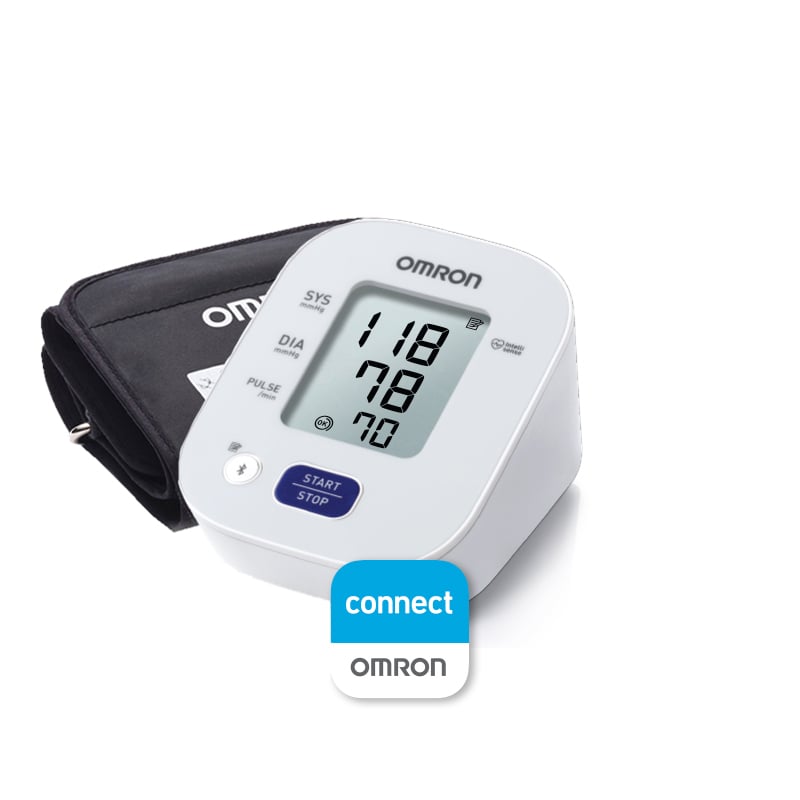
Digital monitors automatically inflate the cuff, detect oscillations in the artery, and display systolic and diastolic readings on an LCD screen. They are the recommended choice for home use - no stethoscope skill required, fewer user-error mistakes, and built-in memory for trend tracking.
- Pros: easy to use, accurate, single-button operation, built-in memory.
- Cons: requires batteries or mains power; less accurate in atrial fibrillation patients.
- Best for: daily home self-monitoring, elderly patients, anyone without clinical training.
Aneroid (manual) sphygmomanometers
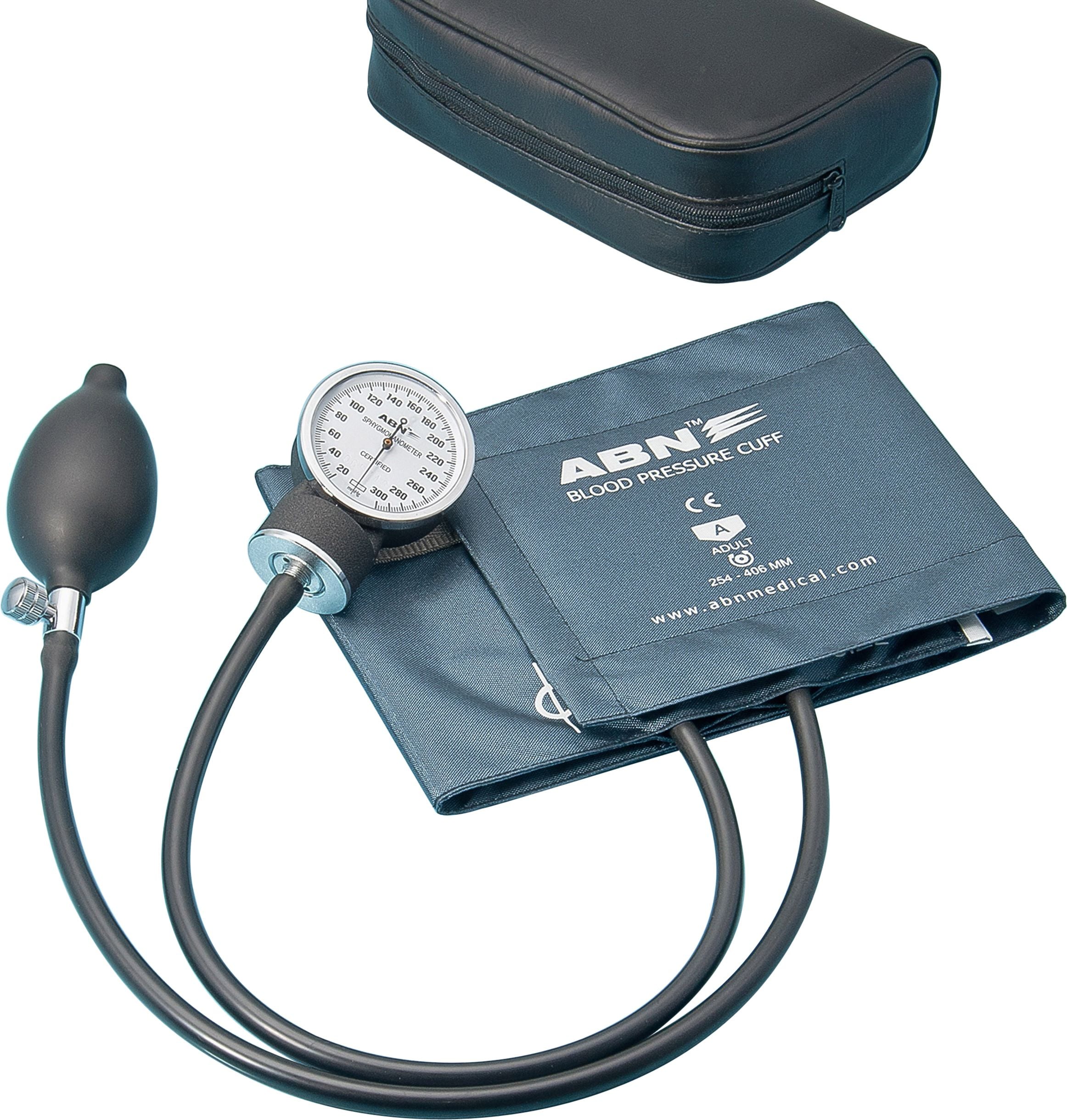
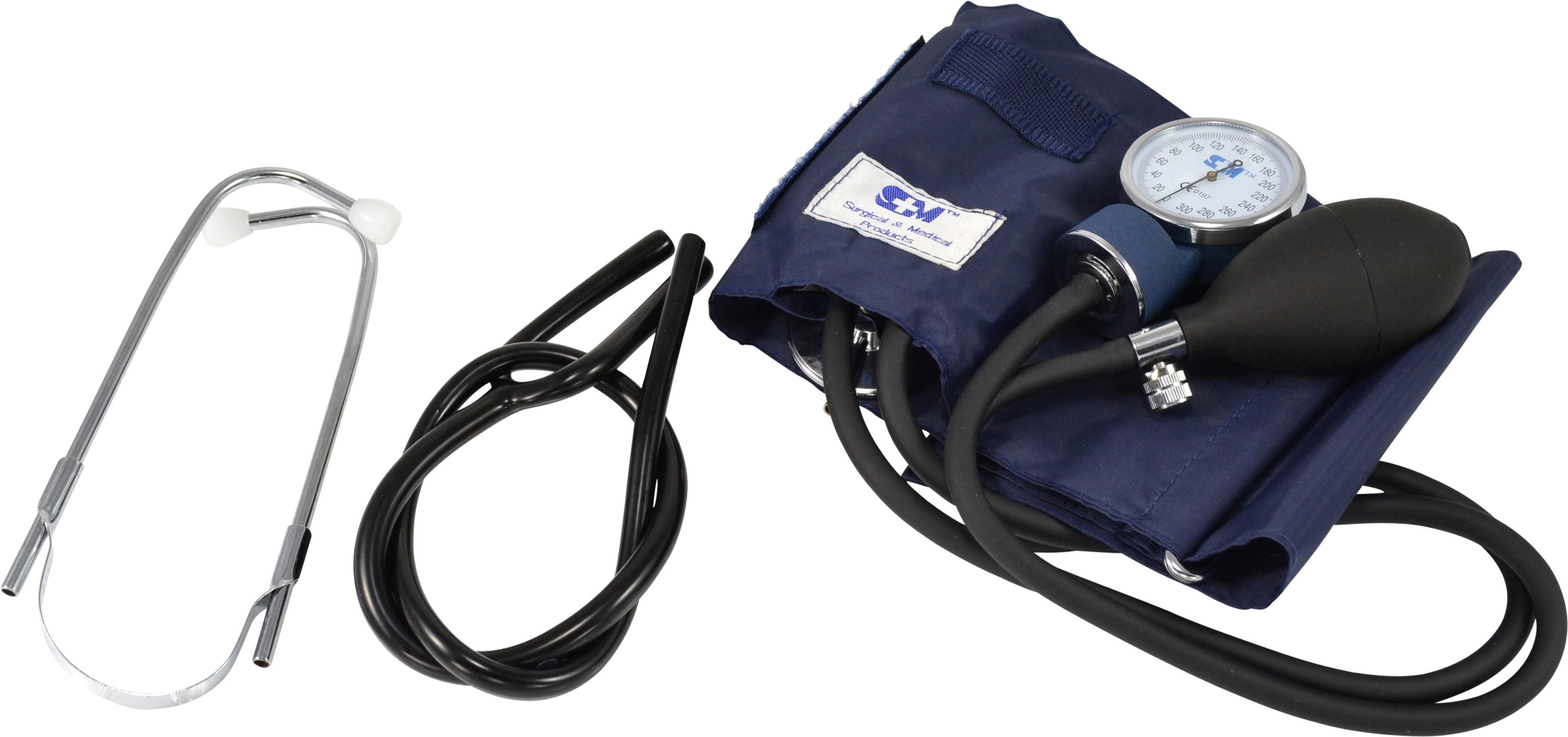
Aneroid sphygs use a manual pump, gauge dial and stethoscope to detect Korotkoff sounds (the audible pulse). Accuracy depends on the user's skill - clinical use only, or for very experienced home users.
- Pros: highly accurate in skilled hands; no batteries; durable; reliable in atrial fibrillation.
- Cons: requires training; needs stethoscope; no memory; difficult one-handed self-measurement.
- Best for: nurses, paramedics, doctors, and clinical or first aid settings.
Hybrid and clinical-grade monitors
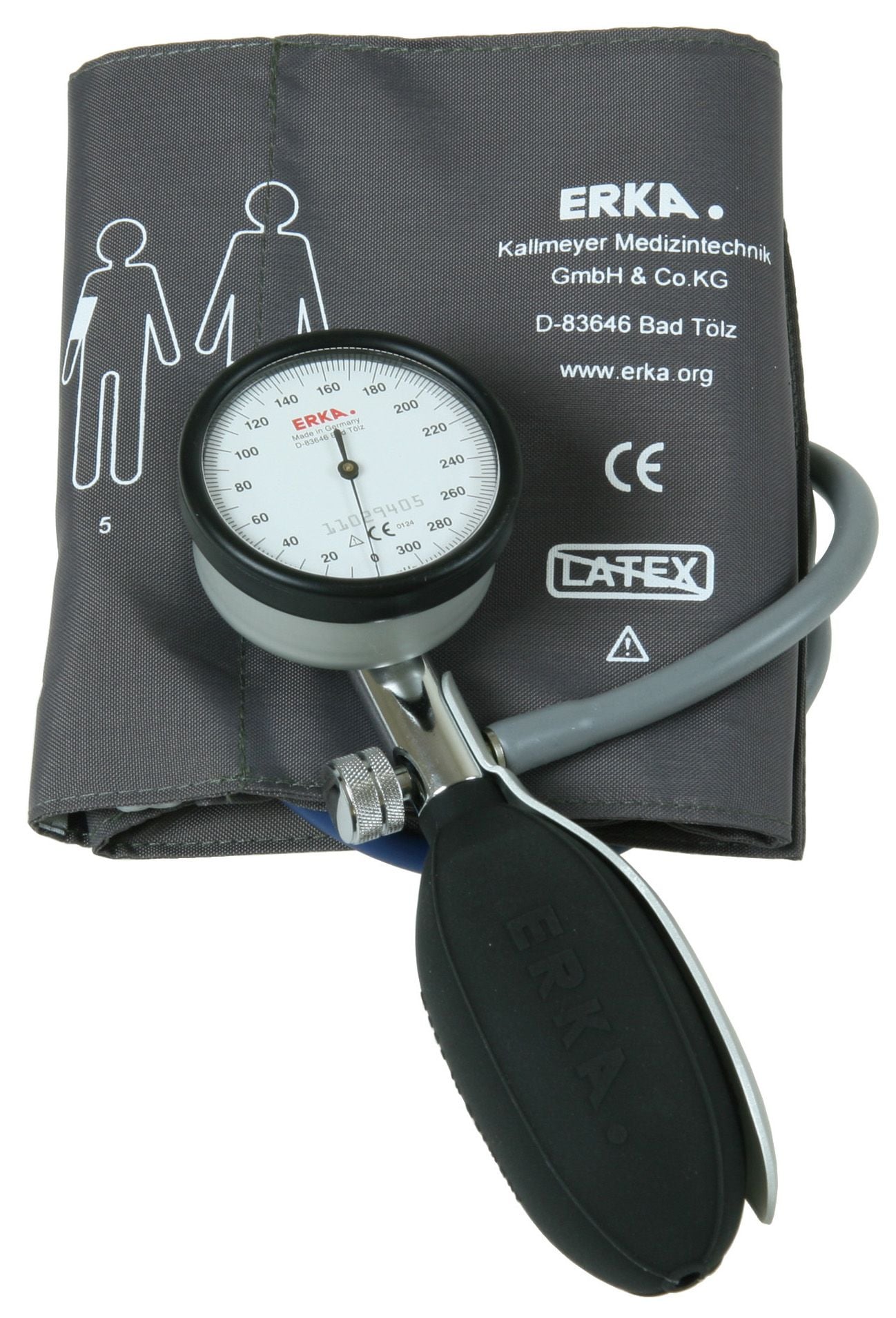
Devices like the ERKA Kobold one-handed professional sphyg combine aneroid accuracy with single-hand operation for clinicians moving between patients. Hybrid models can switch between manual and electronic modes.
Choosing the right cuff size
Why cuff size matters
A cuff that is too small over-reads blood pressure by up to 10 mmHg; a cuff that is too large under-reads by up to 5 mmHg. The single most common cause of inaccurate home BP readings is wrong cuff size.
Measure your upper arm
Measure the circumference of your upper arm halfway between the shoulder and elbow. Match to the cuff size on the box:
- Small adult cuff (22-26cm) - smaller adults and older teens.
- Standard adult cuff (27-34cm) - most adults.
- Large adult cuff (35-44cm) - larger upper arms.
- Extra-large / thigh cuff (45-52cm) - athletes and obese patients.
Many digital monitors come with universal cuffs sized 22-42cm covering most adults. For exceptionally large arms, order the extra-large cuff separately.
How to take an accurate home BP reading
Preparation (30 minutes before)
- Empty bladder.
- No caffeine, food, smoking, or vigorous exercise for 30 minutes.
- Rest seated quietly for 5 minutes.
- Roll up sleeve so the cuff is on bare upper arm.
Posture during the reading
- Seated, feet flat on the floor, legs uncrossed.
- Back supported.
- Arm supported on a table at heart level (the cuff should sit at the level of your heart).
- Don't talk or watch TV during the reading.
Reading technique
- Wrap the cuff snugly around your upper arm, with the artery marker over the brachial artery (inner elbow crease).
- Cuff should fit 2-3cm above the elbow crease.
- Press the start button and stay still.
- Wait for the cuff to inflate and slowly deflate; the monitor will display systolic over diastolic + pulse.
- Take 2 readings 1 minute apart and average them.
- Record the date, time, both readings, and any symptoms.
For best accuracy, take morning readings within 1 hour of waking (before medication) and evening readings before bed. Use the same arm each time - whichever historically reads higher.
Understanding your BP numbers
What the two numbers mean
BP is reported as systolic/diastolic (e.g. 130/85):
- Systolic (top number): peak pressure when the heart contracts and pumps blood out.
- Diastolic (bottom number): resting pressure between contractions.
Australian BP categories (Heart Foundation)
- Optimal: <120 and <80
- Normal: 120-129 and/or 80-84
- High-normal: 130-139 and/or 85-89
- Grade 1 hypertension: 140-159 and/or 90-99
- Grade 2 hypertension: 160-179 and/or 100-109
- Grade 3 hypertension: 180+ and/or 110+ (see your GP urgently)
When to see a doctor
See your GP for any reading consistently above 140/90, or sooner if you have a single reading above 180/110, chest pain, severe headache, vision changes or neurological symptoms. Call 000 for any BP above 220/120 with new symptoms - this is hypertensive emergency.
Building a home BP monitoring kit
Daily-use home kit
- Digital upper-arm monitor (Omron, GoWISE or similar validated brand).
- Correctly-sized cuff (measure your arm first).
- Notebook or app for recording readings.
- Spare batteries.
Clinical / first aid kit
- Aneroid sphyg with multiple cuff sizes.
- Dual-head stethoscope (paediatric + adult diaphragm).
- Alcohol wipes for cuff hygiene between patients.
Travel or limited-mobility kit
- Battery-powered digital with built-in memory.
- Wrist or one-handed cuff for arthritis sufferers.
- Carry case to protect the unit.
Common mistakes and how to avoid them
Wrong cuff size
Re-measure your upper arm at least annually - weight changes affect cuff fit. Replace cuffs that no longer fit correctly.
Skipping the 5-minute rest
BP taken immediately after walking up stairs, eating, or feeling stressed will read 10-30 mmHg higher than your true resting BP.
Talking during the reading
Talking raises systolic BP by 10-15 mmHg. Stay quiet from the moment the cuff begins to inflate.
Single readings instead of averages
Always take 2 readings 1 minute apart and average them. Single readings are unreliable.
Not validating the device
Only buy BP monitors that are validated against international standards (BHS or AAMI) and recommended by the Australian Heart Foundation. Avoid wrist or finger monitors except for specific clinical indications.
When home BP monitoring may not be reliable
Atrial fibrillation
Digital BP monitors may give inconsistent readings in atrial fibrillation because the irregular pulse confuses the oscillometric algorithm. Some advanced monitors (e.g. Omron with AFib detection) flag irregularities. For confirmed AF, use an aneroid sphyg with stethoscope under clinical guidance.
Pregnancy
Pregnancy-related hypertension (pre-eclampsia) needs specialist monitoring. Use only TGA-cleared validated monitors during pregnancy and report any reading above 140/90 to your obstetrician immediately.
Elderly with very stiff arteries
People with calcified arteries may give falsely-high cuff readings. If your home reading is consistently 30+ mmHg higher than the GP-clinic reading, ask about an oscillometric cuff with calcified-artery compensation.
Frequently asked questions
How often should you check blood pressure at home?
For people newly diagnosed with hypertension or starting medication, the National Heart Foundation recommends two readings in the morning and two in the evening for 7 consecutive days, then averaging the readings (discarding the first day). Once stable, twice-weekly readings are usually sufficient. Always take 2 readings 1 minute apart and average them.
Are digital or manual BP monitors more accurate?
When both are validated and used correctly, digital and manual monitors give similar accuracy. Digital is preferred for home use because it removes the user-skill variable (correct stethoscope placement, listening for Korotkoff sounds). Always choose a digital monitor validated by the Australian Heart Foundation or British Hypertension Society.
What is a normal blood pressure reading?
Normal blood pressure is below 120/80 mmHg. The National Heart Foundation classifies readings as: optimal (<120/<80), normal (120-129/80-84), high-normal (130-139/85-89), Grade 1 hypertension (140-159/90-99), Grade 2 (160-179/100-109), Grade 3 (180+/110+). See your GP for any reading consistently above 140/90.
Why is my BP higher at the doctor than at home?
This is called the white-coat effect - blood pressure rises in response to clinical environments. Around 15-30% of Australians experience it. Home BP monitoring captures your true blood pressure across the day, which is why GPs increasingly request home readings rather than relying on a single clinic measurement.
Should I take my BP medication if my reading is normal?
Yes - do not skip your prescribed blood pressure medication based on a single normal reading. Hypertension medication works by keeping your BP in the normal range; stopping the medication will let it rise again. If you consistently see readings in the optimal range, talk to your GP about reducing or changing your medication.
Sources: National Heart Foundation of Australia — Blood pressure, healthdirect.gov.au — Blood pressure test, AIHW — Heart, stroke and vascular diseases facts, WHO — Hypertension.